
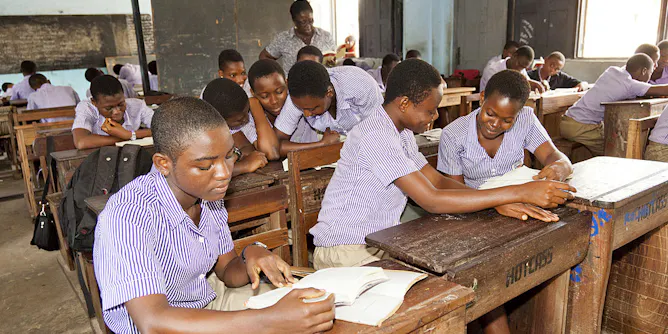
The introduction of free education should follow a gradual process, starting with the lowest levels.
Articles on Schooling in Africa
Displaying 1 - 20 of 28 articles
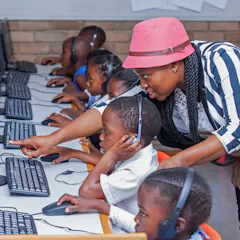
Teacher training and support, appropriate localised content, technical support and safety and security must all be prioritised.

The most effective way to provide children in the CAR with access to education is to aim interventions at them directly.
South African universities are failing to graduate the strongest students the schooling system has to offer.
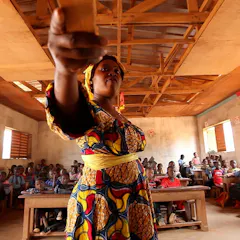
The need for qualified teachers is a major challenge in a number of African countries.
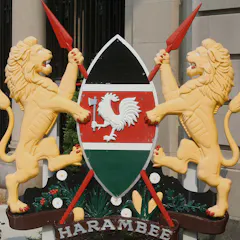
Kenyans believe that fixing education is not someone else’s task or someone else’s failure.
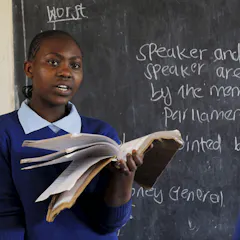
Authors Lutz and Klingholz explore how mass literacy became a revolution that changed the world.

Local governance can have a real effect - positive or negative - on the quality of schooling.
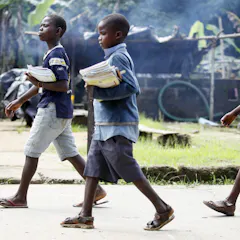
Schools that have supportive strategies in place can offer buffers. They can promote positive outcomes – for pupils and teachers.
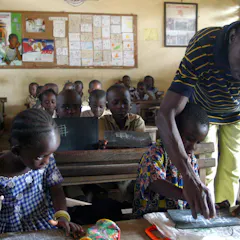
Many people look down on foundation phase teachers, believing it requires little training or expertise. This couldn’t be further from the truth.
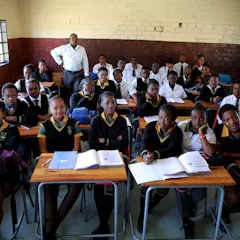
South Africa’s annual matric pass rate obscures important differences in provincial achievements, the rural and urban divide and the unequal outcomes for learners in poorer schools.
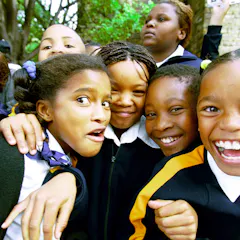
Teachers in South Africa need far more high quality professional development, policy direction and support to take social cohesion from concept to classroom

Many South African teachers don’t accept the theory of evolution. They feel deeply conflicted when they have to teach it to their pupils as part of the life sciences curriculum.
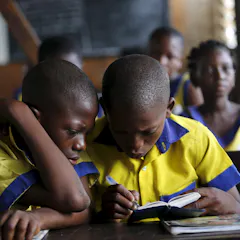
It’s unusual for children in Nigeria’s rural areas to have any access to private schooling, even if it’s of the low-cost variety. They must rely instead on poorly resourced government schools.
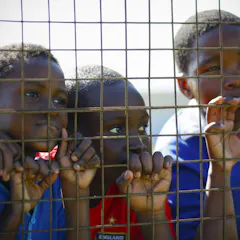
The lessons Paulo Freire learnt nearly 90 years ago and the theories he developed from painful personal experience still resonate across Africa’s schooling systems today.

Girls’ lives are still entangled in a culture whose custodians happen to be men.
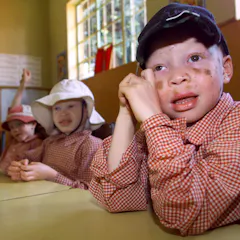
In Tanzania, where albinism is common, there’s plenty that ordinary teachers can do to support students with albinism – much of it quite simple.
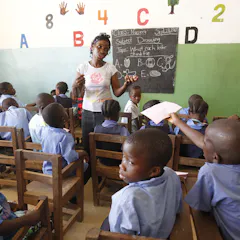
Even poor, badly resourced schools can perform well when teachers, the education department, parents and a school’s broader community work together.
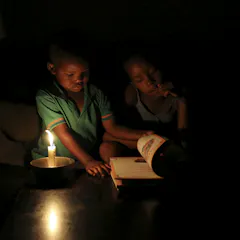
South Africa’s fee exemption system is at the heart of a deepening divide in the country’s school sector. It’s time for a major relook at how this policy is applied.
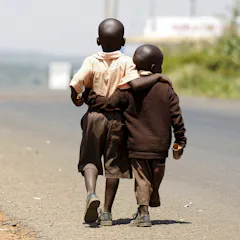
It takes a combination of people, places and activities to make school a happy environment for kids. Here’s how teachers and parents can get involved.
Top contributors
-

Professor, University of Nottingham
-
Professor, University of Cape Town
-
Emeritus Professor, Faculty of Education, Stellenbosch University
-
PhD Candidate, University of Pretoria
-
Professor of Education, University of Johannesburg
-
Education economist, Stellenbosch University
-
Senior Research Associate in Science Education, University of KwaZulu-Natal
-
Professor and Dean of the Faculty of Education, University of Johannesburg
-
Professor: Teacher education for the primary school, University of Johannesburg
-
South African Research Chair in Teacher Education; Director of Centre for International Teacher Education (CITE) & Professor of International Education and Development Policy (University of Sussex, UK), Cape Peninsula University of Technology
-
Faculty member, Centre for Researching Education and Labour, University of the Witwatersrand
-
Professor and Dean of Humanities, University of the Witwatersrand
-
Professor of the Practice of International Development, Johns Hopkins University
-
NRF Accredited & Senior Researcher; Lead Coordinator of the South-South Educational Collaboration & Knowlede Interchange Initiative, Cape Peninsula University of Technology
-
Post-Doctoral Research Fellow, SARChI in Higher Education and Human Development Research Group, University of the Free State