
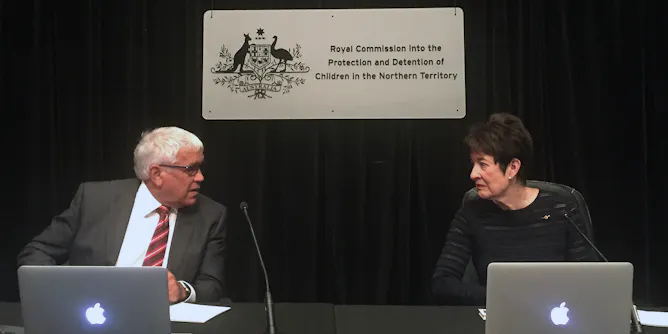
The NT youth justice royal commission’s interim report did not deliver any findings or make any recommendations. Nor did it reflect young people’s personal stories.
Articles on Royal Commission into Aboriginal Deaths in Custody
Displaying 21 - 30 of 30 articles
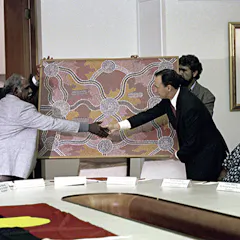
Cabinet papers reveal the extent to which the Keating government was torn between concern for fiscal responsibility and a desire to tackle Indigenous disadvantage and pursue meaningful reconciliation.

The official data show incarceration rates of Indigenous people have doubled since the Royal Commission into Aboriginal Deaths in Custody 25 years ago. But the problem may be even worse than that.
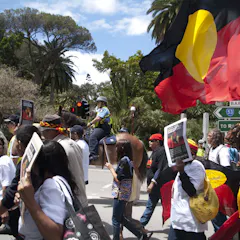
The statistics used to discuss deaths in custody can make us lose sight of the fact that it’s people we’re talking about. People with families and friends, who died prematurely – and often brutally.

Accountability for the deaths of Aboriginal and Torres Strait Islander people at the hands of the state remains absent 25 years after the Royal Commission into Aboriginal Deaths in Custody’s report.

Australia has become less compassionate, more punitive and more ready to blame individuals for their alleged failings since the Royal Commission into Aboriginal Deaths in Custody.
The Royal Commission into Aboriginal Deaths in Custody’s report was meant to be a blueprint for reducing the disproportionate incarceration of Indigenous Australians and deaths in custody.

The days of prison, an 18th-century industrial institution, as the justice system’s dominant form of punishment may be numbered. Electronic monitoring of offenders is one promising alternative.

Without the Custody Notification Service in NSW, deaths of Indigenous people in police custody will almost certainly increase, along with the over-representation of Indigenous people in prison.

Northern Territory police powers to make ‘paperless arrests’ are completely contrary to recommendations by the Royal Commission into Aboriginal Deaths in Custody, and now the inevitable has happened.
Top contributors
-

Professor of Law, University of Technology Sydney
-
Senior Fellow Indigenous Programs, The University of Melbourne
-
Research Fellow, University of Technology Sydney
-
The University of Melbourne
-
Professor of Criminology, University of Technology Sydney
-
Professor in History, University of Tasmania
-
Victoria University
-
Senior Lecturer in Journalism, Adelaide University
-
Lecturer in Law, Faculty of Law, University of Technology Sydney
-
Professor, University of Technology Sydney
-
Professor of Communication, Deakin University
-
Senior Lecturer, UTS Faculty of Law, University of Technology Sydney
-
PhD Candidate, University of Technology Sydney
-
Professor of Criminology, Australian National University
-
Associate Director of Research and Senior Fellow, Yardhura Walani, National Centre for Aboriginal and Torres Strait Islander Wellbeing Research, Australian National University