
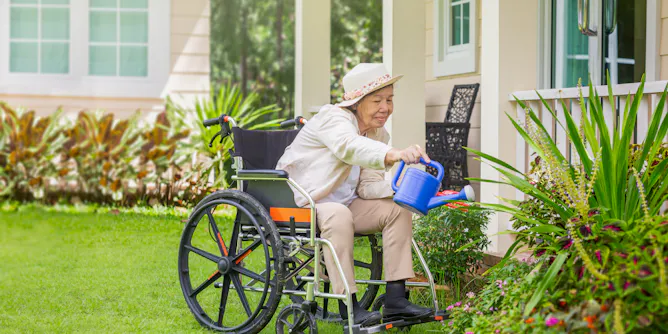
Remaking aged care in Australia starts with embracing people-centred design. Instead of the institutional model with its focus on restraint, we need to understand and design for people’s needs.
Articles on Residential aged care
Displaying 21 - 36 of 36 articles
Many Australians come to the end of their life while living in aged care. But damningly, the aged care royal commission found many residents have worse palliative care options than those living elsewhere.
Disappointingly, however, this report gives the government room to pick and choose recommendations as the cabinet likes.
The free market experiment in residential aged care is failing older Australians. Rebuilding trust in the system starts with valuing residents’ rights, and holding government and providers to account.
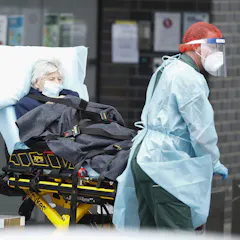
Most aged care homes are designed to be naturally ventilated. But when windows are closed to keep out the cold, poor ventilation appears to be common – and that’s a problem for infection control.
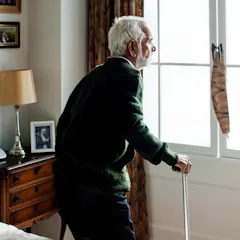
For many people living in residential aged care, their priority is quality of life, not length of life. So how do we reconcile this with the need to restrict visitors during the coronavirus pandemic?
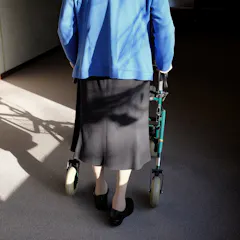
The aged care royal commission’s interim report paints a picture of a system in deep crisis. Its recommendations for action have some merit, but won’t address what are underlying, systemic problems.
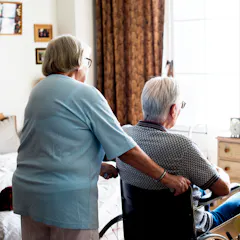
While the majority of aged care funding comes from government, residents also have to contribute. Here’s how the payment system works.

Sedative medications and restraint belts are too often given to aged care residents with dementia to stop them wandering, prevent falls, or manage “difficult” behaviour.
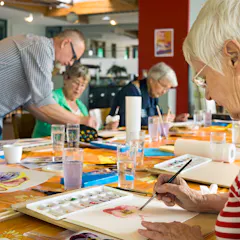
Creative arts therapies allow people with dementia to express joy and sadness through painting, dance, music and drama.
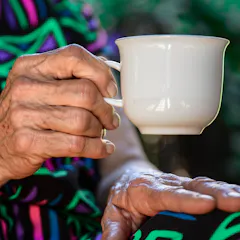
If you don’t plan for your aged care and make your wishes known, you may be admitted to a hospital or aged care facility when something goes wrong. That’s where most Australians end up dying.

Eliminating sexual assault in nursing homes is a major challenge which starts with acknowledging it exists and recognising the scale of this abuse.
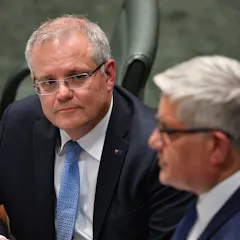
Prime Minister Scott Morrison has defended the Coalition’s spending on aged care as preparations for a Royal Commission into the sector get underway. We asked the experts to crunch the numbers.
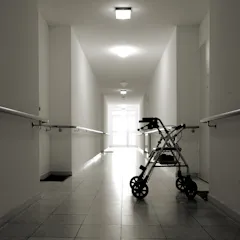
Large institutions for people with disability and mental illness were once commonplace. These have now been replaced with smaller community-based services. With aged care, we’re doing the opposite.
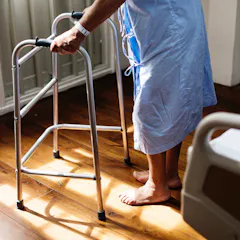
Four Corners this week revealed understaffing and poor staff training in aged care. These issues have also been found in previous reviews into aged care.
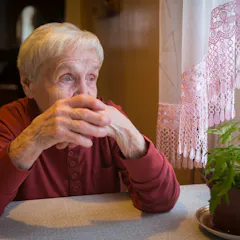
Older people living in residential aged care often have few friends, no meaningful interactions and feel socially isolated. Most people are depressed and some may no longer wish to live.
Top contributors
-

Professor, Aged Care Medical Research Australian Centre for Evidence Based Aged Care, La Trobe University
-
Professor of Health Economics, University of Technology Sydney
-
Professor in Ageing and Health, University of Sydney
-
Honorary Enterprise Professor, School of Population and Global Health, and Department of General Practice and Primary Care, The University of Melbourne
-
Associate Professor of Accounting, University of Technology Sydney
-
Professor of Nursing Aged Care (Dementia), University of Technology Sydney
-
Postdoctoral Research Fellow, Translational Health Research Institute (THRI), Western Sydney University
-
Research Assistant, Monash University
-
Emeritus Professor of Public Health, La Trobe University
-
Davina Porock is a Friend of The Conversation.
Professor of Nursing, Director of Centre for Research in Aged Care, Edith Cowan University
-
Senior Lecturer (Teaching and Research), Discipline of Occupational Therapy, School of Health Sciences, Faculty of Medicine and Health, University of Sydney
-
Adjunct Professor of Architecture and Urban Design, Queensland University of Technology
-
Associate Professor, Monash University
-
Adjunct Professor of Architecture, University of Technology Sydney
-
Professor, Crawford School of Public Policy, Australian National University