
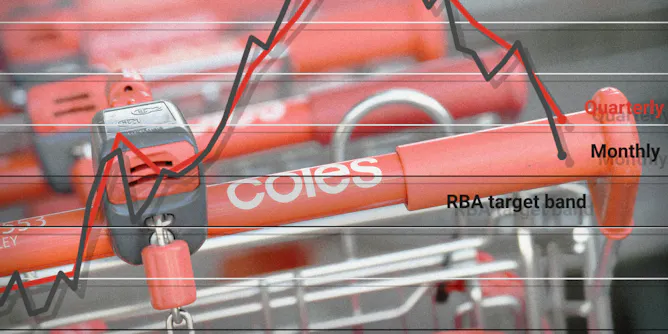
On one measure the latest inflation rate is just 3.4%, within spitting distance of the Reserve Bank’s 2–3% target.
Articles on Reserve Bank of Australia
Displaying 81 - 100 of 272 articles

Per person, we’re spending less this year – even on this year’s much hyped Black Friday sales. If that continues over summer and inflation stays low, a rate hike in February 2024 looks unlikely.
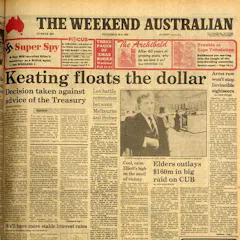
Up until December 9 1983, officials used to announce each morning how much the dollar was worth. Even bankers were shocked about letting the market set the price – but it’s served Australia well.
Average prices fell in October, driven down by dives in the price of petrol and overseas travel, and an increase in Commonwealth Rent assistance.

Sure, a good many of us don’t trust politicians – but surely politicians ought to trust politicians. History shows why they might one day need to overturn a Reserve Bank decision.

Treasurer Jim Chalmers has made the first ever Reserve Bank appointment from outside the country as part of an effort to fight ‘groupthink’.
Australian financial markets are now pointing to a close to zero chance of further rate rises – with a fair chance of a rate cut next year. That’s thanks to the latest news from the US and UK.
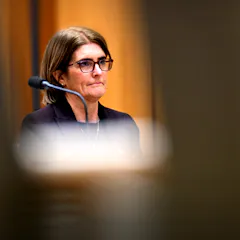
It’ll now be a frugal Christmas in many Australian homes. But there is a glimmer of good news: if we do tighten our belts, rates could start to come down by as early as the middle of next year.
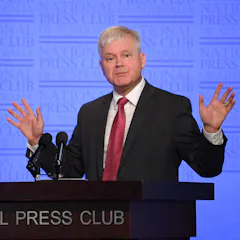
In this podcast, independent economist Chris Richardson joins The Conversation to discuss a rate rise, "sticky" inflation, the fall in the standard of living, and a bleak prospect as we go into 2024.
The governor’s remarks about the board “not hesitating” to raise rates further aren’t as clear cut as they seem.
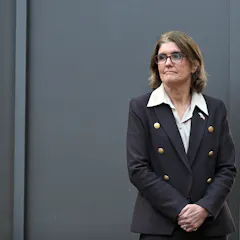
Petrol prices have pushed inflation up. At its next meeting, the Reserve Bank board is going to have to decide if that warrants an increase in interest rates.

30 years ago, Labor Prime Minister Paul Keating adopted an ambitious official target for Australian unemployment. The Albanese government just passed up a historic opportunity to go even further.

Monday’s white paper will define fuill employment more broadly than in the past as when “everyone who wants a job should be able to find one without searching for too long”.
Complaints that our recommendations would weaken the Reserve Bank governor ignore the fact that outsiders already control the board. We just want them do it better.
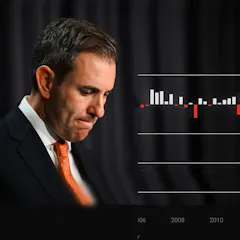
Six charts explain the Australian economy. Three of the most disturbing show living standards going backwards, productivity collapsing and household saving falling to a 15-year low.
Former Reserve Bank and Treasury chiefs have gone on to run Westpac, the National Australia Bank, the ANZ, and Macquarie Bank. It makes regulating those banks hard.
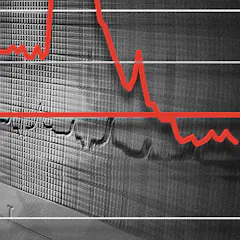
The Treasury and RBA believe Australia’s sustainable rate of unemployment is above 4%, but Australia’s leading economists think 3.75% is possible long-term, and have ideas about how to achieve it.

Australia has never clearly defined what “full employment” means. That’s about to change – and a more ambitious definition could help keep 150,000 or more Australians in work.
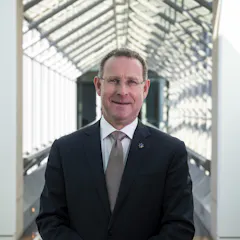
In this podcast, our guest is Andrew McKellar, CEO of the Australian Chamber of Commerce and Industry. He joins us to give a business take on the economy and relations with the Albanese Government
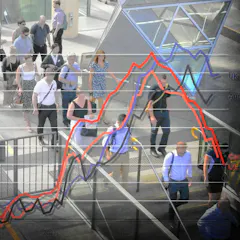
Even a week ago we couldn’t have predicted this. But after good news from the US, our Reserve Bank now has a chance to cement low unemployment while controlling inflation – without more rate rises.
Top contributors
-

Visiting Fellow, Crawford School of Public Policy, Australian National University
-
Scientia Professor of Economics, UNSW
-
Senior lecturer, Canberra School of Government, University of Canberra
-
Associate Professor, School of Economics, University of Sydney
-
Lecturer in Economics, Monash University
-
Professorial Fellow, University of Canberra
-
Professor, Warwick Business School, University of Warwick
-
Associate Professor, Research School of Economics, and Research Associate, Centre for Applied Macroeconomic Analysis, Australian National University
-
Professor of Economics, University of Canberra
-
Associate Professor, School of Economics, University of Sydney
-
Visiting Fellow, Macquarie University Applied Finance Centre, Macquarie University
-
Senior Lecturer in Economics, University of Sydney
-
Professor of Economics and Finance, Tasmanian School of Business and Economics, University of Tasmania
-
Higher Education Consultant, Monash University
-
Professor of Institutional Economics, RMIT University