

‘It dawned on me that I felt lonely’: how my research into friendship gave me a new perspective on my social life.
Articles on Research
Displaying 41 - 60 of 958 articles

Hasty adoption of AI may erode the scientific culture and human relationships that sustain rigorous research.

Canada must decide what kind of country it wants to be: One that generates new scientific knowledge, or one that waits for other nations’ discoveries.

Unstructured play – especially the kind that allows kids to test their limits – can help children become competent, independent adults.

Women make up one in three researchers worldwide, but they remain sidelined in scientific organisations.

Science itself isn’t ‘truth,’ but it is an activity with the goal of getting closer to the truth.

Australia spends less on research and development than most of the developed world, and our productivity growth is the lowest in decades.

Surveys have found that researchers studying UAPs can face pushback from mentors and colleagues, even from people who think it’s an important line of research.

The purportedly unique and local feel of coffee shops has instead been homogenized into a singular, palatable aesthetic.

Whether they’re famous composers or first-year art students, creators experience reputational costs when AI enters the mix.
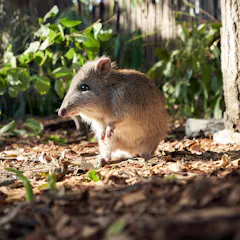
When feral cats are scarce, potoroos and bandicoots forage more freely, altering their behaviour and chances of survival.

Existing underwater fibre optic cables could help monitor tectonic movement on the ocean floor.

‘Green open access’ has existed for decades – and it’s not hard to get academics to use it more.

New research adds evidence to a common thesis offered after the end of the Cold War that globalization was making physical distance economically obsolete.

There’s a worry that AI will take away student voice and agency.

When you outsource romance, there’s a hidden emotional cost.

Nearly three-quarters of tourism professors are white, a recent analysis found, and nearly half are white men.

AI-mediated culture is already being filtered in ways that favor the familiar, the describable and the conventional.

More organizations are letting AI act on their behalf, but far fewer have mature governance to manage the consequences.
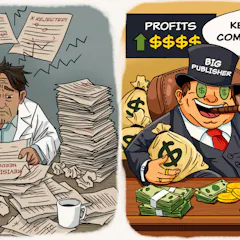
Academic publishing system often allows scientific errors to persist because it prioritises profit and prestige over timely correction.
Top contributors
-

Associate Professor (Law), Southern Cross University
-
Professor of Marketing, The Ohio State University
-
Cornelia H. Dudley Professor of Psychology, Knox College
-
Professor of Psychology, San Diego State University
-
Professor, Chemistry and Biochemistry, Laurentian University
-
Professor of Psychology, Dickinson College
-
Associate Professor, Researcher Development (EMCR), La Trobe University
-
Associate Professor, Khalifa University
-
Professor of Psychology, Michigan State University
-
Professor of Natural Philosophy in the Department of Physics, University of York
-
Senior Lecturer, School of Mathematics, Monash University
-
Previous Vice President of the Academy of Science of South Africa and DSI-NRF SARChI chair in Fungal Genomics, Professor in Genetics, University of Pretoria, University of Pretoria
-
Associate Professor of Government, American University
-
Associate Professor of Communication, Michigan State University
-
Director, Melbourne Institute of Applied Economic and Social Research, The University of Melbourne