
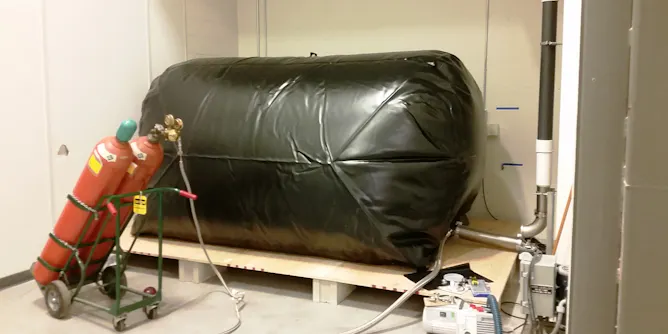
With the fourth significant shortage of helium in a decade continuing, companies and researchers are looking for alternative sources.
Articles on Research
Displaying 201 - 220 of 958 articles
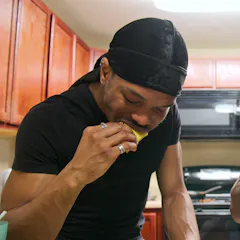
The new Netflix documentary follows identical twins as they adopt different diets. This is a great example of a twin study – a uniquely useful research tool in science.

Though they’re sometimes characterized as attention-addled homebodies, younger people see a real value in libraries − one that goes beyond books.

Researchers have made a fascinating observation: a polar bear used a diving hunting technique, never before reported, to capture large moulting snow geese.
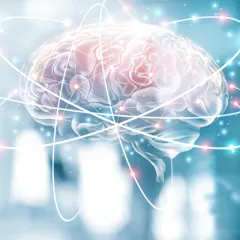
Montréal is home to one of the world’s largest brain banks, the Douglas-Bell Canada Brain Bank, where discoveries about different neurological and psychiatric diseases are made.

If scientists cannot freely conduct and communicate their work, the gap between evidence and policy widens, and that means Canada gets less effective laws and policies.

ChatGPT can explain key concepts and information that can help people make the most of their time locating, accessing and interpreting archives. But ChatGPT can also give false information.
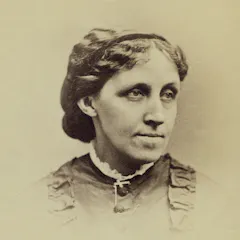
By disguising her name, Alcott could publish in less prestigious venues without worrying about tarnishing her literary reputation.

Translation involves more than just transferring words from one language to another. Better translations of study materials can improve both the diversity of study participants and research results.
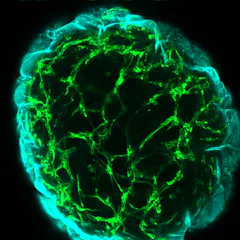
Organoids — clusters of specialized cells designed to mimic organs — enable researchers to study biological processes and the effects of drugs.
The project, spanning researchers across science and the humanities, looks at how ‘research assessment’ affects research in Australia.
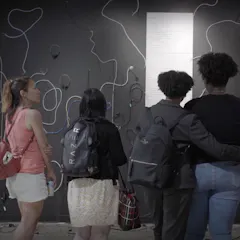
To inform university responses to online harassment affecting graduate students, artist-researchers created original artworks in response to interviews with their peers who experienced online hate.
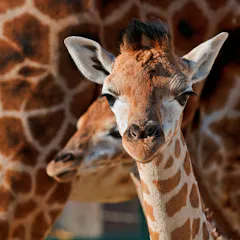
Giraffes are vulnerable to extinction, mainly due to habitat loss and killing for bushmeat markets. The good news is human actions can alleviate that danger.

246 scientists looked at the same data sets and drew very different conclusions.
Conversations about scientific research and technological innovations allow the public to build trust with experts, and understand the impacts on everyday lives.

The winners of the 2023 Nobel Prize in physiology or medicine made a discovery that helped create the COVID-19 vaccines. They couldn’t have anticipated the tremendous impact of their findings.

Canada’s partnership in the world’s largest radio telescope, located in South Africa and Australia, creates new opportunities for research, but the benefits go beyond astronomy.

Science works better when barriers to collaboration are removed, say experts.

COVID-19 radically shifted the way we work and learn. It presented an opportunity for institutions to rethink the future of higher education. But, what does this future look like?

Police-academic partnerships are key to the success of evidence-based policing. Growing support for coercive control legislation makes research collaboration all the more urgent.
Top contributors
-

Associate Professor (Law), Southern Cross University
-
Professor of Marketing, The Ohio State University
-
Cornelia H. Dudley Professor of Psychology, Knox College
-
Professor of Psychology, San Diego State University
-
Professor, Chemistry and Biochemistry, Laurentian University
-
Professor of Psychology, Dickinson College
-
Associate Professor, Researcher Development (EMCR), La Trobe University
-
Associate Professor, Khalifa University
-
Professor of Psychology, Michigan State University
-
Professor of Natural Philosophy in the Department of Physics, University of York
-
Senior Lecturer, School of Mathematics, Monash University
-
Previous Vice President of the Academy of Science of South Africa and DSI-NRF SARChI chair in Fungal Genomics, Professor in Genetics, University of Pretoria, University of Pretoria
-
Associate Professor of Government, American University
-
Associate Professor of Communication, Michigan State University
-
Director, Melbourne Institute of Applied Economic and Social Research, The University of Melbourne