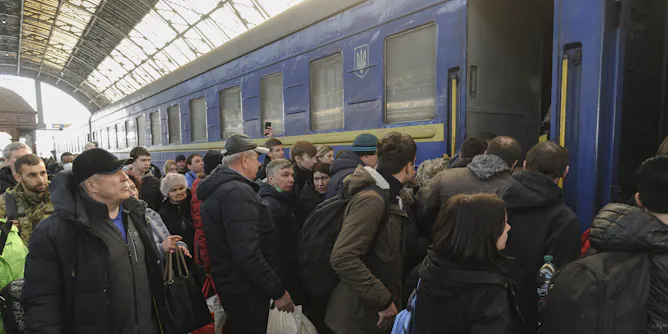
What can New Zealand do now to support Ukraine while avoiding unnecessary risk to its own citizens and interests?
Articles on Refugees
Displaying 321 - 340 of 1346 articles
Wealthy states sort people into hierarchies, keeping ‘unwanted people’ in their regions of origin while facilitating mobility for supposedly ideal migrants.
Daily life for many Ukrainians is dismal: hungry, cold and frightened, say friends of the author who are caught by the conflict.
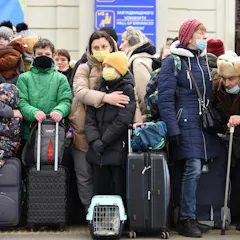
Homestays can be a life-changing experience for refugees and hosts.
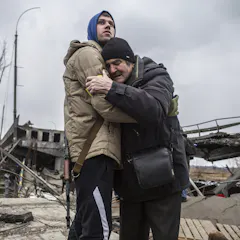
Classic literature is full of themes that speak to refugees’ experience today, from the Book of Exodus to ‘The Grapes of Wrath.’
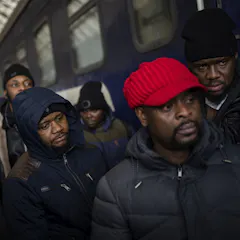
Ukraine’s history with the former Soviet Union and its current relationship with the European Union inform how refugees move across borders. While race plays a role, citizenship is also an important factor.
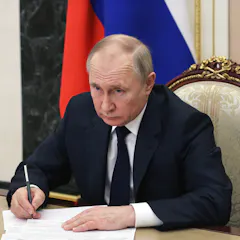
The Conversation’s weekly round-up of some of the best articles about the war in Ukraine.
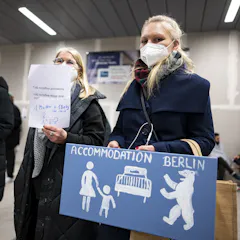
The Ukrainian crisis is probably the biggest crowdsourced humanitarian aid operation ever undertaken.

Plus, Russia’s history of using refugees from Ukraine as geopolitical tools. Listen to The Conversation Weekly.
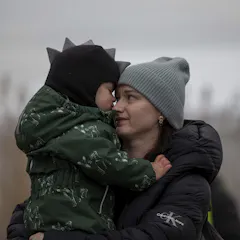
Children live through the same wars as adults. The effects of the Russian invasion of Ukraine on children will have long-lasting effects, and underscores the urgency of a peaceful resolution now.

Canada’s temporary protection measures to Ukrainians fleeing the war ensure they’re brought to safety faster. But will this kind of response become the preferred method for all future refugees?
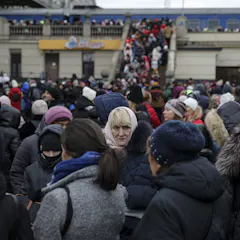
Instead of providing safe and legal routes to protection to people in grave danger, Home Secretary Priti Patel has announced a minor loosening of visa rules.
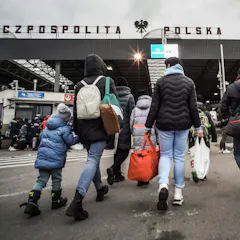
More than 2 million Ukrainians have fled the country since the Russian invasion. The EU has welcomed the refugees, but research shows that host communities may tire of the newcomers.
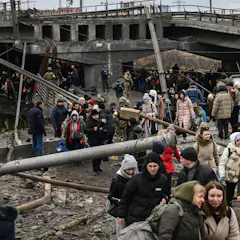
The welcome mat for refugees fleeing war-torn Ukraine stands in stark contrast to recent anti-immigrant policies targeting those from the Middle East, Latin America, Africa and Asia.
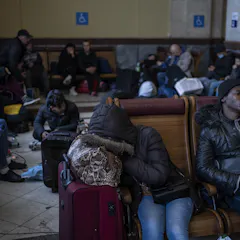
We must demand safety for all refugees, not just Ukrainian nationals.
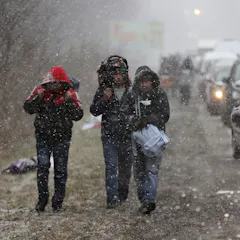
The intensifying conflict in the Ukraine has raised the issue of racism not only in Ukraine, but Europe. Three specific and related dimensions of racism are evident in this complex conflict.
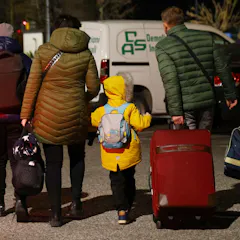
The European response to Ukrainian refugees shows a system working mostly as it should, but some people are still left behind.
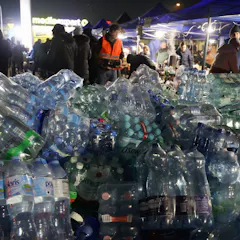
Money is a far more effective way of helping the hundreds of thousands of refugees than sending food or clothing.
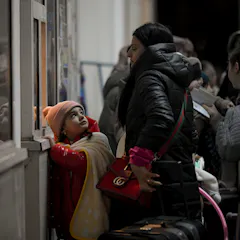
Europe’s need to support Ukrainian refugees could inhibit its ability to respond in Ukraine, allowing Vladimir Putin to consolidate his control of the Russian-speaking territories of Ukraine.
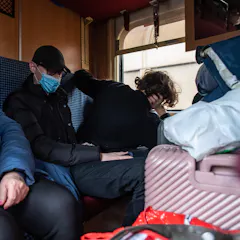
The conflict is already driving thousands of Ukrainians to leave their country and seek safety elsewhere.
Top contributors
-

Professorial Fellow, University of Canberra
-
Associate Professor, School of Law, Murdoch University
-
Lecturer and Senior Research Fellow at the South African Research Chair in International Law (SARCIL), University of Johannesburg
-
Professor in Human Rights and International Law, University of Newcastle
-
Scientia Professor and ARC Laureate Fellow, Kaldor Centre for International Refugee Law, UNSW
-
Adjunct professor, Adelaide University
-
Professor and Director, Kaldor Centre for International Refugee Law, UNSW Law & Justice, UNSW
-
Visiting professor, Harvard University
-
Senior Research Fellow, Kaldor Centre for International Refugee Law, UNSW
-
Visiting Research Fellow at the Centre for Peace and Security, Coventry University
-
Professor of International Migration and Forced Displacement and Director of the Institute for Research into International Migration and Superdiversity, University of Birmingham
-
Associate Professor of Law, Member of Deakin Cyber and the Centre for Law as Protection, Deakin University, Deakin University
-
Senior Research Fellow, Andrew & Renata Kaldor Centre for International Refugee Law, UNSW
-
Professor and Chair: Mental Health Nursing, Adelaide University
-
Professor of Social Economics, UTS Business School, University of Technology Sydney