

Hard bargaining still needs to happen before the country has a definitive sense of how executive accountability will be enforced under a unity government.
Articles on Raymond Zondo
Displaying all articles
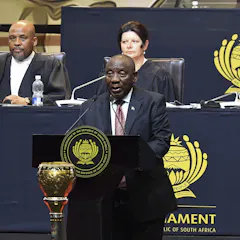
Elite political culture matters, especially in the context of a unity government. To succeed, party leaders must embrace the politics of collaboration built on trust.

The constitution and the principle of constitutionalism will continue to be politically contested territory. So far it’s held in South Africa.

The Zondo Commission was globally unique in scope and scale. The book selects and explains its key findings and recommendations.
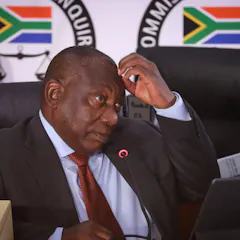
Rebuilding South Africa after the devastation of state capture would not be possible without the work of the Zondo commission.
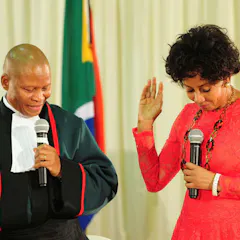
The rule of law embodies the rallying cry for the fair and democratic exercise of public power, buttressed by law and fundamental rights.
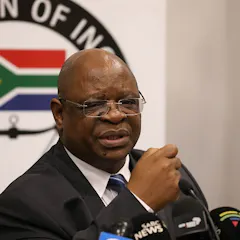
The inquiry’s findings could be a defining moment for South Africa, but only if the work of the Commission leads to concrete action and systemic change.
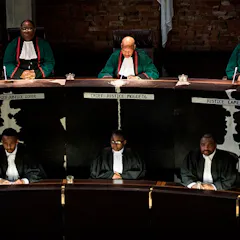
The Chief Justice needs to have a single-minded and unyielding commitment to constitutional democracy and constitutional values, including social justice.
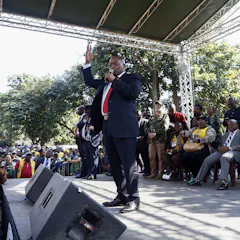
The former president is in a corner and largely isolated. His only option is to stir the pot so much that it gives him some kind of bargaining power.

The Constitutional Court described Zuma’s lack of cooperation with the commission as “reprehensible”.
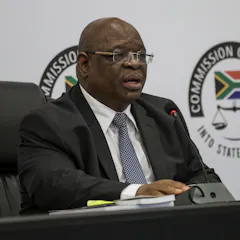
Justice Raymond Zondo found that the test for recusal had not been met.

The dilemma for Zuma and his legal team is this: by putting him on the witness stand, there is a risk that he would be found wanting, especially in terms of the detail of any matter.
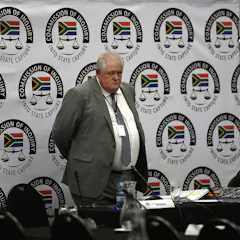
The state capture inquiry is a remarkable political as well as legal event.

Former South African president Jacob Zuma’s proposed prosecution is a welcome reaffirmation of the principle that all are equal before the law.
Top contributors
-

Emeritus Associate Professor in Public Law, UCT. Visiting Adjunct Professor, WITS School of Governance; Director, Africa Programme, University of Cambridge Institute for Sustainability Leadership, University of Cambridge
-
Associate Professor in Public Law, University of Cape Town
-
Professor Emeritus of Public Law, University of Cape Town
-
Lecturer in Politics and International Relations, University of Leicester
-
Professor in Political Science, University of South Africa
-
Political Scientist, University of the Western Cape
-
Chief Research Specialist in Democracy and Citizenship at the Human Science Research Council and a Research Fellow Centre for African Studies, University of the Free State