
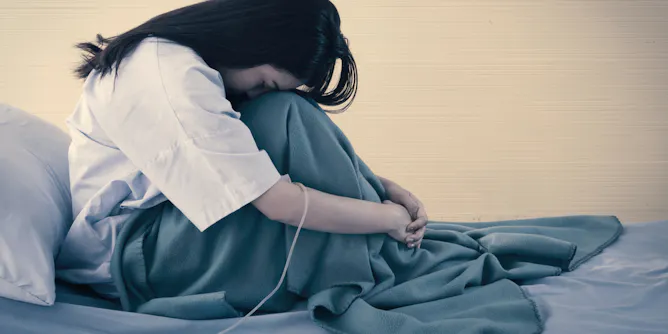
Australians are more likely to receive treatment against their will if they are born overseas, speak a language other than English or are unemployed.
Articles on Psychiatric hospitals
Displaying all articles
Rather than asking ‘who is at risk?’ of suicide we should also ask ‘when is a person at risk?’ Our preliminary research shows this has promise.
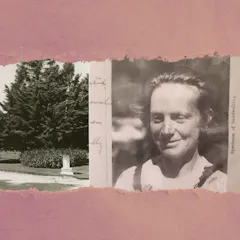
Alison Watt’s grandmother was diagnosed with ‘puerperal insanity’ and institutionalised not long after giving birth to her father. He didn’t meet her – or know she was alive – until his early 20s.
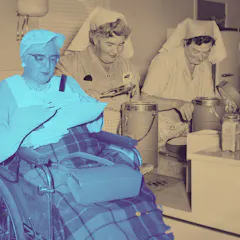
When Doris Taylor became paralysed, her mother was advised to put her in a Home for Incurables. Instead, Doris helped elect a reforming South Australian premier and founded a national institution.
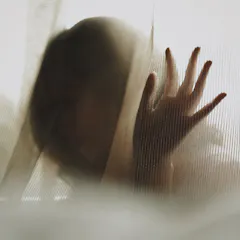
Tara Calaby’s novel peeps into the interior lives of women in a 19th-century asylum and uses her historical imagination to generate new knowledge.

Why was Susanna Kaysen really hospitalised? Her memoir Girl, Interrupted turns 30 this year. It investigates whether she was ‘mad’, or medicalised for a ‘chaotic’ life that defied gender norms.

Set in a mental health facility, Wakefield shows the advantages of television over feature film, giving scope to explore mental health stories without resorting to caricatures.
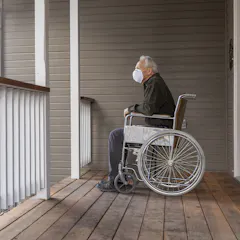
A neuropsychologist who works in these skilled care facilities describes the changing populations. With COVID-19, many nursing homes are now struggling to stay in business.
Top contributors
-

Professor of History, School of Humanities, Creative Industries and Social Sciences, University of Newcastle
-
ARC Research Fellow, Adelaide University
-
Senior Lecturer in Screen Studies, University of New England
-
Research Fellow, School of Psychological Science, The University of Western Australia
-
Medical doctor and PhD candidate studying involuntary psychiatric treatment, School of Psychiatry, UNSW
-
Adjunct Lecturer, Faculty of Health, Southern Cross University
-
Pro Vice-Chancellor (Research), The University of Western Australia
-
Director, Urban School Counseling Graduate Program, Youngstown State University