
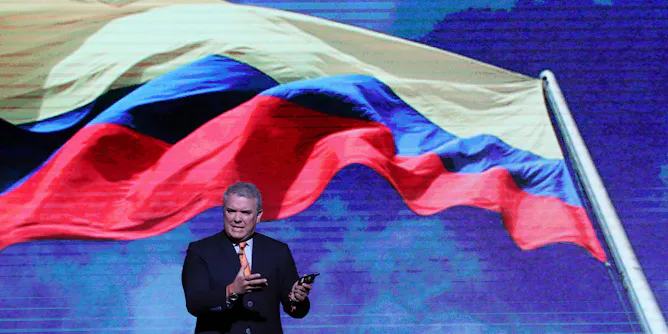
Post-conflict processes are often slowed down or even halted by fear. Can Colombia buck the trend?
Articles on Post-conflict
Displaying 21 - 40 of 41 articles
Some of the crucial mechanisms meant to deliver peace in Colombia have yet to be set up.
It seems the culprits in a “cash-for-kills” scheme that claimed thousands of lives might find a way to wriggle out of the peace process.
Survey data shows that Iraqis of all sectarian stripes agree on what’s wrong with their country.
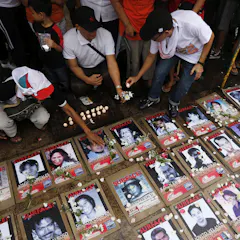
Establishing what happened to lost relatives and brutalised populations is a moral imperative.
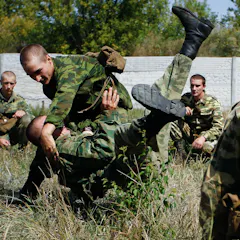
Ukraine is implementing a deal to placate its restive separatists – but other countries have had trouble with similar strategies.
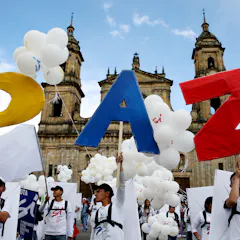
Colombia’s deal with the FARC means third parties implicated in international crimes could at last face justice.
How are we to understand why people in different parts of the world continue to demand and participate in transitional justice institutions and processes in spite of the shortcomings?
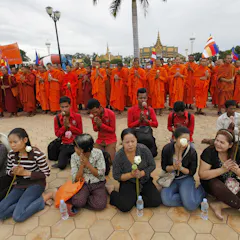
Once one of the world’s very poorest countries, Cambodia has been through a remarkable two and a half decades of growth and development.
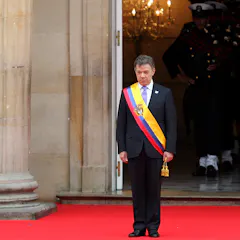
The voters may have said no to the deal struck with the FARC, but Juan Manuel Santos and his fellow negotiators intend to keep going.
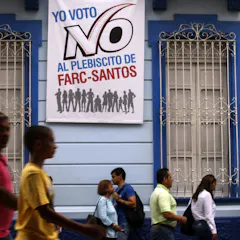
Given their chance to ratify a deal to end a 60-year war, less than 40% of Colombians voted – and they threw it out.
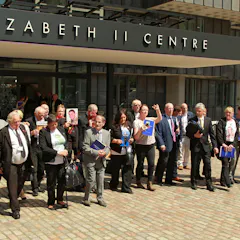
Compared with other attempts to mend deep wounds after wars and conflicts, the Chilcot Report falls depressingly short.
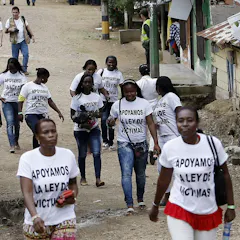
Colombia is pursuing a bold programme to give people back land seized by paramilitaries. But its beneficiaries don’t feel safe.
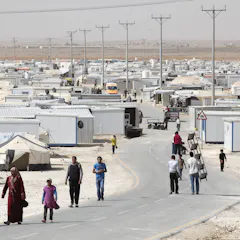
Calls to stop division between emergency and development aid will be heard at UN’s first ever humanitarian summit.
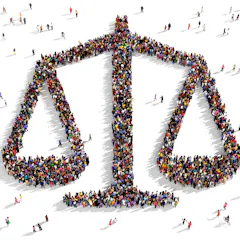
Indonesia needs a combination of retributive and restorative justice for the reconciliation of the 1965-66 anti-communist killings.
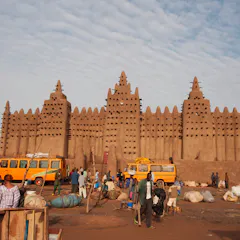
The international conference for the economic recovery of Mali resulted in promises of substantial aid, but the areas targeted fail to address the country’s real needs.
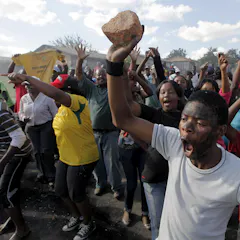
The advent of democracy in South Africa in 1994 is often hailed as peaceful and smooth. But, there are lingering problems. Dissent over unmet expectations has resulted in an increase in protests.
Return of the Jedi saw Emperor Palpatine’s regime brought crashing down – but the hard peace-building work to save the galaxy from a relapse was clearly never done.
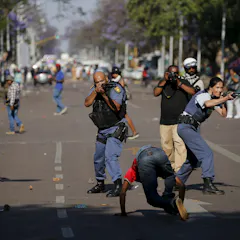
South African students have won a pyrrhic victory in their battle for free university education. Will students and their institutions ever be able to interact without violent conflict again?
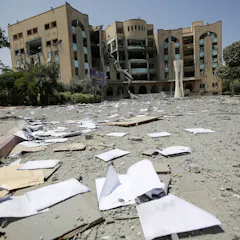
Quality higher education is crucial for recovery, peace-building, economic development and stronger governance in post-conflict societies.
Top contributors
-

Professor, Lancaster Law School, Lancaster University
-
Faculty Lecturer, Johns Hopkins University
-
Research fellow at the International Development Department, University of Birmingham
-
Économiste, Chargé d'enseignement, Sciences Po
-
Professor and Chair of Gender and Women's Same-Sex Relations Crossculturally, University of Amsterdam
-
Visiting Scholar, Weatherhead Center for International Affairs, Harvard University; Director of Studies at the Changing Character of War Centre, and Senior Research Fellow, Dept. of Politics and International Relations, University of Oxford
-
Assistant researcher, University of Sydney
-
Researcher, Nelson Mandela University
-
Professor and Head of Department of Political and Conflict Studies, Nelson Mandela University
-
Professor, Department of Politics, University of York
-
Associate Professor in Conflict Resolution and Peace Building, Durham University
-
Reader in Human Rights, Goldsmiths, University of London
-
Professor and Chair, Department of Journalism, Stellenbosch University
-
Teaching Fellow in Defence, Development and Diplomacy, Durham University
-