

Cuban doctors have specific expertise in dealing with diseases like malaria which remains a major problem in Kenya.
Articles on Post-apartheid South Africa
Displaying 21 - 30 of 30 articles
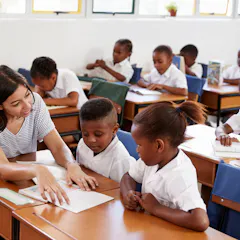
Learners benefit from being exposed to multiple and unfamiliar teacher identities.

South Africa has tended to prioritise race relations over gender relations since formal apartheid ended.
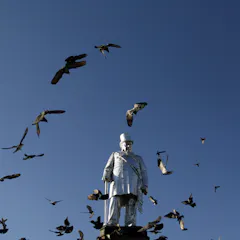
Afrikaners in post-apartheid South Africa struggle with a historical sense of inferiority that reinforces their whiteness.
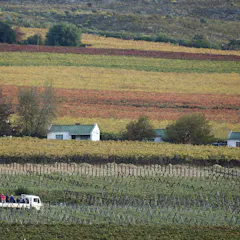
There is very little clarity as to who owns what land in South Africa. A lack of reliable data and statistics doesn’t help.
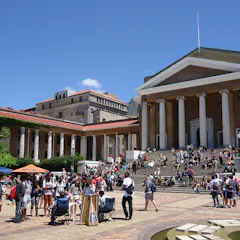
Students experience intense feelings of discomfort, confusion and even embarrassment at being classified as “different” and an “anomaly” alongside the norm of white academic success.
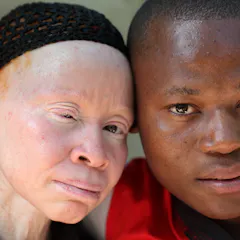
People with albinism tend to identify with the black rather than the white community. Their physical differences, though, mean they don’t fit into either race group.

Democracy in South Africa is meaningless if it doesn’t improve the lives of the people. To do this, the governing ANC must be led by conscientious, competent and interested leaders.
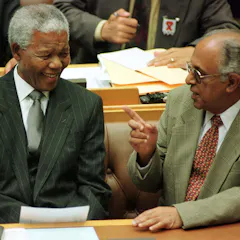
South African struggle stalwart Ahmed Kathrada believed in non-racialism to his core, even as others around him began to argue for an Africanist approach.

A pioneering documentary about South African punks, Fokofpolisiekar, doesn’t only focus on the band, but also illuminates the evolution of the documentary form.
Top contributors
-

Professor, Sociology, University of the Western Cape, Nelson Mandela University
-
Professor of Philosophy of Education, Stellenbosch University
-
Honorary research affiliate, Centre of Criminology, University of Cape Town
-
Senior lecturer, School of Governance, University of the Witwatersrand
-
Acting Director: Institute for Pan-African Thought & Conversation, University of Johannesburg
-
Professor, Institute for Poverty, Land and Agrarian Studies, University of the Western Cape
-
Public Health Researcher, Anglia Ruskin University
-
Postdoctoral fellow, SARChi Chair in Gender politics, Stellenbosch University
-
Visiting Professor of Social Work, University of Johannesburg
-
Professor of Urban Governance, University of the Witwatersrand
-
Professor in Africana & Latin American Studies
-
Associate Professor: Ali Mazrui Centre for Higher Education Studies, University of Johannesburg
-
Researcher, Gauteng City-Region Observatory
-
Director in the Centre for Excellence in Learning and Teaching (CELT), Durban University of Technology
-
Emeritus Professor, Poverty, Land and Agrarian Studies, University of the Western Cape