
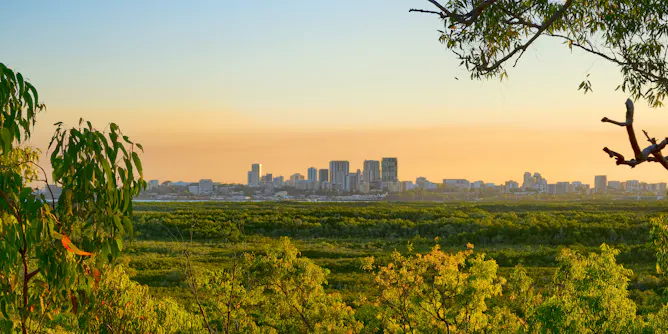
The government wants more people to live in Australia’s north. So we looked at three scenarios to increase the population and the results don’t always look good for the north.
Articles on Population growth
Displaying 61 - 80 of 122 articles

Given Africa’s projected population growth, management of its environment must be a global priority
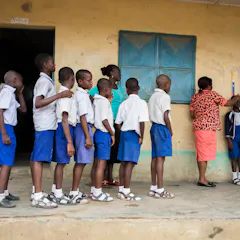
In addition to being poorly trained, Nigeria’s school teachers are being outnumbered by a growing population.

The inner cities of Australia’s major state capitals are failing to meet the needs of families in terms of space, amenities and affordability.
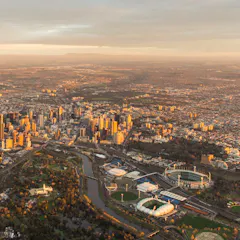
State and local governments can’t do much about the rapid population growth in Melbourne, but they can take steps to reduce the costs of growing disparities between the outer suburbs and inner city.

Decision making on water infrastructure in peri-urban areas is challenging. But lessons have been learnt from a water project in Mozambique.

When President Trump declared the US full, little did he know he was wading into a centuries-old economic debate.

Population growth has pros and cons, and the Morrison government’s plan is less about a change in immigration numbers than about increasing the benefits and minimising the costs.
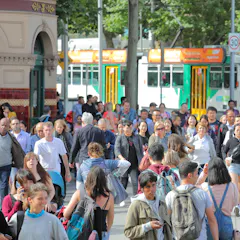
Capital city populations are growing twice as fast as the rest of Australia, because of the employment and business opportunities and lifestyle on offer to both new migrants and long-term residents.

Cutting migration to Australia’s biggest cities would do nothing to ease congestion in those cities and could make it worse.

Efforts by governments to redirect population growth to regional Australia have never worked. Even if such policies could be made to work, they probably wouldn’t be worth the costs.
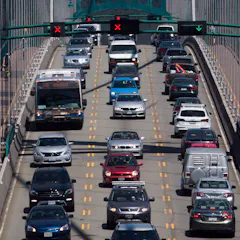
It’s easy to over-estimate crowding and traffic in highly visible downtown cores and underestimate the vast growth happening in the suburban edges of our metropolitan regions.
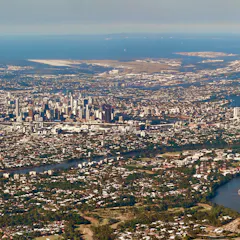
Urban growth has had much less impact on commuting distances and times than media reports would suggest. The explanations include jobs being widely dispersed and residents’ adaptable decision-making.
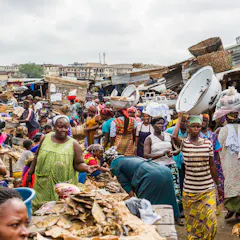
Empowered women make millions of decisions that add up to a better demographic situation for themselves, their children and for Africa.

Many people think a population policy is about control – like the one-child policy in China, for instance. But modern population policies are about population-well-being.
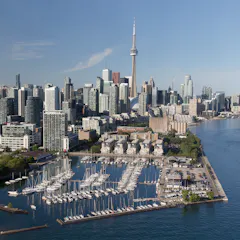
As Toronto hurtles towards its population dense future, the making of significant green communities for its waterfront needs to be urgently considered.
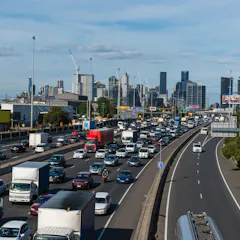
In the 70s, Whitlam tried to build new, big cities. But this was too costly. Now the most viable solution for Australia’s population woes is to make existing cities bigger.

Planners have long tried to determine the ideal city size, and ideas have evolved with changing circumstances. But a good city depends more on the way it’s managed than on how many people it holds.

August 1, 2018 is ‘Earth Overshoot Day,’ a date coined by the nonprofit Global Footprint Network to publicize overuse of Earth’s resources. But their estimates actually understate the problem.

Politicians across the spectrum have at some point targeted immigration as a contributor to out-of-control population growth. But would reducing, or banning, immigration take pressure off cities?
Top contributors
-

Honorary Professor of Demography, Macquarie University
-
Professor of Demography and Social Statistics., Obafemi Awolowo University
-
Demographer, POLIS Centre for Social Policy Research, Australian National University
-
Honorary Associate Professor in Planning, University of Queensland, University of Sydney
-
Professor of population and development studies, University of Kinshasa
-
Distinguished Professor, College of Humanities and Social Sciences, Te Kunenga ki Pūrehuroa – Massey University
-
Head of Urbanisation and Wellbeing, African Population and Health Research Center, African Population and Health Research Center
-
Dornsife Endowed Professor of Global Health, Drexel University
-
Professor of Economics and Public Policy, ANU College of Arts and Social Sciences, Australian National University
-
Emeritus professor, Monash University
-
Professor of International Planning, Centre for Urban Research, RMIT University
-
Deputy Director, Australian Urban Design Research Centre, The University of Western Australia
-
Professor in Demography, Northern Institute, Charles Darwin University
-
Principal Research Fellow, Charles Darwin University
-
Post-Doctoral Associate, University of Minnesota