
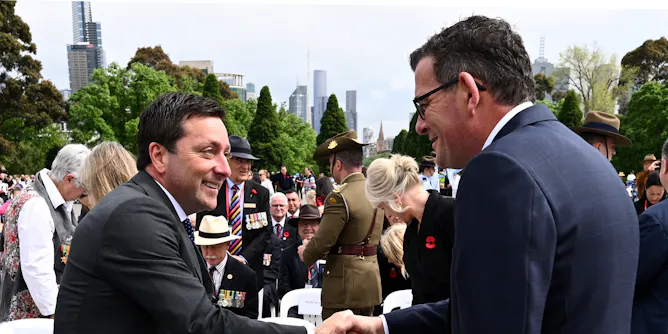
Latest polls show a narrowing lead for the ALP in the Victorian election, while the upper house voting system continues to attract criticism.
Articles on Polls
Displaying 41 - 60 of 192 articles
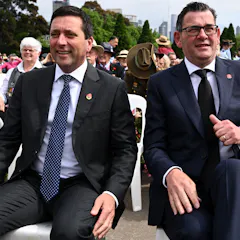
With 12 days to go until the Victorian state election, the Labor government appears headed for re-election.
Four weeks out from the Victorian state election, Labor still looks likely to retain government, although with a swing against it.
What happens if the public loses faith in fair elections? That’s the question being asked as candidates influenced by Donald Trump aim to become the chief election officials in their states.
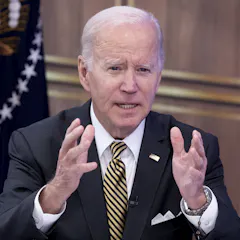
With less than a month until the US midterms, the economy may play the decisive role in the outcome- and that may be difficult for Biden and the Democrats.
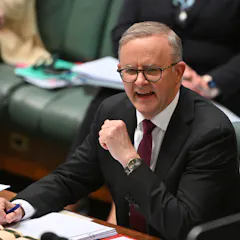
Latest polls continue to show strong support for the Albanese government.

A recent NSW Resolve poll gave Labor 43% of the primary vote, and the Coalition just 30%, though the major party leaders were tied for preferred premier.
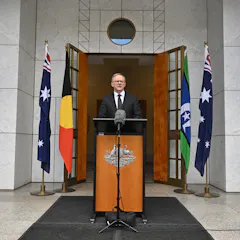
While there is some tapering off of support for the Albanese government since the 2022 election, it is still comfortably ahead of the Coalition.

Anthony Albanese extends his lead over Peter Dutton as preferred prime minister as the government’s ‘honeymoon’ period continues.
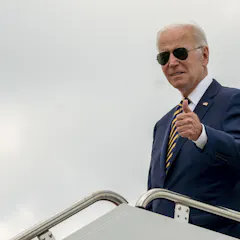
The Supreme Court’s decision to strike down the landmark Roe v Wade ruling on abortion is having big political ramifications - and favouring the Democrats.
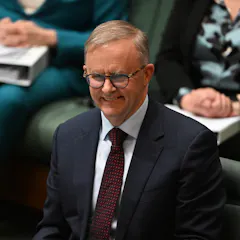
The latest Newspoll show Albanese’s net approval ratings are the highest for a prime minister since early in Malcolm Turnbull’s tenure.
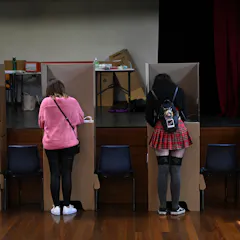
Census and election data show the shift in demographics of the major parties’ voting bases.
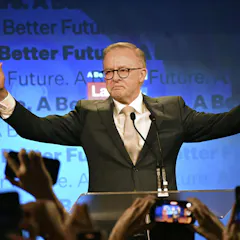
While none of the major polls were entirely accurate, Resolve was closest to the mark; meanwhile, seat polls continue to be highly inaccurate.

The final polls ahead of the federal election on May 21 give Labor a 53-47 two-party preferred leave - if that is repeated on May 21, Labor will win government.
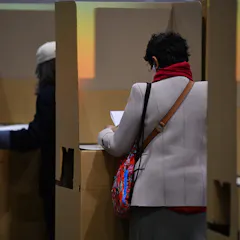
There have been few if any elections when, in the last week, it has been the ‘uncommitted’ voters who have turned things around.
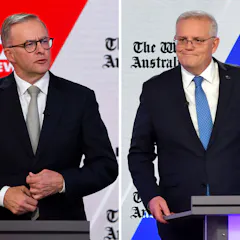
Late polls show a tightening on two-party preferred votes, but a slew of seat polls reveal just how close a lot of the contests will be on May 21.
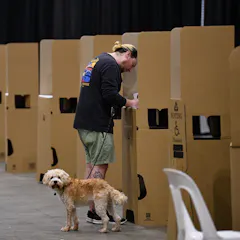
Labor needs substantially more than 50% of the two-party preferred vote – 51.8% according to the pendulum – to win the majority of seats, 76. This equates to a swing of 3.3 percentage points.

With early voting about to begin, Labor has widened its margin in polls to a strong winning position.
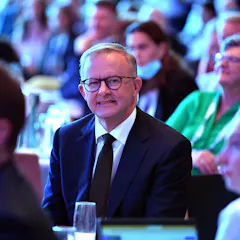
A slew of polls show only a modest lift for the government after the budget, and Labor favoured to win the election.
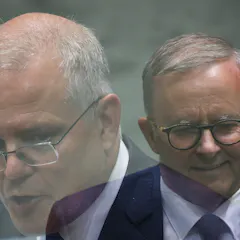
Post-budget polls show a small gain for the Coalition on two-party preferred figures, but still point to a Labor victory is replicated on election day.
Top contributors
-

Election Analyst (Psephologist) at The Conversation; and Honorary Associate, School of Mathematics and Statistics, The University of Melbourne
-
Professor of Economics and Finance. Director of the Betting Research Unit and the Political Forecasting Unit at Nottingham Business School, Nottingham Trent University
-
Professor, Department of Government, University of Essex
-
Professor of Politics, University of Strathclyde and Senior Research Fellow, National Centre for Social Research
-
Research Professor at the Center for Political Studies, University of Michigan
-
Professorial Fellow, University of Canberra
-
Emeritus Professor of Politics and International Relations, Macquarie University
-
Professor of Political Science, LaGrange College
-
Senior Research Fellow, Centre for Advancing Journalism and Information Integrity, The University of Melbourne
-
Senior Project Manager, Murdoch University
-
PhD Candidate, The University of Western Australia
-
Adjunct Research Fellow; Journalist, University of Notre Dame Australia
-
Senior Lecturer, School of Political and Social Inquiry, Monash University
-
Associate Professor in American Politics and Foreign Policy, US Studies Centre, University of Sydney
-
Professor of Geography, University of Bristol