
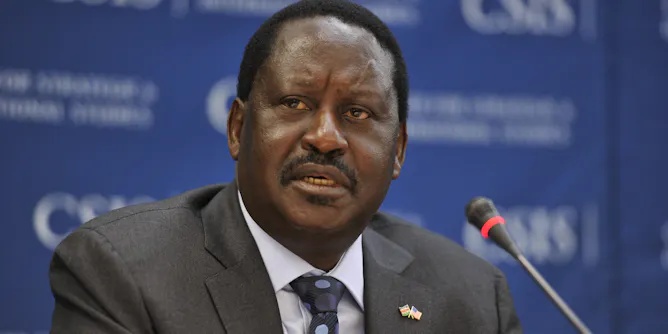
Odinga escaped all attempts by his detractors to reduce him to an ethnic leader.
Articles on Politics of ethnicity
Displaying all articles

In 2003, Rwanda adopted a policy of ethnic non-recognition. However, for 100 days in a year, it centres ethnicity in the country’s psyche.

Universal schemes aimed at classifying populations by ‘race’ or ‘ethnicity’ can force us into a game of competing for better positions within a racial hierarchy.

The idea of what it means to be South Sudanese is not universally accepted in the young nation.
On average, countries that adopt ethnic recognition experience less violence, more economic vitality, and more democratic politics.
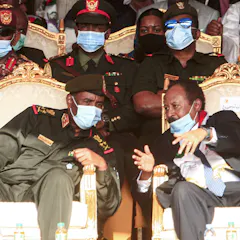
The transitional government has achieved a monumental milestone, but peace agreements in Sudan have been known to fall apart quickly.
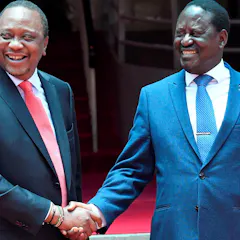
The Building Bridges Initiative is best understood by recognising that Kenyan politics is fundamentally shaped by competition between political elites and their ethnic groups.
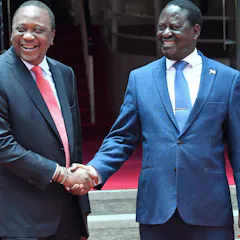
Even in the most tense and dangerous of moments, the elite has found a way to come back together.
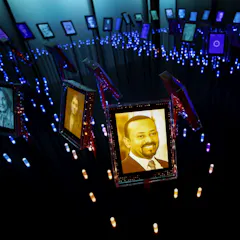
The prime minister may have won the Nobel Peace Prize but he has failed to quell the violence in his own backyard
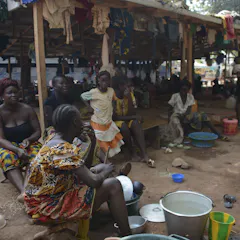
The volatile conditions in the Central African Republic make the administration of justice difficult.

One way to diffuse the tension when Kenyans choose a head of state is to take that decision out of their hands. This could help achieve ethnic cohesion.
Top contributors
-

Research Professor, Institute for Development Studies (IDS), University of Nairobi
-
Associate Fellow, SMC University
-
Visiting Fellow, Coral Bell School of Asia Pacific Affairs, Australian National University
-
Researcher, Stockholm International Peace Research Institute
-
Senior Lecturer of Political Science, Georgia Gwinnett College
-
Professor of Democracy, University of Birmingham
-
Associate Professor of International Studies, University of Nottingham
-
Professor of International Education and Politics, New York University
-
Associate Professor of Politics, New York University
-
Professor of Comparative Politics, University of Warwick
-
DPhil Candidate, Department of Politics and International Relations, University of Oxford
-
Head of Research Programme, Council for the Development of Social Science Research in Africa
-
International Relations Scholar, University of the Witwatersrand