

Forget the “summer slide” here’s how you can help your child learn more over the summer holidays.
Articles on Parents
Displaying 201 - 220 of 342 articles

Estimating parents’ capacity to contribute to their children’s schooling is both vital and politically sensitive. Schools with well-off parents get much less funding from government.

In this professor’s class, there are no calculators. Instead, students learn advanced math by talking, drawing pictures, playing with beach balls – and knitting.

Encouraging and supporting failure can make your child more resilient, better able to cope and help them grow.

The number of UK babies being born to surrogate mothers has risen by 255% in the past six years.

The number of births in the US is down 2 percent. That pops the country’s ‘fertility bubble’ – and brings numbers closer in line with peer countries.

Babies would rather listen to each other than to their parents’ babytalk, according to new research.

Sure Start centres are shutting or becoming ‘hubs’, but will they still provide the services which local families value and need?
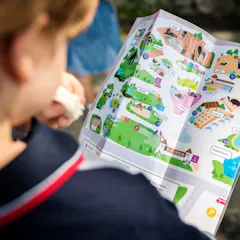
Early STEM skills are as important as early literacy skills. Parents can help their preschoolers develop STEM skills by working these simple techniques into everyday activities.

Parents only want the best for their children, but caring for the environment doesn’t happen overnight.

Children feel worried or nervous in a new situation if they think something bad might happen or if they feel they won’t be able to handle the situation.

Parental views have a big impact on the decisions that children make - so let’s help mums and dads support their daughters in STEM careers.

Teaching your kids core principles about sexuality and consent early can help them navigate the gray areas of adulthood.
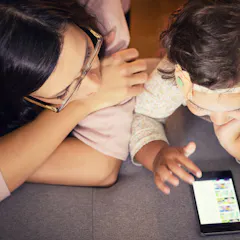
Touchscreen technologies have made it easy for children as young as four to go online. Here are some things to teach them about how to be safe on the internet.

A picky eater need not ruin dinner and drive parents crazy. Two nutrition experts offer simple strategies for happier and healthier family mealtimes.

Negative experiences in mainstream schools have harmful long-term effects on pupils with autism spectrum conditions.

From collecting bugs to using math apps, there are many ways parents can engage in STEM activities with their kids to support their learning.

Parents killing their children is uncommon, but there are some risk factors around the crime such as mental illness, previous abuse and domestic violence.

A new psychological intervention can help any parents - even those crippled by fear and self-blame - to become powerful recovery coaches to children with eating disorders.

Inequality across the domestic sphere – housework and parenting – jeopardises relationship quality.
Top contributors
-

Professor, Canada Research Chair in Determinants of Child Development, Owerko Centre at the Alberta Children’s Hospital Research Institute, University of Calgary
-
Senior Lecturer in Education, Queensland University of Technology
-
Professor of Child Public Health, Swansea University
-
Adjunct Professor, School of Nursing and Midwifery, Western Sydney University
-
Assistant Professor of Sociology, University of South Carolina
-
Associate Professor Leeds University Business School, University of Leeds
-
Lecturer, School of Education, Edith Cowan University
-
Professor of Educational Inclusion, Newcastle University
-
Emeritus professor of children's literature, University of Canberra
-
Lecturer in Educational Leadership and Management, University of Bath
-
School Education Program Director, Grattan Institute
-
Professor in Child Health Literacy, Edge Hill University
-
Senior Lecturer, School of Early Childhood and Inclusive Education, Queensland University of Technology
-
Senior Lecturer in Early Childhood Studies, Charles Sturt University
-
Honorary Senior Fellow, The University of Melbourne