
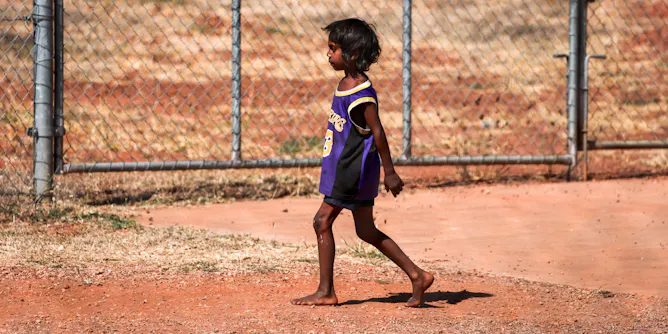
Media has reported up to 15 children have been living unattended in a squalid house in WA’s Pilbara. While the danger didn’t start overnight, the fixes can.
Articles on Out of home care
Displaying 1 - 20 of 28 articles

The 16-volume royal commission report, to be made public tomorrow, will show beyond doubt how state policies and institutions have been guilty of enabling abuse. Change has to begin immediately.
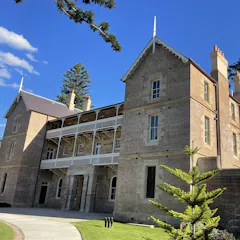
Built in 1821 to house and provide productive employment for the New South Wales colony’s growing population of female convicts, the Parramatta Female Factory was also the site of countless horrors.

New research shows keeping First Nations families together is better for the children’s wellbeing. How can First Nations families be better supported to achieve this?
Rather than policing or separating families, a new collaborative movement born in the US seeks to find better ways to support children, families and communities.
The new report calls for funding and support for Aboriginal community controlled organisations. They are best placed to lead reform and to make decisions about the wellbeing of Aboriginal and Torres Strait Islander children.
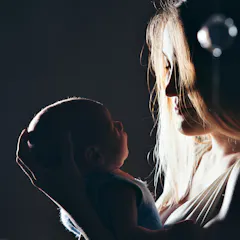
We surveyed 232 foster and kinship carers who had provided care to a baby in out-of-home care sometime in the last five years. Many were not well supported to care for babies.
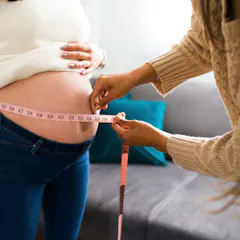
First Nations women and their newborns are considered high risk due to fatality rates and access to care. Research shows First Nations-led culturally safe healthcare could prevent further deaths.
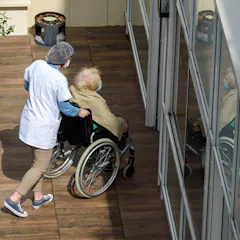
Only a fraction of aged care homes currently have staffing levels above the new minimum ratios that will be mandatory from next year.
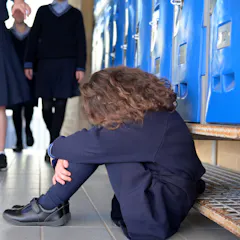
Attendance at school is crucial to improving educational outcomes for students. Unfortunately, children in out-of-home care face myriad challenges when it comes to attending school every day.
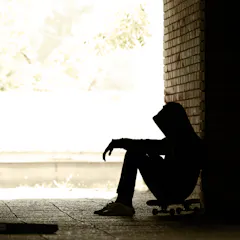
Most exit the out-of-home care system at 18, or younger, without ongoing support.

Families need support to care for their children safely, rather than having their children removed.
A new bill in NSW seeks to reduce First Nations children in out-of-home care. Before the bill can become law, it must pass the lower house.
As we edge closer to another anniversary of Kevin Rudd’s National Apology to the Stolen Generations, the number of First Nations children in out-of-home has increased.
Child protection notification processes in Australia have a history of disproportionately targeting First Nations families.
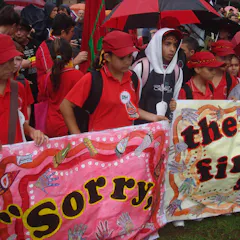
Recently, the Commonwealth government created a redress scheme to compensate Stolen Generations survivors. But more needs to be done to address the trauma.
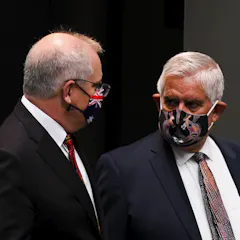
The government recently announced a new reparations scheme for Stolen Generations survivors. However, these survivors are only a fraction of the Indigenous children separated from their families.
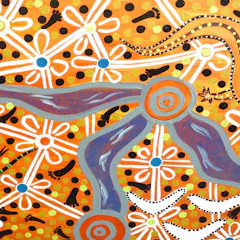
Pandemic-induced lockdowns have brought up challenges for children in out-of-home care and their carers. However, Kinship care provided unexpected positives for Aboriginal elders and their families.
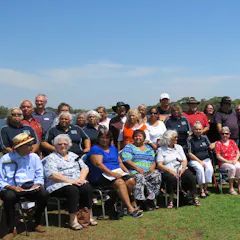
We need to stop taking Aboriginal and Torres Strait Islander children out of their homes and listen to elders instead.
New research suggests that 20% of existing foster carer households may be affected in some way by the virus, and that we have a unique opportunity to support vulnerable children in the months ahead.
Top contributors
-

Director, Kath McFarlane Consulting & Adjunct Associate Professor, The Kirby Institute, UNSW
-
Deputy Director: Australian Centre for Child Protection, Adelaide University
-
Senior Research Fellow, Co-Head, Aboriginal Health and Wellbeing, The Kids Research Institute Australia
-
Associate professor, Jumbunna Insitute for Indigenous Education and Research, University of Technology Sydney
-
Aboriginal Enterprise Fellow, Australian Centre for Child Protection, Adelaide University
-
Professor & Director, Institute of Child Protection Studies, Australian Catholic University
-
Professor Indigenous Health Equity, The University of Melbourne
-
Senior Research Fellow in Social Policy and Social Work, UNSW
-
Associate Professor in Political Theory, University of Auckland, Waipapa Taumata Rau
-
ARC Research Fellow in Indigenous Health, Disability and Community Development, University of Sydney
-
Sharon Bessell is a Friend of The Conversation.
Professor of Public Policy, Crawford School of Public Policy, Australian National University
-
Senior lecturer, Queensland University of Technology
-
Honorary Associate Professor, The University of Queensland
-
Professor and Director, Centre for Research in Educational and Social Inclusion, Adelaide University
-
Associate Professor of Accounting, University of Technology Sydney