
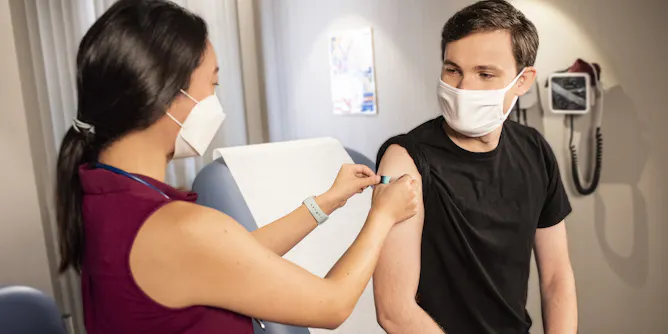
From February 20, adults who haven’t had a COVID infection or COVID vaccine dose in the past six months are eligible for a booster, irrespective of how many previous doses they’ve had. So why get one?
Articles on Omicron transmission
Displaying all articles
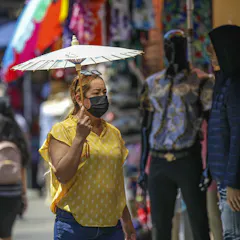
Face masks are still an effective way to help stop the spread of the BA.5 subvariant.

Imagine if every meal you ate included food previously chewed by someone else. That’s what’s happening to the air we breathe in shared indoor spaces.

The plans to keep schools open through the wave of Omicron infections fail to take into account the particular challenges of staffing rural and remote schools.
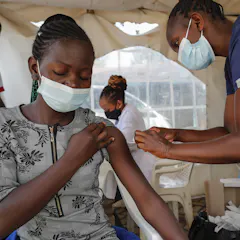
Emerging evidence suggests the highly infectious Omicron variant has the ability to escape the protection two vaccine doses offer.

We can’t say whether longer Omicron survivability on surfaces relates to a greater risk of infection.

The arrival of the highly infectious Omicron variant has changed the COVID landscape in Australia. We asked 5 experts whether it’s time to rethink vaccine mandates for dining, fitness and events.

Plus, is the human emotional response to music innate or is it shaped by a person’s culture? Listen to The Conversation Weekly podcast.

New Zealand has managed to stamp out onward transmission of the Delta variant, which means it’s not dealing with a “double epidemic” and has a better chance to tackle Omicron’s spread.
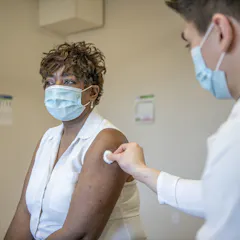
Studies suggest seniors without the booster shot run a higher risk of infection and hospitalization from the omicron variant.
Top contributors
-

Host, The Conversation Weekly Podcast, The Conversation
-
Researcher and lecturer in Spatial Data Science, University of Canterbury
-
Associate Professor, Epidemiology, Deakin University
-
Professor and Department Chair of Infectious Diseases and Microbiology, University of Pittsburgh
-
Lecturer in the Institute of Education, Arts and Community
-
Professor of Epidemiology, Population Interventions Unit, Centre for Epidemiology and Biostatistics, Melbourne School of Population and Global Health, The University of Melbourne
-
Associate Science Editor & Co-Host of The Conversation Weekly Podcast, The Conversation
-
Senior Lecturer in Epidemiology, University of Canterbury
-
Associate Professor of Medicine and Geriatrics, University of Virginia
-
Dean Faculty of Health Sciences and Professor of Vaccinology at University of the Witwatersrand; and Director of the SAMRC Vaccines and Infectious Diseases Analytics Research Unit, University of the Witwatersrand
-
Chair in Epidemiology, Deakin University
-
Academic Specialist & Senior Lecturer in Cancer Sciences & Digital Health | Superstar of STEM | Science Communicator, The University of Melbourne
-
Principal Air Quality Scientist, National Institute of Water and Atmospheric Research (NIWA)
-
COFUND/Marie Curie Junior Research Fellow, Durham University
-
Associate Professor, University of Canterbury