
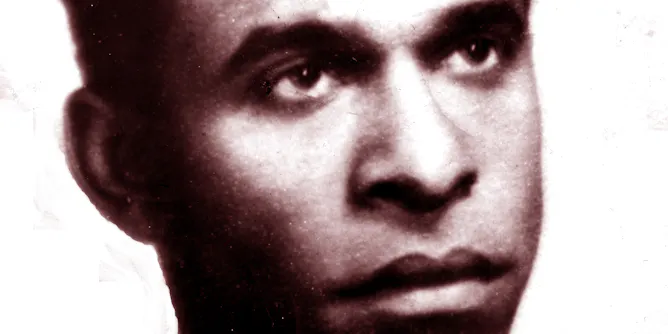
Fanon found in Algeria that what the colonial law courts considered a failure of integration by mental patients was in fact an elemental resistance to European rule.
Articles on North Africa
Displaying 61 - 80 of 111 articles
Frantz Fanon recognised mental illness as a real experience and offered an understanding of it being influenced by society and culture.

The football world cup offers a useful chance to consider the apparent division between North and sub-Saharan Africa.
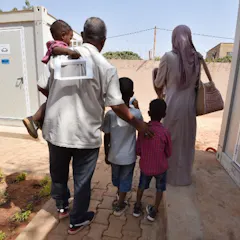
Displacing the EU’s border as far as possible from Europe: is this really a solution to mitigate the flow of migrants?
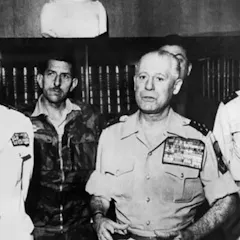
In May 1958 General de Gaulle returned to power and established the Fifth Republic. Yet despite the monumental changes of that time, many in France today still don’t understand what really happened.
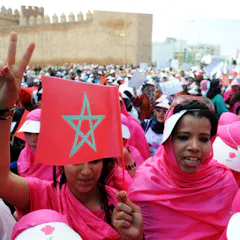
Conservative segments of Moroccan society, have blocked women from inheriting.
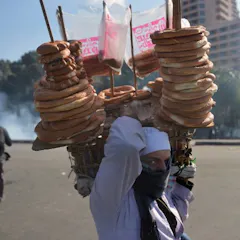
In Morocco, bread is not only a symbol for wider demands but also the material basis of affordable and just living conditions.
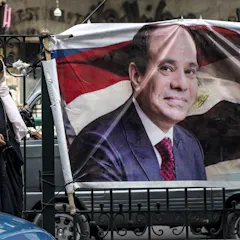
Egyptians’ revolutionary demands for ‘bread, freedom and social justice’ are a distant memory.
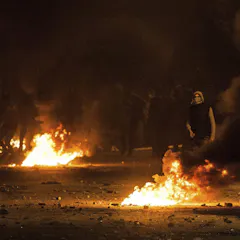
Decentralization in the Middle East and North Africa is supposed to lead to greater public representation in municipal politics. In fact, it is largely strengthening authoritarianism.
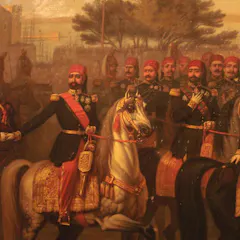
When we think of migrants, we think of them crossing the Mediterranean to come to Europe. Yet 200 years ago, many did it the other way.

About 263 million children and youth worldwide are out of school. If some progress have been made, especially on school attendance, huge gaps remain on gender parity or equity in schooling choices.
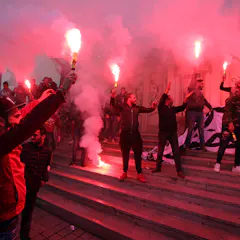
Seven years after Ben Ali was deposed, Tunisians feel little happier with their lot.
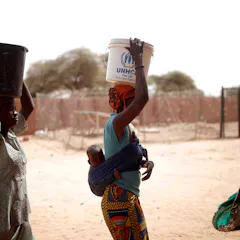
Developing a map of African countries’ water poverty levels offers a transparent analysis for policymakers, governments and organisations that deal with water issues.
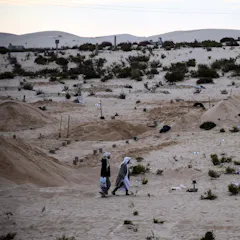
Much of Sinai is almost beyond Egyptian state control altogether.
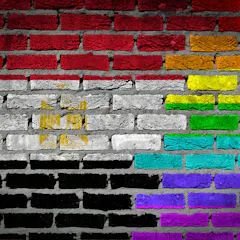
Personal freedoms and self-expression have come under attack.

Bones and texts showed how decades of strenuous hikes led to higher levels of osteoarthritis in workers’ knees and ankles in an ancient Egyptian village.

The UK foreign secretary has been talking up the merits of clearing away bodies to build a new Dubai on the Libyan Med.
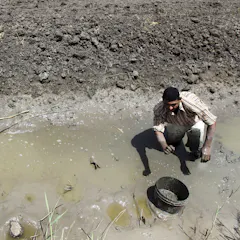
At present, the Middle East and North African region contains 7% of the world’s population but only has access to 1.5% of its renewable freshwater supply through rainfall.
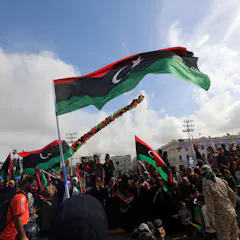
As far as Moscow’s concerned, the stakes in Libya are low and the potential returns very high.
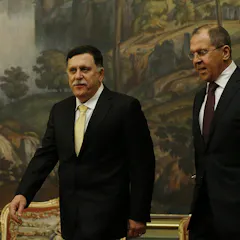
After abstaining on a key Security Council vote in 2011, Moscow lost billions of dollars in Libyan contracts as well as its say in international security governance. It wants both back.
Top contributors
-

Professor in the Department of Government, University of Essex
-
Professor, Université Sidi Mohammed Ben Abdellah
-
Senior Lecturer in Paleontology and Evolutionary Biology, Life Sciences at the University of Bath, University of Bath
-
Academic Fellow & Lecturer in Architecture and Cultural Heritage, Nottingham Trent University
-
Research Associate, McDonald Institute for Archaeological Research, University of Cambridge
-
Lecturer at the National School of Architecture and Urbanism, Université de Carthage
-
Associate Professor in Sport Policy & Management, Qatar University
-
Teaching Fellow, University of Portsmouth
-
Associate Professor in the Comparative Politics of the Middle East and North Africa, Director of Arabic, Islamic and Middle Eastern Studies, University of Leeds
-
Postdoctoral Researcher in Palaeontology, Utrecht University
-
Associate Professor of History, University of Washington
-
Associate Professor in Politics and Islam, Durham University
-
Lecturer in Middle Eastern History, University of Reading
-
Post-doctoral Researcher at The University of Oxford, University of Oxford
-
PhD Candidate, School of Government and International Affairs, Durham University