
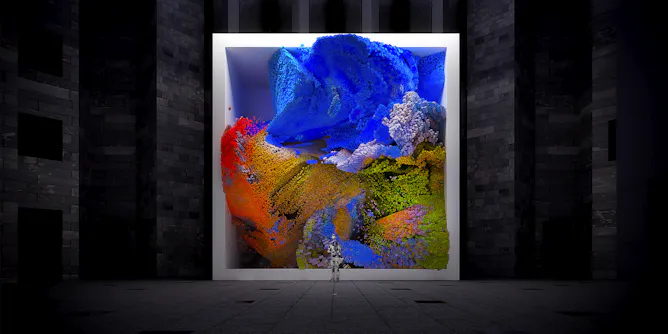
With more than 100 artists from more than 30 countries, this exhibition features alternative realms drawn from a Google quantum computer, a Jeff Koons ‘selfie magnet’ and moments of Zen beauty.
Articles on National Gallery of Victoria
Displaying 21 - 36 of 36 articles

The first director of the National Gallery of Australia has died at 88.
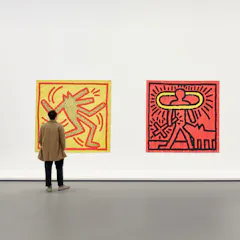
At the National Gallery of Victoria’s summer blockbuster, Keith Haring, Jean-Michel Basquiat: Crossing Lines, Haring’s sexuality is obscured.
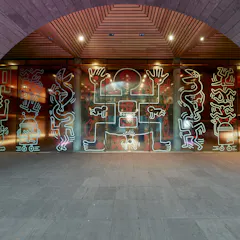
Keith Haring | Jean-Michel Basquiat: Crossing Lines may well be the riskiest exhibition the National Gallery of Victoria has staged in its more than 150-year history.
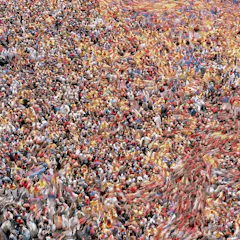
Many of the world’s greatest photographers focus on our shared human experience in a milestone exhibition.
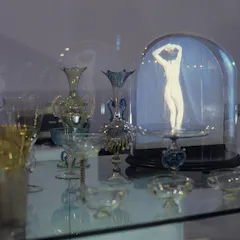
Rosslynd Piggott’s artworks explore an uncanny, dream-like state. A new exhibition of her objects, installations and paintings is a memorable reflection of a major Australian artist.
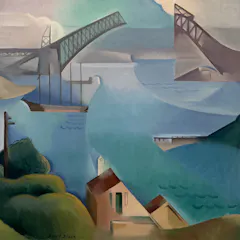
Dorrit Black, Grace Cossington Smith and Grace Crowley were some of many talented modernist women artists. But only with the advent of second wave feminism in the 1970s was their work properly acknowledged.
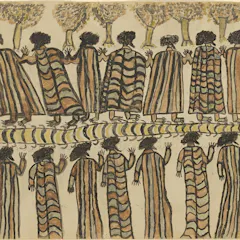
Colony at the NGV pairs colonial art with Indigenous responses, in an effort to create dialogue about Australia’s history.
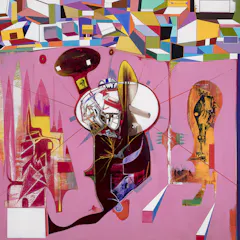
A retrospective exhibition of Gareth Sansom’s 60-year career is bold, provocative and exquisitely crafted.
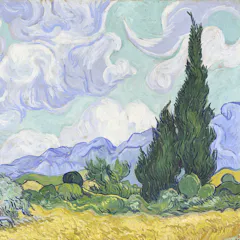
Van Gogh’s immersion in the natural world, for his art and for its therapeutic effects, saw him observe in minute detail the changing of the seasons.
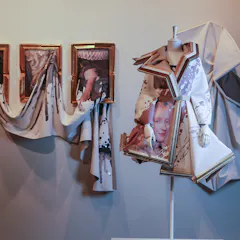
Paintings that turn into frocks; a model dressed in nine outfits like a Russian doll. A new exhibition by Dutch designers Viktor & Rolf is truly fashion as performance art.
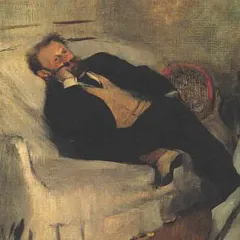
Edgar Degas’ relationship with Impressionism was to be a stormy one, but his encounter with Edouard Manet in 1862 was a turning-point in his career. Degas went on to paint a portrait of Manet and his wife - later slashed in mysterious circumstances.
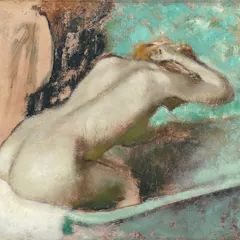
Edgar Degas was fascinated with women’s bodies. Whether dancing, ironing or bathing, he captured these intimate moments with a voyeur’s detached scrutiny.
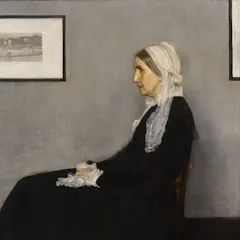
Whistler’s Mother, which arrives in Melbourne on March 25, is one of the most famous portraits in the world. But James Whistler never wanted the sitter’s identity known.
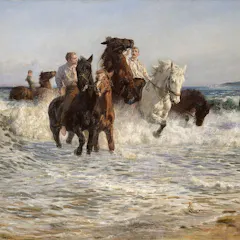
The Horse, currently on display at the National Gallery of Victoria, celebrates the pivotal role the horse has played in the evolution of civilisation.
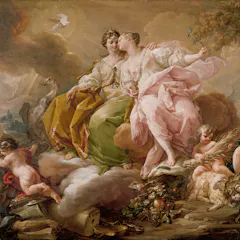
Nationalism is not always a good thing where understanding art is concerned, but in the case of Italian Masterpieces from Spain’s Royal Court, Museo del Prado on show at the National Gallery of Victoria…
Top contributors
-

Adjunct Professor of Art History, Australian National University
-
Honorary Lecturer, School of Literature, Languages and Linguistics, Australian National University
-
Honorary Professor, Edith Cowan University
-
Emeritus professor, History, The University of Melbourne
-
Associate Professor in Art History, The University of Melbourne
-
Joanna Mendelssohn is a Friend of The Conversation.
Honorary Senior Fellow, School of Culture and Communication, The University of Melbourne
-
Professor of Cinema Studies, Director, Human Rights & Animal Ethics Network, The University of Melbourne
-
Principal Fellow, The University of Melbourne
-
Senior Research Fellow, Victorian College of the Arts, The University of Melbourne
-
Researcher, Social History/Tutor in Medical Education, University of Dundee
-
Honorary Professor, DVCE Portfolio, Deakin University
-
Distinguished Professor of Design History, UTS, University of Technology Sydney
-
Professor & Dean, School of Media and Communication, RMIT University
-
Program Manager, Master of Fashion (Design), RMIT University
-
Senior Lecturer, Visual Communication, School of Design, University of Technology Sydney