

The first episode of Scam Factories, a three part podcast series from The Conversation Weekly taking you inside Southeast Asia’s brutal fraud compounds.
Articles on Myanmar
Displaying 21 - 40 of 215 articles

Myanmar’s junta now only controls 21% of the country. Even if the regime can be ousted, there are increasing fears the country will split along ethnic lines.
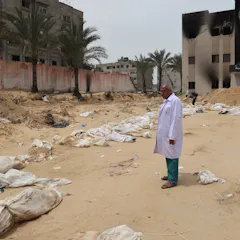
While overall atrocities declined last year, they came down from one of the worst years on record. Meanwhile, a number of areas actually got worse in 2024.

Since 2021, Myanmar has descended into civil war, repression, poverty and economic turmoil.
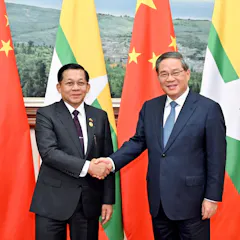
China wants to use private security contractors to protect its investment projects in the war-ravaged country.

Where traditional advocacy fails, a more creative approach is giving new life to Rohingya resistance across the globe.
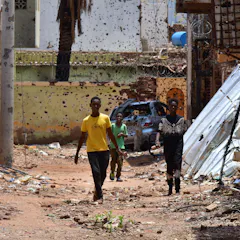
The past few years have been among the most violent of any time since the second world war.

The impact of wars on children is vast and multifaceted. The trauma inflicted is enduring and will shape the rest of their lives — and by extension, the societies in which they and we live.
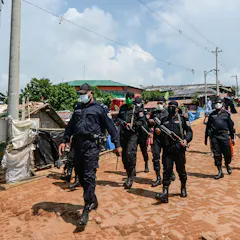
Hundreds of thousands of minority Muslims fled Myanmar in 2017 amid a government crackdown. Seven years on, they remain in refugee camps.
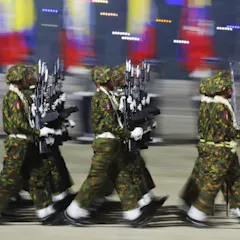
In the absence of effective domestic or international prosecutions, evidence of these crimes must continue to be collected for use in future international tribunals.
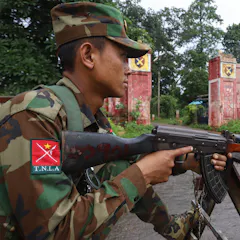
The military has lost one of its regional military command centres for the first time. What happens next may depend on Myanmar’s neighbour across the border – China.
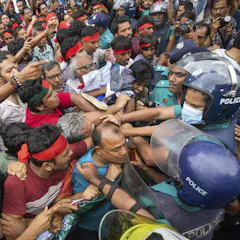
A curfew has sealed Rohingya refugees inside camps run by armed criminal gangs. Here’s what Australia and other nations should be doing to help.

Growing numbers of insurgents, terrorists and extremists are using the FGC-9 3D-printed gun. Here’s what I learned about the man who created it, and the dark world he inhabited
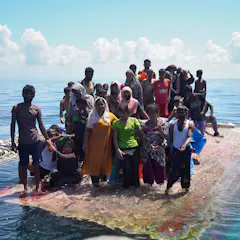
The number of Rohingya trying to escape Bangladesh by boat has risen 74% since October. Increasing lawlessness in the camps is one of the major push factors.
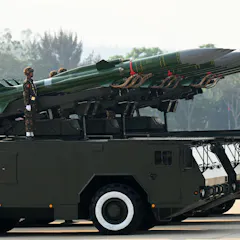
Economic proscriptions by the US and EU are hampered by lack of support among Myanmar’s major trading partners in the region.

The military has suffered huge defeats on the battlefield, which might lead junta leaders to be more open to a political compromise.
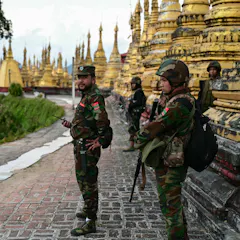
Beijing is losing patience with Myanmar’s military, as well as its influence with resistance groups.
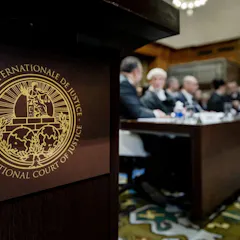
Genocide is called ‘the crime of crimes’ because of its collective significance.
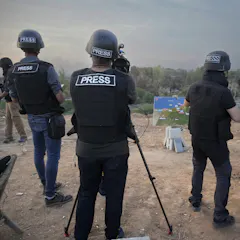
New statistics show a spike in the amount of journalists jailed in the country. To protect its democracy, Israel needs to be transparent about why members of the media are arrested.
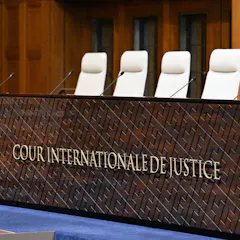
Six cases are testing international accountability mechanisms and showing how small countries like New Zealand can impact global justice.
Top contributors
-

Senior Lecturer in International Studies in the School of Society and Culture, Adelaide University
-
Pro Vice-Chancellor, University of Tasmania
-
Associate Professor of World Cultures and Languages, Northern Illinois University
-
Leverhulme Trust Early Career Fellow, Loughborough University
-
Associate Professor in International & Community Development, Deakin University
-
Associate Professor in International Management, Curtin University
-
Co-Deputy Director, Human Rights Centre and Co-Director of Postgraduate Studies, School of Law, University of Essex
-
Senior Lecturer in Politics and International Relations, University of Dundee
-
Lecturer, Department of International Relations, Universitas Gadjah Mada
-
Lecturer, School of Political Science and International Studies, The University of Queensland
-
Industry Professor and Chief Economist, University of Technology Sydney
-
Professor, School of Law, Western Sydney University
-
Doctoral Student, College of Community and Public Affairs, Binghamton University, State University of New York
-
PhD Candidate, UNSW Law; Assistant professor, International Relations, University of Chittagong
-
Host, The Conversation Weekly Podcast, The Conversation