
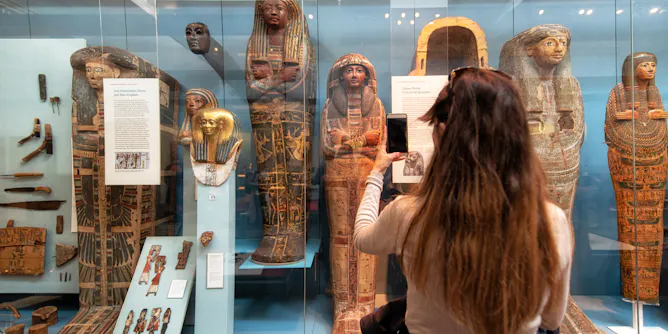
Even with the best of intentions, restitution is not a fast process.
Articles on Museums
Displaying 61 - 80 of 313 articles

Every field has its own standard for what data gets recorded for specimens archived in a museum collection, which can make research difficult.
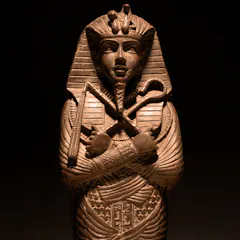
Welcome to ‘sensory heritage’, the study of how we engage with objects from the past besides what they look like.
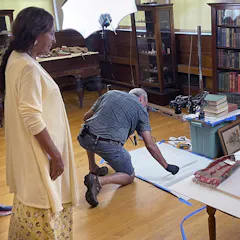
Repatriation is now a legal responsibility, but also a matter of human rights, an anthropologist writes.

Canadian media theorist Marshall McLuhan’s ideas shaped museum curation through his friend, designer Harley Parker, in the 1960s.
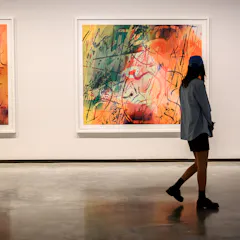
It’s the first time the MCA will be charging a general entry fee since 2000. The move reflects a global trend of museums facing financial pressure.

A historian of artistic censorship sees chilling similarities to 19th-century anti-obscenity crusades.
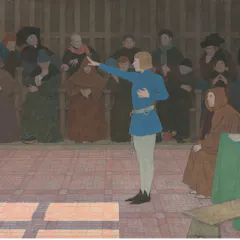
Trial lawyers, like artists, have to connect with different audiences and push them to look at legal issues, people and ideologies in new ways.

Pompeii: Inside a Lost City at the National Museum of Australia depicts life in the flourishing Roman city of Pompeii before it was destroyed by the eruption of Mount Vesuvius in 79 CE.
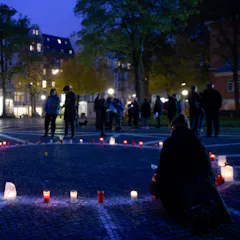
Questions about how to represent German Jews, past and present, have complicated plans to rebuild the destroyed temple.
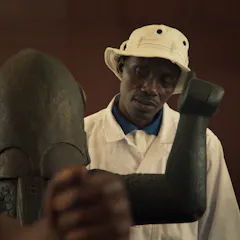
The film restores the agency of the objects at the heart of the Dahomey restitution case by transforming them into a living culture.

Some of the most thrilling items are the most personal, from teen fan art to scribbles on table napkins and university lecture notes.
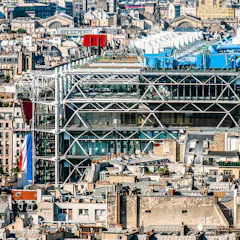
An iconic building in the heart of Paris, the Centre Pompidou is set to close its doors for a five-year renovation. Before the closure, let’s take a look at its economic model.

War is escalating in the Middle East and continuing in Ukraine, Sudan and Myanmar. Gun violence in the US is ballooning, too. How do our cultures nurture violence? And can we change?
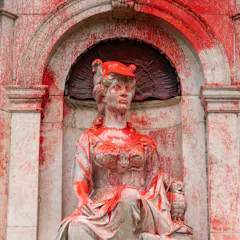
The War Against the Past is sometimes convincing, but prompts larger questions about history, culture, education and morality.

The pigeon was chosen because it has remained for a thousand years ‘an impartial and humble observer of London life’.

In asking how Buddhism gained such a vast material presence, the course helps students understand how a religion manages to survive over time.
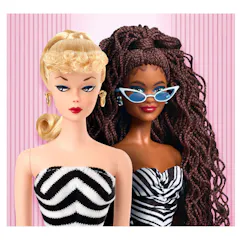
Barbie’s houses, fashions, vehicles and even her face, hair and body can be seen as a pink-tinted reflection of western culture.
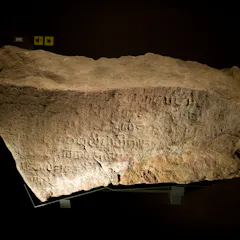
Despite its name, this sandstone slab is not a simple stone. It was once part of a monument, an ancient epigraph measuring three by three metres carrying about 50 lines of text.
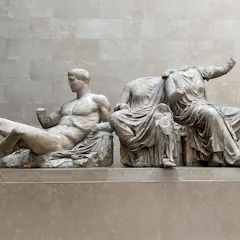
The marbles are a physical manifestation of what it meant to be Athenian during the 5th century BC.
Top contributors
-

Professor of Public Humanities and Director of the ANU Humanities Research Centre, Australian National University
-
Assistant Director of the University Museum of Zoology, Cambridge, University of Cambridge
-
Ruth Coulter Heede Professor of Art History, Case Western Reserve University
-
Honorary Professor, Edith Cowan University
-
Professeur de Marketing, EDHEC Business School
-
Associate Research Professor of Anthropology, University of Colorado Denver
-
Lecturer, The University of Queensland
-
Associate Professor in Ancient History; Director, Australian Centre for Ancient Numismatic Studies, Macquarie University
-
Eminent Scholar and Professor of Economics Emeritus, Auburn University
-
Postdoctoral research fellow, RMIT University
-
Director, Centre for Cultural Materials Conservation, The University of Melbourne
-
Lecturer, University of Glasgow; University of Nigeria
-
Lecturer in School of Art History and Art Education, UNSW
-
Senior Lecturer School of Art History and Art Education, UNSW
-
Senior Curator of Australian and First Nations Art, National Gallery of Victoria, The University of Melbourne