
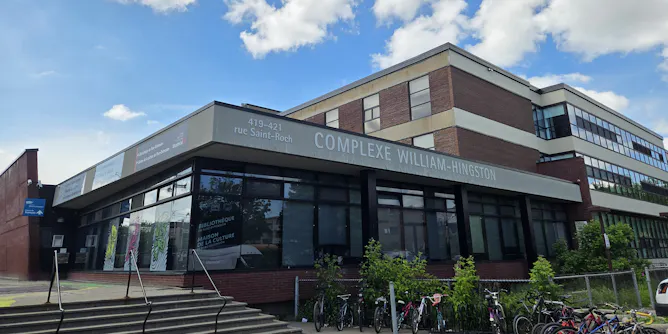
A wider shift is taking place in which the Quebec government is pushing responsibility for social infrastructure off itself and onto community organizations.
Articles on Montreal
Displaying 1 - 20 of 85 articles
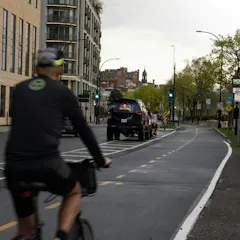
We know how cities move, but policy and organizational changes are needed before algorithms can actually improve mobility.

A sedentary lifestyle lurks in every neighbourhood. So what motivates people to walk?

From a Cyberpunk stunt team to a Japanese superhero, Montréal’s Fantasia Film Festival reveals that media evolutions can start with scrappy ideas and budgets.
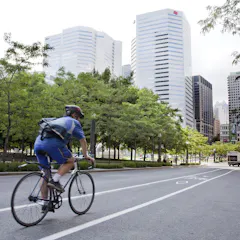
Researchers found that neighbourhoods with more children, older adults and racialized people were usually further away from bike infrastructure.

After decades of sprawling suburbs, various cities are embarking on densification projects that emphasize proximity, diversity, and neighborhood services.

As cities debate how to sustain the nighttime economy while keeping residents safe, Montréal’s past reminds us that the way we govern the night determines who gets to belong in it.

Any large-scale policy affecting schools, like Montréal’s ambitious transition to zero waste, needs to reflect that success relies on the labour and care of students and education workers.

Urban green spaces should be better managed to provide places too cool off for the most underserved communities.

Bike infrastructure in Montréal takes up less than three per cent of the roadway, while car infrastructure has more than 90 per cent of roads across the city.

Recent studies have demonstrated that eRNA, previously considered too unstable for field use, can be reliably detected in freshwater ecosystems.
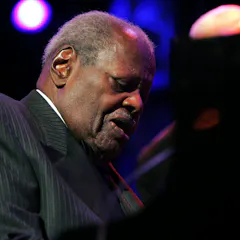
Peterson stands among the greatest virtuosi of musical history. He voiced stylistic grace, impeccable command of his instrument and the execution of spiritual freedom.

We don’t recycle enough! Cities, as the main sources of consumption and waste production, are strategically positioned to reverse this trend.

Urban studies is a relatively new academic field of study. This raises the question of what the field actually is.

As the COP29 summit gets underway and zero-emissions goals seem further away than ever, video games could provide new pathways for people to imagine plausible low-carbon futures.
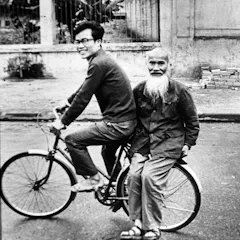
A study of parent-child pairs from Montréal’s Vietnamese diaspora found different paths to preserving language shaped by political and economic experiences.

The vast majority of damage to residential buildings during flooding occurs in basements. Rather than rebuilding identically after a disaster, we need to build better.
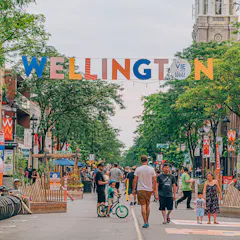
The media outlet ‘Time Out’ made a big splash when it announced that certain Canadian streets were ranked ‘coolest in the world.’ But are they really?

What will our daily lives be like in 50 years’ time? What will our challenges be? Scientific data and analysis are essential, and municipal diplomacy is the key to sharing knowledge.
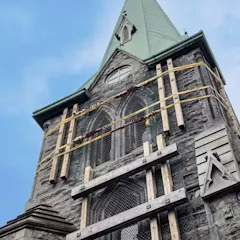
Critics argue that church tax exemptions represent millions in lost government revenue. However, others say that churches can and should use their funds to support local communities.
Top contributors
-

Associate professor, Geography, Planning and Environment, Concordia University
-
Professor of English and former Academic Director of the Public Humanities Hub, University of British Columbia
-
Professeur titulaire, Université du Québec à Montréal (UQAM)
-
Assistant Professor, Adult Education, Concordia University
-
Professeur agrégé, Université du Québec à Montréal (UQAM)
-
Professor of Communication Studies; Research Chair on Intersectionality, Violence and Resistance, Concordia University
-
Professor of Political Science, Athabasca University
-
Professor, School of Urban and Regional Planning; Department of Geography and Planning, Queen's University, Ontario
-
Visiting Research Fellow, Edinburgh Napier University
-
PhD Student, New York University
-
British Academy Global Professor, Queen's University, Ontario
-
Professor of Political Science, Concordia University of Edmonton
-
Research Associate, British Columbia Centre on Substance Use and PhD Candidate, Faculty of Health Sciences, Simon Fraser University
-
Associate Professor, Psychosocial Difficulties, University of Oslo
-
Postdoctoral fellow, Concordia Institute for Information Systems Engineering, Concordia University