
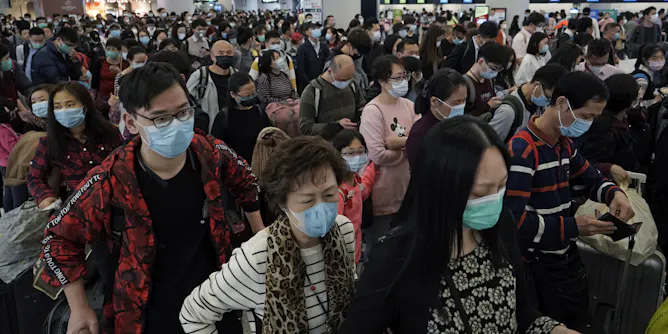
The novel coronavirus spreading outward from Wuhan, China, will get an assist from a subset of infected people who transmit it to many others.
Articles on Middle East Respiratory Syndrome (MERS)
Displaying 21 - 36 of 36 articles
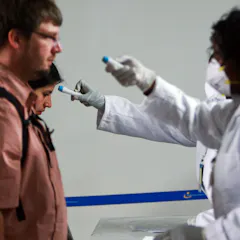
Airport public health officials have got better at screening at ports of entry especially for international arrivals.

The coronavirus that has sickened hundreds in Wuhan, China, has worried health officials and other humans across the globe. Should people in the US worry?

The virus seems to spread like any other respiratory illness – through coughs and sneezes, or contact with contaminated surfaces. Here’s what we know about it so far.
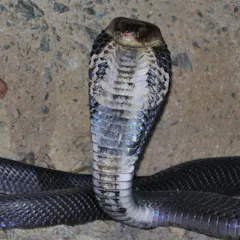
A new coronavirus related to SARS and MERS has now traveled from China to the United States. A genetic analysis reveals that this deadly pathogen may have originated in snakes.
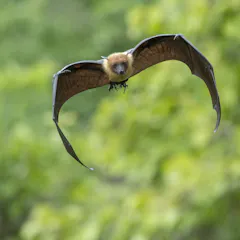
Scientific studies show that bats may carry “coronoviruses” causing SARS and MERS - without showing symptoms of disease. Could the bat immune system be key to human survival in future pandemics?

QuRapID can find Ebola in a drop of blood in just over an hour.

We’ve all endured infections. Here’s how it works when our bodies are attacked by viruses, bacteria or parasites, and our innate immune system becomes the first line of defence.
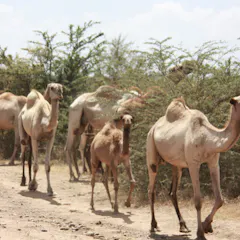
There is a high prevalence of the MERS virus in African camels. More research is key to understanding the virus better globally.

Viruses cause all kinds of infections from relatively mild cases of the flu to deadly outbreaks of Ebola. Clearly, not all viruses are equal and one of these differences is when you can infect others.

Twelve years ago the world was threatened by an outbreak of a new coronavirus called SARS. MERS belongs to the same virus family and has killed 19 people in South Korea.

Spanish authorities have euthanised the dog of Madrid nurse Teresa Romero Ramos, who contracted Ebola. The 12-year-old dog, Excalibur, was not showing symptoms and was not tested for Ebola. But he lived…

The Middle East respiratory syndrome coronavirus (MERS-CoV) is a tiny, spiky package of fat, proteins and genes that was first found in a dying man in the Kingdom of Saudi Arabia in 2012. Since then, we…

The Middle East respiratory syndrome coronavirus (MERS Co-V) emerged in 2012 and has caused ongoing illness in the Middle East and more than 280 deaths. The public health response to MERS-CoV has been…

A team of European researchers has identified a novel compound that stops coronaviruses from replicating. The study, published in PLOS Pathogens today, also pinpoints the juncture in the virus’ life cycle…
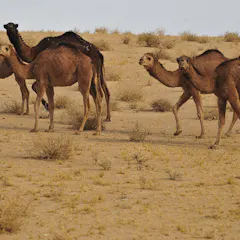
The discovery that dromedary camels may be a key source of the virus behind Middle Eastern Respiratory Syndrome (MERS) looks to unravel one of the biggest mysteries surrounding outbreaks of the deadly…
Top contributors
-

Virologist, The University of Queensland
-
Principal Scientist and Canada Research Chair in Zoonotic Virus and Animal Reservoirs at the Vaccine and Infectious Disease Organization and Co-Lead of One Health at the University of Saskatchewan, University of Saskatchewan
-
Adjunct Associate Professor, Faculty of Medicine
-
Professor of Medicine and Vice President, Research, McMaster University
-
Dean Faculty of Health Sciences and Professor of Vaccinology at University of the Witwatersrand; and Director of the SAMRC Vaccines and Infectious Diseases Analytics Research Unit, University of the Witwatersrand
-
John Curtin Distinguished Professor of Health Science, Curtin University
-
Professor of Entomology and Director of the Center for Infectious Disease Dynamics, Penn State
-
Research scientist, CSIRO
-
Doctoral candidate, Biology, Wesleyan University
-
PhD student in virology, University of Pennsylvania
-
Professor of Microbiology and Molecular Genetics, University of Pittsburgh
-
Associate Professor in Cellular and Molecular Sciences, Northumbria University, Newcastle
-
Professor and Director of Doherty Epidemiology, The University of Melbourne
-
Professor of Philosophy, University of the Witwatersrand
-
Fellow, Australian National University