

While menopause media coverage helps to bust taboos, it also fosters a lucrative, social media and business-driven market that takes advantage of woman’s need for support.
Articles on Medical research
Displaying 1 - 20 of 245 articles

Veterans have launched a class action against the department for ‘mass and routine sharing’ of their medical records over 20 years. How common is this?
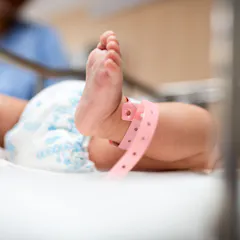
Detecting impaired motor function in infants using AI-driven motion capture is producing promising results. A French research team introduces the new screening tool for spinal muscular atrophy (SMA).
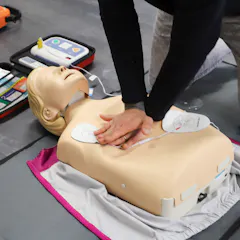
Studies may include both sexes yet leave differences unexplored. That gap becomes more consequential when old evidence helps train medical AI.

The assumption that has kept women out of so many physiology studies for years — uncertainty about potential fluctuations due to menstrual cycles or hormonal birth control — turns out to be incorrect.

Endometriosis is an age-old condition and yet until recently, the complex disorder remained largely overlooked due to medical and social perceptions of women’s pain.

Here’s how to sift through complicated studies without getting overwhelmed.

This little-known brain disorder is currently one of the biggest challenges facing medicine where age-related diseases are concerned.

Scolyer captured the world’s attention when he volunteered for a world-first experimental treatment for brain cancer. He died on Sunday night, aged 59.

In cardiology, sex and gender-sensitive diagnosis and treatment planning are crucial, but biological differences remain the missing link in AI-powered human virtual twin technology.

Some industry-funded clinical trials show signs of being designed to market drugs rather than to test them for their safety and effectiveness. Detecting these studies remains difficult.
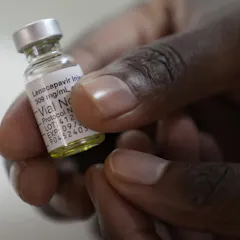
A secret HIV research project carried out in the Central African Republic in the 1990s sheds light on how biomedical extractivism operates.
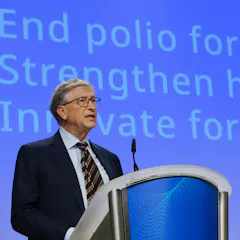
Could philanthropists be dominating global health metrics, governance, and outcomes?

This change frees researchers to study cannabis products that most consumers encounter when buying medical marijuana – which could accelerate its treatment potential.

Medicine is steadily improving its evidence base, but in children, careful research and ethical limits mean progress takes time.

The agency’s budget has grown steadily since the 1960s, fueling an industry that creates lifesaving medicines and attracts billions of dollars in investment.

Answering personal questions at the doctor’s office can help researchers recognize health problems and find effective interventions.
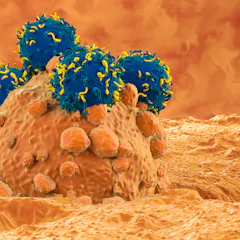
CAR-T cells are 1,000 times more effective at destroying cancer than our own immune systems.

More than a century of evidence suggests that bureaucrats, at their best, stand for expertise, fairness and public service.

When people with lived experience contribute to the design and delivery of health care and research, it means services are used more and fairer outcomes achieved.
Top contributors
-

Chief Executive, CSIRO
-
Emeritus Robert Reford Professor and Professor of Medicine, McGill University
-
Visiting Professor UNSW, UNSW
-
Senior Lecturer in Ethics and Professionalism, Adelaide University
-
Professor of Health Economics, Duke-NUS Medical School
-
Associate Professor, Public Health Ethics, School of Population Health, UNSW
-
Chancellor, Monash University
-
Secretary-General, International Human Frontier Science Program Organisation; Emeritus Professor, Monash University, Monash University
-
Professor of Clinical Neuropsychology, University of Cambridge
-
Principal Research Fellow, Australian Research Centre in Sex, Health and Society, La Trobe University
-
Professor and Chair, Department of Immunology, Monash University
-
Senior Research Fellow; Rheumatology Research Group, Centre for Inflammatory Diseases, Monash University
-
Professor of Statistics, Queensland University of Technology
-
Geneticist and Group Leader, The John Curtin School of Medical Research, Australian National University
-
Associate Professor, Epidemiology, Deakin University