
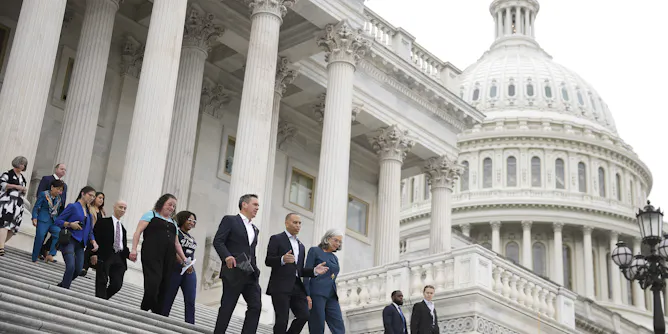
As the battle for health care plays out in Washington, the shutdown itself could also make it harder for Americans to get the care they need.
Articles on Medicaid
Displaying 21 - 40 of 143 articles
Cuts to Medicare and Medicaid may harm vulnerable populations that depend on government-funded care. Proponents of such cuts often frame them in a different way.

Trump voters still reliably back the president, believing that most of the criticism of him is fake news.
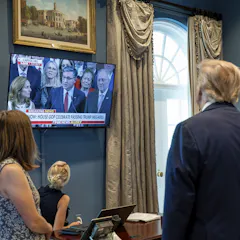
The measure enables broad tax cuts that disproportionately favor wealthy households while forcing its costs on the most economically vulnerable Americans.

The government, because it takes the lead in implementing official policies, is in a unique position to collect and store sensitive data collected over long periods of time.

The biggest changes will be to the Medicaid program, which currently covers more than 78 million people. And Congress may cut health care spending further.
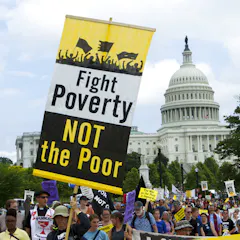
The Republican tax bill is set to worsen inequality, government data shows. It’s part of a 50-year trend that’s affecting the social fabric as well as the economy.

Drastic cuts to Medicaid and other public health provisions in the new law will mean even less money to rural hospitals, many of which are already at risk of closing.

A provision in the big legislative package and a related Supreme Court ruling mark the culmination of a strategy to defund the health care provider that was in full swing by 2007.

Medicaid improves access to care for low-wage workers who cannot survive on bare-bone benefits offered by their employers.

Democrats failed to stop Trump’s major policy bill passing in the Senate, despite all their efforts.
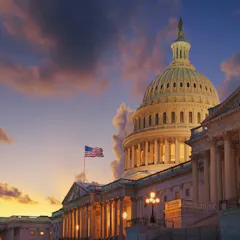
Donald Trump’s scored a major political win, after his mega tax and spending bill cleared its biggest hurdle. It could be signed into law as soon as July 4.
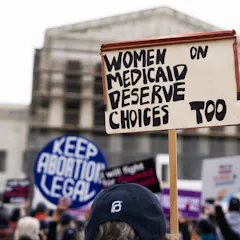
The ruling limits the rights of Medicaid patients to choose their own health care provider. It could have consequences far beyond South Carolina.

When that important link is broken, your health gets worse and the costs borne by the whole health care system for your treatment rise.

All told, more than 16 million Americans could become uninsured, reversing major progress seen since the Affordable Care Act’s passage in 2010.

Research shows that decades of policy choices shaped today’s fragmented health care system – which is precisely why reform is so difficult.

Past experience suggests that adding work requirements to Medicaid will strip health services from millions of American without increasing employment.

When Arkansas tried to make Medicaid contingent on meeting work requirements, 18,000 low-income Arkansans lost their health insurance, but few of them got jobs.

When people over 65 lose Medicaid coverage, they stop seeing their doctors for preventive care due to high costs. This in turn leads to worse health outcomes and higher health care costs.

At a time when California’s farm operators are struggling to hire enough people, providing better benefits could attract more workers who are citizens or have legal immigration status.
Top contributors
-

Associate Professor of Public Health, The Ohio State University
-
Professor of Gerontology, UMass Boston
-
Senior Research Fellow and Lecturer of Gerontology, UMass Boston
-
Professor of Law, University of Virginia
-
Professor of Public Policy (retired), University of Virginia
-
Assistant Professor of U.S. History, University of Cambridge
-
Professor of Social Welfare, Stony Brook University (The State University of New York)
-
Professor of Law, George Washington University
-
Venable Professor of Law, University of Baltimore
-
Investigative Journalist, The Conversation
-
The Lee and Brena Freeman Professor at the University of Chicago Law School and Professor at the Pritzker School of Medicine., University of Chicago
-
University Professor of Sociology, Syracuse University
-
Associate Professor of Health Law, Policy and Management, Boston University
-
Research Scientist of Health Policy and Economics, University of Southern California
-
Associate professor of Education, University of Oregon