
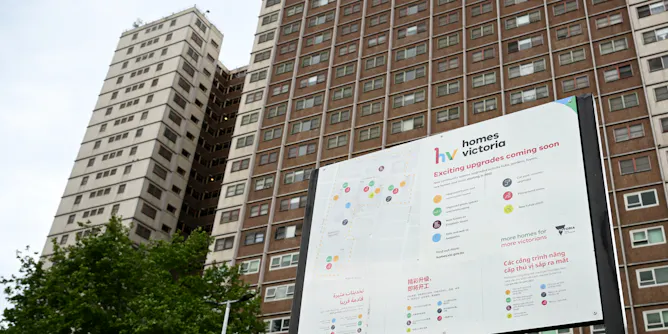
Social housing is being built at the fastest pace since the 1980s. But we are still leaving hundreds of thousands of Australians waiting for a home.
Articles on Low-income housing
Displaying all articles

Stipends paid to residents had unintended consequences.

Changes made to comply with executive orders could interfere with the mission of a program that has historically helped some of the people who most need a hand.

Building a stronger Detroit means stabilizing housing, using vacant land to benefit the public and investing in social infrastructure.

Insulating attics, replacing windows and adding heat pumps can save money and reduce emissions − if residents can afford the upgrades. Carbon-offset purchases by local companies could help.
The people with the worst health often live in rental homes likely to make them sicker, and poor policy could make it worse.
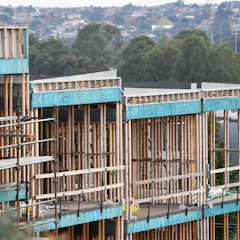
Build-to-rent developments have been touted as a way to deliver affordable housing on a large scale. But, to date, the sector has not been focused on housing for people on lower incomes.
The concentration of subsidized low-income housing developments isn’t as bad as residents fear: It actually increases property values – at a faster rate than other neighborhoods.
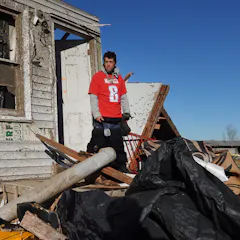
The most affordable homes face the highest risks from disasters for three key reasons.

It will cost tens of billions of dollars to find and remove all the lead service lines that deliver water to US homes and schools. A public health expert explains why he sees it as money well spent.
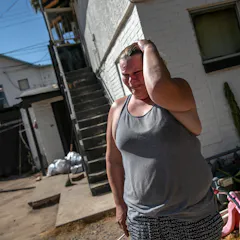
‘Informal evictions’ in which landlords harass or pressure tenants out of their homes continued during the the pandemic and may have even seen an increase.

Building retrofits are no joke: They make dwellings healthier and more energy-efficient. And when they’re done in low-income housing, they also reduce inequality.

Solar power doesn’t have to be just for the wealthy anymore. With the right kind of financial incentives, households at all income levels can benefit from affordable clean energy.

A long-term housing stimulus package that focuses on retrofitting to cut energy demand would also help households repay the debts being accumulated during this crisis.

Apartments house one in ten Australians, including a higher share of low-income households than other housing types. A new study identifies why some high-density neighbourhoods work better than others.

Societal pressures make it hard for people living in low-income areas to change their ways.
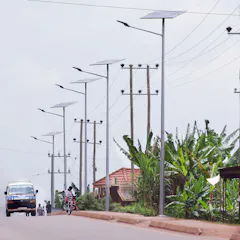
Solar lights can help local governments drastically reduce their spending on electricity bills.
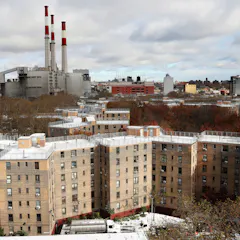
When large companies move into an area, the result is often gentrification. When this happens, the economic and social costs for displaced residents is typically high.
Top contributors
-

Professor of Housing Research, Adelaide University
-
Professor of Environmental Policy and Associate Pro-Vice-Chancellor (Interdisciplinary Research), University of Leeds
-
Associate Professor of Urban Development, Bond University
-
Senior Scientist, Lawrence Berkeley National Laboratory
-
Assistant professor, Simon Fraser University
-
Senior Lecturer in City Planning, UNSW
-
Professor of Landscape Architecture and Urban Planning, Texas A&M University
-
Associate professor in urbanism, University of Sydney
-
Professor and Chair, Department of Environmental Health, Boston University
-
Research Fellow in the Climate Smart Cities Team, University of Leeds
-
Professor of Earth & Environmental Sciences and Executive Director, Environmental Resilience Institute, Indiana University
-
Associate Deputy Vice Chancellor in Research & Innovation, RMIT University
-
Lecturer in Property, Bond University
-
Ph.D. Candidate in Public Policy and Governance, University of Washington
-
Professor of Architecture; Affiliate Faculty, Rock Ethics Institute, Penn State