
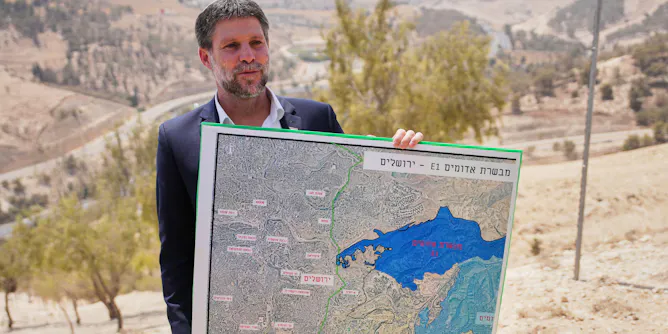
The proposed development would effectively cut the West Bank in two.
Articles on Listen to a narration of this article
Displaying 21 - 40 of 592 articles

GPT-5’s focus on routing queries to the best model could be an admission that LLMs can’t get much smarter.

As visionary capacity increases, so does myopia.
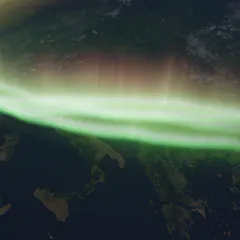
Two geophysicists and an archaeologist teamed up to connect space weather 41,000 years ago to human behaviors that might have been in response – and show the value in cross-discipline teamwork.

A new study shows how polluted air could have been masking the full effects of global warming.

Just having plenty of money does not guarantee success fo an insurgent political movement in the US.

A scholar of intelligence and strategy explains why battle damage assessments are so challenging – and why the process has become politicized.

Nonproliferation experts believe Iraq’s nuclear program went underground after Israel destroyed its reactor just outside Baghdad.

Various failure scenarios have been aired as the Boeing 787 crash investigation continues.
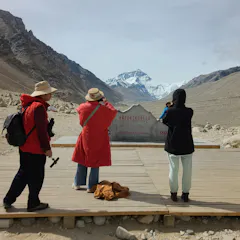
A century after the disappearance of explorer George Mallory, his photos and diary offer a valuable baseline for investigating impacts of tourism and climate change on the Tibet side of Everest.

It’s the best result yet - but the evidence still isn’t strong enough to convince the scientific community.

Two studies show major progress in the field of photonic microchips.
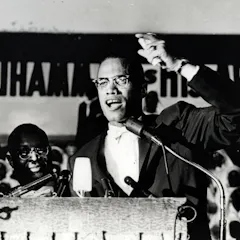
Psychiatry has been used to enforce political conformity – and not just in authoritarian regimes.

Harmful stereotypes, misinformation and conspiracy theories have all found their way into meme format.

Companies are preparing to move forward with seabed mining, but a method for gathering critical minerals from the seafloor would create sediment plumes in the water column where many creatures live.
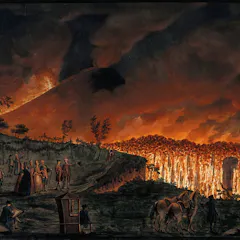
We tend to underestimate the threat of rare events but we can prime ourselves to be more alert to the signs.
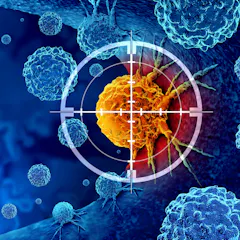
A century-old cancer therapy gains new life with modern science.
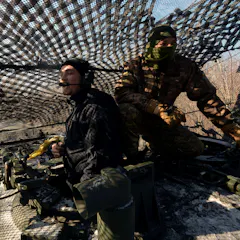
Ukrainian public attitudes about having nuclear weapons have shifted significantly in 30 years. Kyiv may consider setting up a nuclear programme.
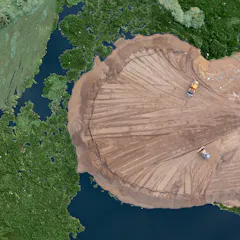
Sand mining destabilises riverbeds and affects local communities but new hi-tech surveillance can improve the monitoring of extraction and help protect these people.

Synthetic cells that look just like natural cells but are chemically reversed could outcompete other living organisms − with dire consequences for human health and the environment.
Top contributors
-

Senior Lecturer in Economics, Lancaster University Management School, Lancaster University
-
Professor of Clinical Neuropsychology, University of Cambridge
-
Senior Lecturer in Psychology, Leeds Beckett University
-
Senior Lecturer in the History of Science, Technology and Medicine, King's College London
-
Honorary Research Fellow, City Political Economy Research Centre, City St George's, University of London
-
Professor of International Security, University of Birmingham
-
Professor of International Politics, University of Birmingham
-
Associate Professor in Accounting and Sport Finance, University of Portsmouth
-
Assistant Professor, Friedrich-Schiller-Universität Jena
-
Professor, Research Centre for Business in Society, Coventry University
-
Reader in Exercise and Health Physiology, University of Hertfordshire
-
Honorary Associate Professor, University of Leicester
-
Professor of International Security, Jean Monnet Professor of European Security, National University Odesa Law Academy
-
Associate Professor in Fashion and Material Culture, Nottingham Trent University
-
Senior Lecturer in Philosophy of Public Health, University of Cambridge