

The platform has provided a forum for the written Scots language to evolve that wasn’t possible before the advent of social media.
Articles on Linguistics
Displaying 281 - 300 of 458 articles
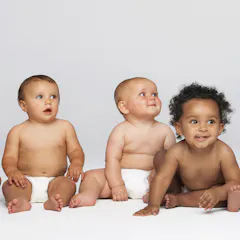
New research shows that there’s much in a name: people will use the sounds in names to infer someone’s physical and personality traits.

Britons are notoriously bad at learning other languages. Here are some of the things that they find difficult.

The relationship between street slang used by young people and secret codes deployed by gang members is not always straightforward.
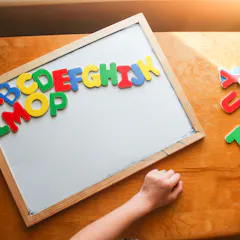
Writing has only been a part of the human story for the last 5,000 years. In comparison, humans began to communicate using speech some 50,000 years ago.
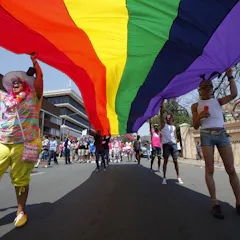
Gayle remains as popular as ever – but it has evolved, shifted and become a language spoken by more than just gay men.

Analysis of 228,000 comments shows that while surgeons are likely to be called ‘outstanding’ and ‘brilliant’, receptionists are branded ‘arrogant’ and ‘rude’. But it’s not because they do a bad job.

This explains why some aspects of English can be hard to learn for speakers of other languages.
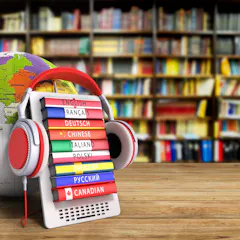
Ever heard of lexical selection? Every time you open your mouth you change the way future generations will talk.

It can be hard to understand a non-native speaker of your own language. But conversation is a two-way street and linguists are figuring out how native listeners can improve their half of the interaction.

When you listen very closely, the Duchess of Sussex still sounds like she’s from Los Angeles.

The self-help books are full of advice on how to get meaning in life, but it helps to understand what meaning actually is. Science may be able to provide some answers.

Considering language from a biological perspective led researchers to the idea that new food processing technologies affected neolithic human beings’ jaws – and allowed new language sounds to emerge.

The Aussie accent has been lambasted as “lazy”, but this view doesn’t come from the facts.

A linguist explains the physical technicalities and sociological meanings of creaky voice’ – a sound found in diverse gender and age groups, yet often associated particularly with younger women.
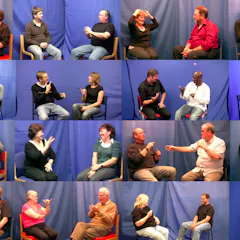
Limited contact between the first British Sign Language communities created dialects that are still in use today.

Different languages have different ways of describing the world – and this in turn affects how speakers see the world.

A study of Polish children in Glasgow reveals how they successfully navigate complex social rules relating to language to blend in with their peers.

In the space of a few short years, deaf Nicaraguan school children created their own language. This example may give us a clue about how spoken language developed over thousands of years.

Young Javanese speakers in Indonesia are nervous about speaking High Javanese, for fear of making mistakes. But they are still eager to learn.
Top contributors
-

Professor of Linguistics, Monash University
-
Senior Lecturer in Linguistics, Monash University
-
Roger J. Kreuz is a Friend of The Conversation.
Associate Dean and Feinstone Interdisciplinary Research Professor, University of Memphis
-
Associate Professor in Linguistics, Macquarie University
-
Associate Professor in Sociolinguistics, University of Cambridge
-
Professor of Linguistics, University of York
-
Professor of Linguistics, University of Nevada, Reno
-
Associate Professor of Linguistics and Director of Language Lab, The University of Western Australia
-
Senior Research Fellow of Linguistics, University of Colorado Boulder; Griffith University; University of New England
-
Professor of Linguistics and English, Florida International University
-
Professor of English Language and Literature, University of Oxford
-
Francesco Perono Cacciafoco is a Friend of The Conversation.
Associate Professor in Linguistics, Xi'an Jiaotong-Liverpool University
-
Professor of Psychology, Cornell University
-
Maïa Ponsonnet is a Friend of The Conversation.
Researcher, Linguistics, Centre national de la recherche scientifique (CNRS)
-
Honorary Associate Professor in Writing, The University of Queensland