

How many healthy years of life do you have ahead before you become unhealthy – and then die? One model tries to find the answer.
Articles on Life expectancy
Displaying 81 - 100 of 118 articles

An academic article that asserted the benefits of colonialism caused an outcry and resulted in calls for its removal. A post-colonial expert explains why.

New Zealand’s health service provides universal and free access to health care, but inequities remain stubbornly high.

With life expectancy stalling and austerity partly to blame, the UK must rethink its approach to retirement.

It is possible to boost life expectancy once it has stalled. One route could be to tackle a few specific ageing processes.

Women are paid 20 percent less than men in the US but live about five years longer than men. You might be surprised at the reasons that men, on average, die at a younger age.

South Africa might want to consider raising its retirement age to 70 to cope with a challenge of an ageing population that’s under-insured and relying on an already pressured public purse.

Over the last century, life expectancy has increased by seven hours a day.
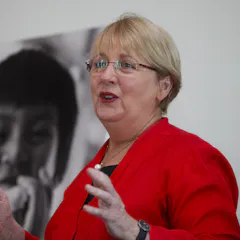
Labor’s Jenny Macklin said that under a Coalition proposal, Australia would have the highest pension age in the developed world. Is that right?

Anti-ageing research often uses short-lived model species such as mice. But these species age in a very different way to us, so they may not tell us all that much about boosting our own lifespans.

The burden of communicable disease is declining in Africa and life expectancy is increasing. But non-communicable diseases like diabetes, cardiovascular disease and cancer are wreaking havoc.

Financial reforms have given us a greater role in saving for retirement. Alas we’re not very good at it.

Some scenarios put the UK population at just under 80m by 2039. Here are the facts.

The Good African Society Index provides a comparative measure of the quality of society in African states. Governments could use its findings to make targeted policy interventions.

Turning 65 in 2016 doesn’t mean the same thing as hitting 65 in 1916. So why are we still using a population aging measure that was developed a century ago?

Where you live affects your health and life expectancy. This makes it possible to map health outcomes against train stations, so that you can readily see the inequalities across cities like Melbourne.

New research suggests Britons are living longer and in good mental shape – but it’s not good news across the board.

Would you want to know how long you’ve got left to live? Scientists are getting closer to estimating it.

How Premier League teams would be arranged if table was according to their area’s health.

Political wrangling over food prices has a long history, and a difficult future. We have become used to ever-cheaper food, but a closer look at what’s happening shows that what we buy and how much we pay…
Top contributors
-

Halford Mackinder Professor of Geography, University of Oxford
-
Director of the International Laboratory of Demography and Human Capital, Russian Presidential Academy of National Economy and Public Administration
-
Professor of Economics, emeritus, Stony Brook University (The State University of New York)
-
Démographe et économiste, spécialiste des inégalités territoriales, Ined (Institut national d'études démographiques)
-
Extraordinary Professor, Global Health, Stellenbosch University; South African Medical Research Council
-
Docteur, spécialiste des méthodes de prévision (mortalité, longévité, etc.), Ined (Institut national d'études démographiques)
-
Démographe, Ined (Institut national d'études démographiques)
-
Associate Professor, Centre for Health Policy, The University of Melbourne
-
Professor of Biogerontology, University of Brighton
-
Professor of Social Science and Public Policy, Hong Kong University of Science and Technology
-
Senior Research Associate, International Centre for Future Health Systems, UNSW, UNSW
-
DPhil, Geography and the Environment, University of Oxford
-
Brass Blacker Associate Professor of Demography at LSHTM and Marie Sklodowska-Curie Fellow at Leverhulme Centre for Demographic Science, University of Oxford
-
AXA Professor of Epidemiology of Ageing, Newcastle University
-
Dean of the Faculty of Social, Human and Mathematical Sciences, University of Southampton