
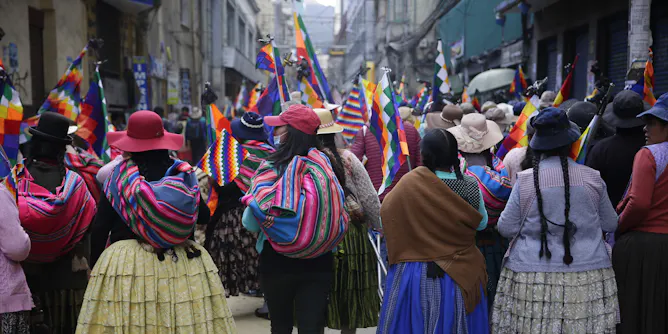
Many thought Bolivia had changed for good under Evo Morales – but perhaps that thinking was premature.
Articles on Latin America
Displaying 301 - 320 of 704 articles
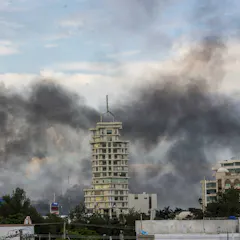
A series of brazen, highly visible attacks by Mexican drug cartels have killed at least 50 people in the past month, terrorizing citizens and making the government look weak on crime.
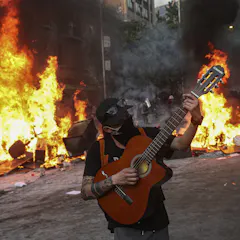
To quell weeks of protest over extreme inequality, Chile’s president has agreed to rewrite the country’s constitution, passed in 1980 under the deadly military regime of Augusto Pinochet.
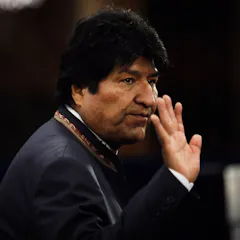
Recent events in Bolivia represent both a military coup d'état and a moment of mass protest.

Who are the LeBarons, the Mexican-American Mormons who lost nine family members in a massacre on Nov. 4.?
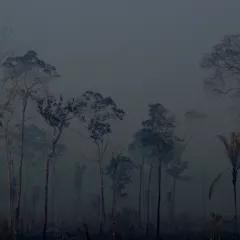
Brazilian evangelicals are politically conservative, but they still believe in climate change. Turning them into climate activists, however, will be a challenge for the environmentalist movement.

A new push to focus development efforts on big infrastructure projects could have unitended consequences.

Alberto Fernández has been elected as Argentina’s new president, defeating Mauricio Macri, who was punished for his economic record.

It may sound like a solemn affair, but the Day of the Dead – which blends indigenous and Catholic ritual – is a convivial celebration that allows Mexicans to reconnect with deceased loved ones.
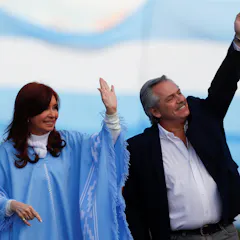
Argentina has voted for change. Alberto Fernández, a 60-year-old lawyer, defeated President Mauricio Macri with a campaign emphasizing economic recovery, social inclusion and national unity.

Populism has a long history in Argentina, tied to the legacy of Juan Perón. Where does Alberto Fernández fit in?
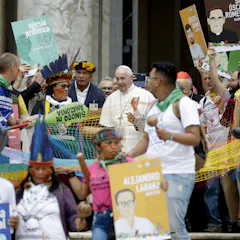
Hundreds of bishops, priests, missionaries and tribal leaders are at the Vatican for the Synod of the Amazon, a three-week meeting focused on the environmental crisis threatening Amazonian peoples.
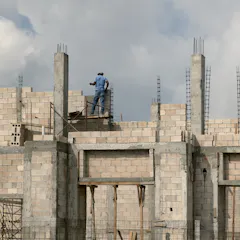
Multinational corporations are increasingly vigilant about respecting human rights, but the case of Mexico tells us that they can indirectly encourage violations by local businesses.

Progressives are leading in the presidential elections of Argentina, Uruguay and Bolivia, bucking the region’s recent rightward trend. But there are lessons in the failures of leftists past.
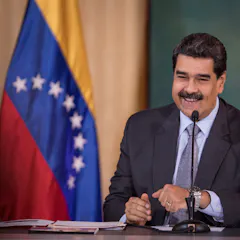
When the Rio Treaty was signed in 1947, an opportunity was missed to promote democracy in Latin America.

Citing national security, Ecuador, Peru and Chile have all made it harder for Venezuelan migrants to enter the country, and xenophobia is rising across the region – even in more welcoming Colombia.
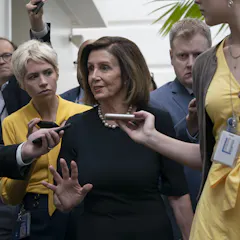
As the House mounts an impeachment investigation of President Trump, examples from Central and South America show that ousting an executive leader from office doesn’t always have the intended effect.
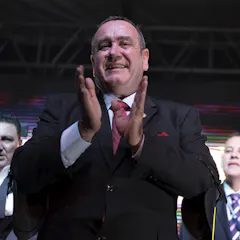
Conservative Alejandro Giammattei beat former first lady Sandra Torres with 60% of the vote. But turnout was the lowest in Guatemala’s modern history, in apparent protest of both candidates.
Does having children make the goal of fairly dividing work at home more elusive?
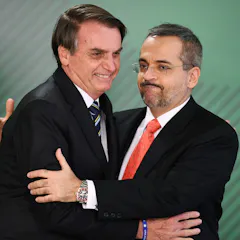
Brazil’s far-right president, Jair Bolsonaro, threatens to slash funding to sociology and philosophy departments. It was just the opening shot in a new battle against the humanities.
Top contributors
-

Senior Lecturer in Human Rights, Constitutional Law and Legal Theory, University of Wollongong
-
Professor of International Politics, Lancaster University
-
Honorary Research Associate, Department of Political and International Studies, Rhodes University
-
Professor of Management and Organization, University of Southern California
-
Richard von Weizsäcker Fellow na Bosch Academy e Co-fundador, Instituto Igarapé; Princeton University
-
Professor of Management and Co-director of the Centre for Latin American & Caribbean Studies, University of Essex
-
Professor of Global Politics, University of Southampton
-
Associate Professor in Strategy and International Business, University of Birmingham
-
Executive Director of the Stone Center for Latin American Studies, Tulane University; King's College London
-
Senior Lecturer in Latin American Politics, University of Bath
-
Senior Lecturer in Latin American Politics, University of Liverpool
-
Professor of Politics and International Relations, Florida International University
-
Research fellow at the International Development Department, University of Birmingham
-
Visiting Scholar, Weatherhead Center for International Affairs, Harvard University; Director of Studies at the Changing Character of War Centre, and Senior Research Fellow, Dept. of Politics and International Relations, University of Oxford
-
Postgraduate Associate at the Institute of Latin American Studies, La Trobe University