
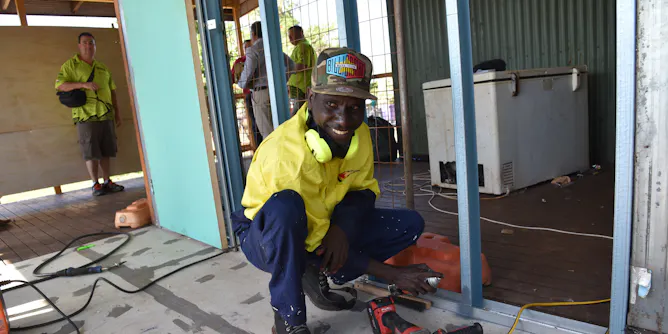
One crucial element of the regional jobs discussion is the need for a redefinition of ‘work’, to include community responsibilities, care and caring for land and Country.
Articles on Labour market
Displaying 41 - 60 of 149 articles

Young workers are particularly vulnerable in the workplace because they tend to do short-term work, often lack training and safety education, and may see injury as just “part of the job.”

A significant employment gap exists between Swedish-born and immigrant job seekers.

How do businesses get employees back into the office when they want to work from home? Research shows the solution could be a blend between the office and home.

Boosting income support payments beyond their current austere levels remains a crucial pillar of policy for governments genuinely committed to reducing persistent disadvantage.

Feudalism has been replaced by capitalism, and the new villeiny — or neo-villeiny — has emerged to reflect a relationship between a worker and an organization.

A tighter labour market than in the past is now needed to drive real wages growth.

There is enough momentum for Australia’s unemployment rate to go lower than 4.2% in 2022. Keeping it low is another matter.

Rates of full-time employment and pay relative to other workers have fallen for the latest generation of new workers. Yet the HILDA Survey shows their reported job satisfaction has risen.

Even now much of the recovery in employment seems to be happening without big wage increases.

Although Latinos are present across all Canadian labour markets, they are lagging behind the Canadian median total income. What does that mean for their economic integration?

Our work suggests we could have achieved much lower unemployment than we have in recent years, without driving up inflation.

Unless we’re careful the damage will be long-lasting — especially for younger Australians.
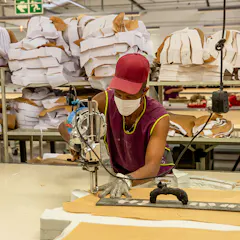
The pandemic has heightened existing weaknesses in South Africa’s skills training regime.

If the best people management practices of the formal economy were to be deployed in the informal economy, new avenues of stimulating economic and life empowerment may be opened.

South Africa is producing an oversupply of graduates in fields that don’t support economic growth.

The British Supreme Court ruling in favour of Uber drivers offers some hope that gig workers, many of them immigrants, might finally be given basic rights. But there’s still lots of work to do.

The government has a legal duty not to exacerbate inequalities in its policies, but this is getting forgotten during the pandemic.

Any permanent increase is welcome, but there’s a long way to go.

Australia has just run a real-life experiment.
Top contributors
-

Professor of Economics, The University of Melbourne
-
Professor of Economics, University of Canberra
-
Professorial Fellow and Co-Director, HILDA Survey, Melbourne Institute of Applied Economic and Social Research, The University of Melbourne
-
Scientia Professor of Economics, UNSW
-
Deputy Program Director, Migration and Labour Markets, Grattan Institute
-
Program Director, Housing and Economic Security, Grattan Institute
-
Associate Professor, Bankwest Curtin Economics Centre, Curtin University
-
Professor of Sociology and Founding Director of The Future of Work Lab, Podcast at MissPerceived, The University of Melbourne
-
Research Associate, School of Social Sciences, Monash University
-
Research associate, Grattan Institute
-
Associate Professor, Department of Political Economy, University of Sydney
-
Research Fellow, Institute for Social and Economic Research, University of Essex
-
Associate Professor UTS Centre for Business and Social Innovation, University of Technology Sydney
-
Laurie Carmichael Distinguished Research Fellow at the Centre for Future Work, Melbourne; and Professor Emeritus, Griffith Business School, Griffith University
-
Director, Bankwest Curtin Economics Centre (BCEC) and John Curtin Distinguished Professor at Curtin Business School, Curtin University