
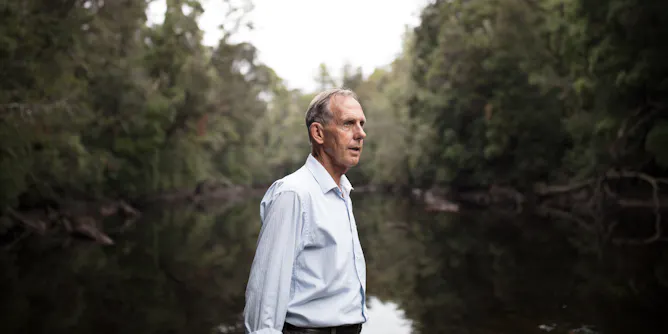
Starting with his campaign against the damming of the Franklin River, Brown has had a huge impact on the place of the environment in Australian political debate.
Articles on Key figures in Australian political history
Displaying all articles
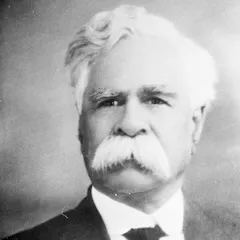
William Cooper was in his 70s when he began a remarkable political campaign, pushing for Indigenous rights and recognition.
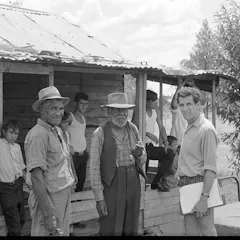
Like other Aboriginal leaders of the 1960s, Perkins viewed basic rights – housing, education and employment – as the building blocks of self-reliant communities.
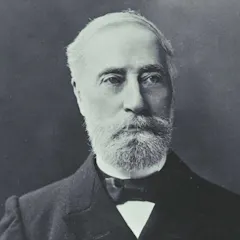
English-born Berry emigrated to gold-rush Victoria, where he helped to shape modern Australian democracy.
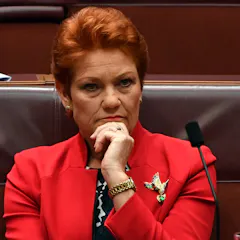
Hanson has been largely unsuccessful in seeing her signature policies realised. But she has helped normalise xenophobia and racism and thus had a disproportionate influence on the national debate.
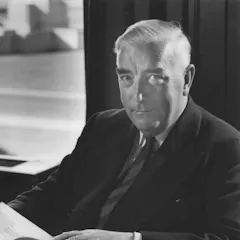
Many of Menzies’s ideas and values were old fashioned by the time he left office in 1966, but his legacy shapes the political debate in other ways.
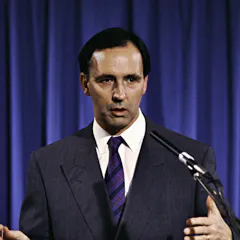
Charismatic, controversial and witty, Paul Keating, along with Bob Hawke, modernised the Australian economy and opened it up to Asia.
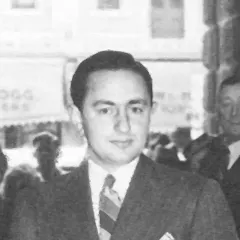
Bob Santamaria knew four Australian prime ministers. Is he the most significant figure in Australian politics never to have held office?
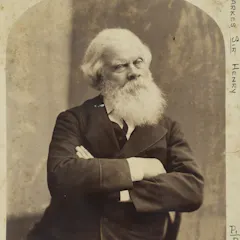
Parkes is known as the ‘Father of Federation’. His tireless championing of a united Australia brought the colonies together and set them on a course for nationhood.
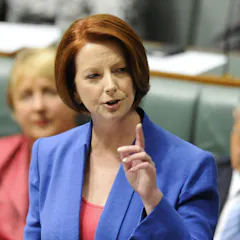
“What would Julia do?” Julia Gillard smashed a glass ceiling as Australia’s 27th prime minister. She also transformed the way we talk and think about women in politics.
Top contributors
-

Associate Professor of History, UNSW
-
Lecturer in Australian Politics, The University of Melbourne
-
Associate professor, Jumbunna Insitute for Indigenous Education and Research, University of Technology Sydney
-
Industry Professor (Indigenous Policy), University of Technology Sydney
-
Professor of History and Politics, School of Humanities and Social Inquiry, University of Wollongong
-
Research fellow, Far-Right Communication, Macquarie University
-
Emerita Professor of Politics, Adelaide University
-
Professor of History, Monash University
-
Professor, School of Historical and Philosophical Studies, The University of Melbourne
-
Professor (Research) and Director, Monash Climate Change Communication Hub, Monash University
-
Lecturer in Australian Politics, UNSW