
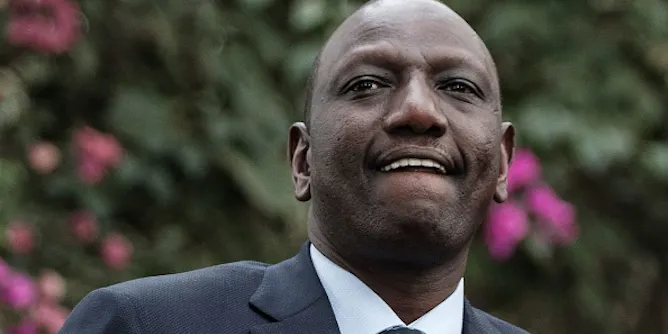
As an outlier in Kenya’s political power matrix, Ruto was elbowed out by the establishment. But he has somersaulted back by appealing directly to the masses.
Articles on Kenya post-election violence
Displaying 21 - 40 of 40 articles

Elites have strong incentives to foment violence. The way they speak about election issues in the media can inflame tensions.
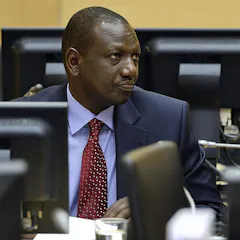
For the ICC, the case against Paul Gicheru represents the possibility for the court to clock a win where so far it has only suffered losses.

Constitutional amendments sought to make it easy for Kenyatta and Odinga to craft a broad tribal coalition against the deputy president.
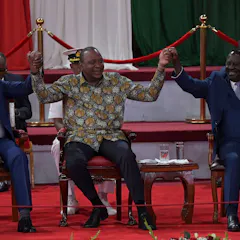
The changes proposed by the initiative are were well-addressed in the country’s 2010 Constitution.
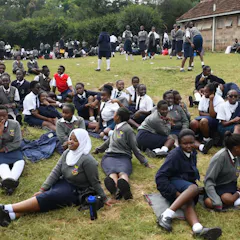
Our findings suggest that it is time to take Kenyan youth seriously as politically important actors.
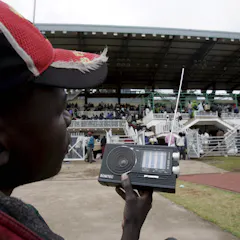
Radio stations with audiences at the grassroots have a key role to play in times of election violence.
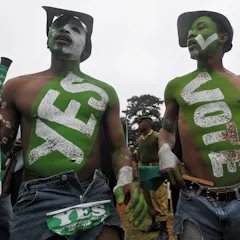
Weary Kenyans are entitled to wonder if the latest referendum push will be any different from the past two.
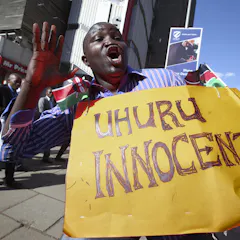
As transitional justice efforts have become more widespread, their mandates have also become increasingly ambitious.
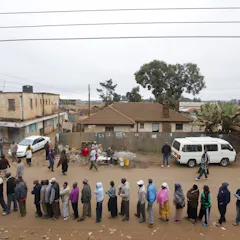
In many counties, there are new health centres, roads and street lights that wouldn’t be there without devolution.
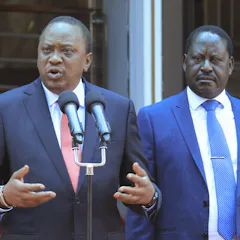
Questions are being raised about the Kenyatta and Odinga relationship.
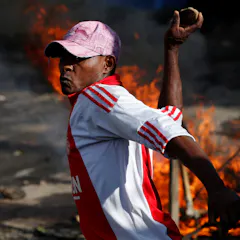
Key institutions steering Kenya’s election have evidently broken down, leaving the country open to an iron fist to reestablish political stability by any means necessary.

Elections in Kenya are never just a matter of casting ballots. Historically, they have been marred by ethno-political violence, exacerbated by vigilantes and militias deployed by politicians.
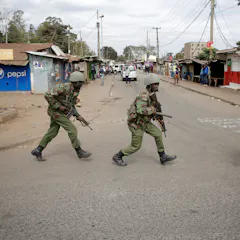
Kenya’s press has admitted to self-censorship after the August 8th poll to avoid a repeat of 2008’s post-election violence. But by refusing to inform the public has the media lost credibility?
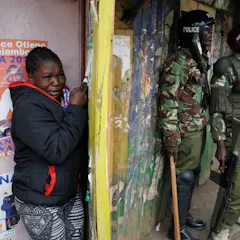
Much international media focus has been on Kenya’s election being a trigger for violence, but that’s only part of the story. The ongoing grievances of Kenyans must be addressed.
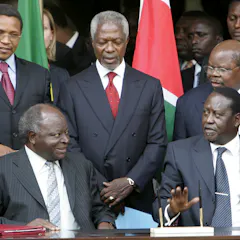
Kenya must address the problem of tribalism and ethnic violence. To do this leaders must critically examine the concept of political ideology.
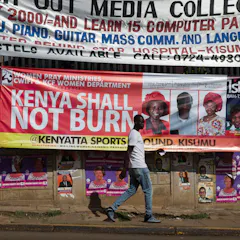
Kenya’s next general election is slated for August 8 this year. As the country prepares for the polls, there are fears that political tensions will result in violence. Will history repeat itself?
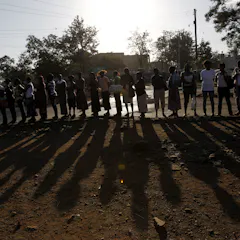
Kenyan voters are aware of their central role in the electoral process, yet they tend to limit their leadership choices. Are they ready to break away from tradition in the 2017 elections?
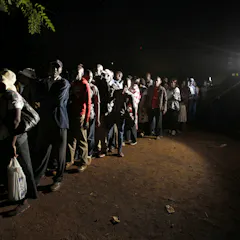
As party primaries have kicked off in Kenya in the run-up to the county’s general election in August, the ghost of violence past has reared its ugly head causing deep divisions along tribal lines.
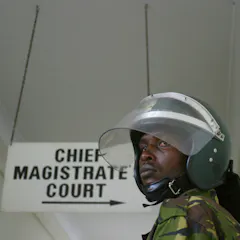
Despite some criticism, the screening of 50-odd judges and nearly 300 magistrates was a remarkable achievement. But Kenya’s new Chief Justice has some cleaning up left to do.
Top contributors
-

Professor of Comparative Politics, University of Warwick
-
Professor, Weber State University
-
International Relations Scholar, University of the Witwatersrand
-
Associate Professor of International Studies, University of Nottingham
-
Associate professor, Uppsala University
-
PhD Candidate, Department of Political Science and Public Administration, University of Nairobi
-
Professor of History, Durham University
-
PhD Candidate, Justice Studies, Charles Sturt University
-
Associate professor, Finance, University of the Witwatersrand
-
Postdoctoral Researcher, Faculty of Law, University of Oxford
-
PhD Candidate in Political Economy, SMC University
-
Associate Professor International Law, Roskilde University
-
Associate Professor, Université Saint-Paul / Saint Paul University
-
Researcher, United States International University
-
Associate Senior Research Fellow, British Institute of International and Comparative Law