
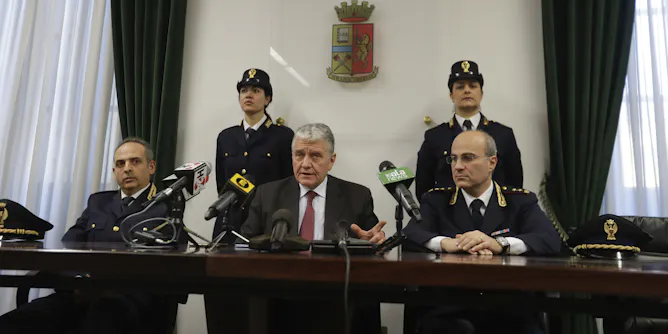
The Berlin terror attack at the end of 2016 will have major political implications for Germany’s elections this year and an uneasy European Union, writes a German studies scholar.
Articles on Italy
Displaying 281 - 300 of 391 articles
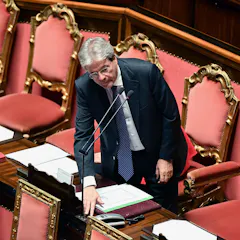
Paolo Gentiloni’s government is barely distinct from his predecessor’s, and its mandate is desperately thin.
Problems at Monte dei Paschi and UniCredit are bad enough without bail-in rules to contend with.

While the US is reeling from rampant fake online news, political movements in Europe are using the internet as a powerful democratic symbol to win elections. Will cyber-optimism or pessimism win?
In a climate of widespread discontent with Italy’s political establishment, a new election might wipe out most of the parties in the current government coalition.
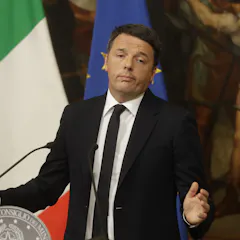
The Italians have rejected Prime Minister Matteo Renzi’s constitutional reform package. Now the real struggle for Italy begins.
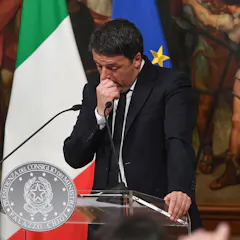
Markets haven’t panicked as they did with Brexit and Trump, but Italy faces serious economic issues in the near future.
This was a vote against the prime minister – not a show of support for his rivals.
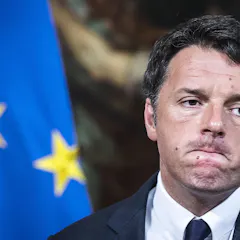
The revolt that brought down Matteo Renzi is no carbon copy of Trump et al, but that won’t be of much comfort to Brussels.
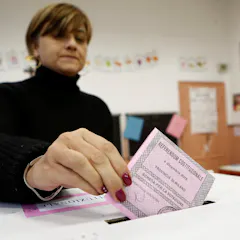
The “no” result from Italy’s referendum is likely to brew political and economic uncertainty for some time yet.
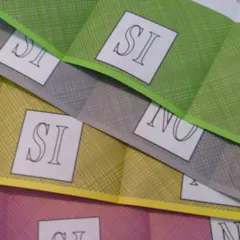
To understand whether the referendum will plunge Italy into a crisis, we need to unpack the problem in its three essential components: the reform; the Renzi’s factor; and the country’s economy.
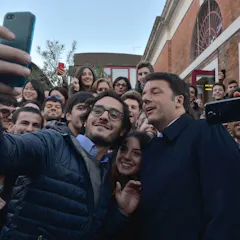
After 1992, the transformation of the Italian left was slow and subtle, but by no means less detrimental to the quality of the country’s democratic system.
US GDP data points to a US rate rise in December, and Australia’s housing affordability problem won’t be helped by current declining building approvals.
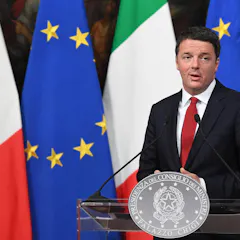
The outcome of Italy’s referendum on constitutional reform could have significant consequences for financial markets and the future of the EU.
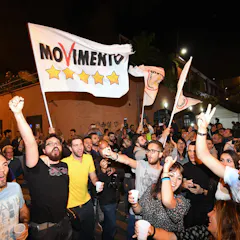
A populist movement led by a comedian has come from nowhere to make life very difficult for the establishment.
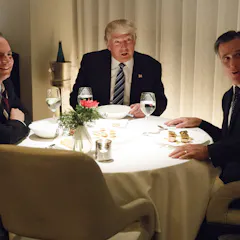
Two Italian scholars who fled fascism in the 1920s urgently warned that American democracy was vulnerable to the same gradual erosion as in Italy. Their message still rings true today.
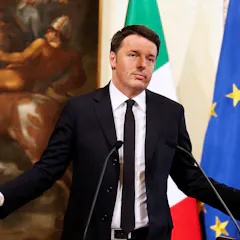
Even if Italy votes for changes that will make it easier for the government to pass economic reforms, the country’s economy will still be in trouble.
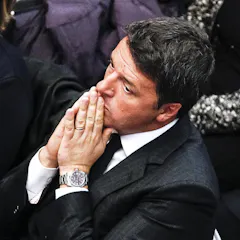
The PM came to power as the anti-establishment candidate. Now he could be the next victim of populist ire.
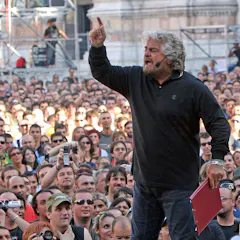
Silvio Berlusconi’s rise to power, hand in hand with his monopoly of mainstream media, made the Internet the favourite harbour for nonaligned audiences and dissident voices.
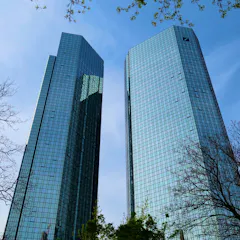
If Berlin doesn’t apply divisive rules that inflict pain on savers, expect cries of double standards from southern Europe.
Top contributors
-

Dean of Business School, University of Southern Queensland
-
Professor of Comparative Organised Crime and Corruption, University of Bath
-
Professor of Politics, University of Salford
-
Professor of Politics and Co-Director of the Centre for Britain and Europe, University of Surrey
-
Professor of International Migration and Forced Displacement and Director of the Institute for Research into International Migration and Superdiversity, University of Birmingham
-
Lecturer and Teacher, Department of Politics and International Relations, Cardiff University
-
Professor of Sociology of Law and Deviance, Università di Bologna; University of Essex; The University of Melbourne
-
Professor of Politics, University of Salford
-
Professor of Critical Cultural & International Studies, Colorado State University
-
Matthew Flinders Professor of Political Science, Flinders University
-
Professor, International Studies, Swinburne University of Technology
-
Professor of Modern Italian History, University of Bristol
-
Associate Professor at University of Milan and Executive Director of the CLEAN Unit on the economics of crime at Bocconi University, Bocconi University
-
Lecturer in Politics and member of Reactionary Politics Research Network, University of Bath
-
Professor of Economics, Bocconi University