

Using force against a ship during a blockade is only lawful under certain conditions. A naval expert explains.
Articles on International law
Displaying 21 - 40 of 538 articles
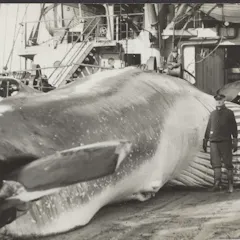
The whaling industry was wildly profitable, and decimated whale populations around the world until it was banned in the 1980s.
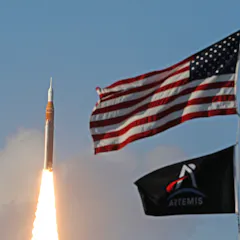
The US disregards international law on Earth. Is that what we want on the Moon?

With peace talks breaking down, the US president has said the US will blockade the Strait of Hormuz, which will have a further dire impact on international fuel supply.
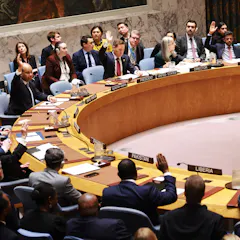
Once again, in a crisis, the UN and the EU seem to pale into insignificance. Multilateralism may not be dead, but it’s currently at an all-time low…

This development reverses decades of global movement towards abolition of the death penalty, while normalising executions in an occupied territory.

The Pakistani strike on a drug addiction hospital raises serious concerns about the enforcement of international humanitarian law.

As the war in Iran escalates across the region, urgent questions about civilian harm, accountability and the limits of international law become harder to answer.
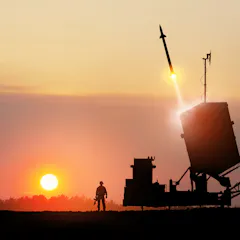
If Israel possesses a nuclear arsenal, while Iran is denied that possibility, what do the international norms on accepting, producing or acquiring nuclear weapons have to say about such double standards?
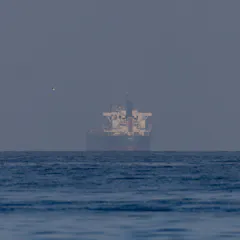
The government must weigh complex moral, legal and political questions before committing to any military involvement in defending the Strait of Hormuz.

There is a gap in international law protections when dangerous toxins are released due to attacks on sites like fuel depots.

Afghanistan says at least 400 people were killed in a Pakistani strike on a hospital on Monday – the latest in a deadly year for medical staff and patients worldwide.
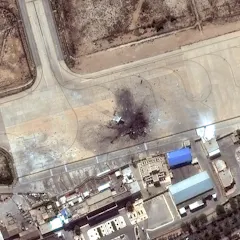
A new treaty on military space operations is highly unlikely, leaving private companies and militaries to define the boundaries of acceptable conduct in war.
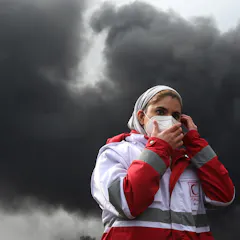
Oil refineries can be legitimate military targets, but only if specific criteria are met.

These rules have developed over centuries as states sought to regulate the conduct of conflict at sea while still allowing navies to operate effectively.
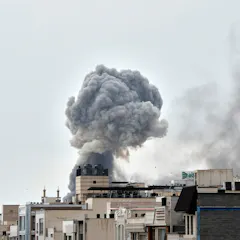
Mark Carney’s support for the U.S.-Israel war against Iran seems hypocritical, but it’s consistent with Canada’s longstanding support for a rules-based order that only applies when convenient.
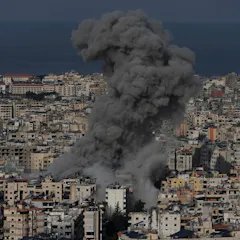
The U.S.-Israel strikes on Iran raise uncomfortable questions about whether the post-1945 rules-based order still constrains the use of force by major powers.
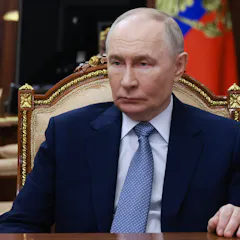
A greater fail is hard to imagine.
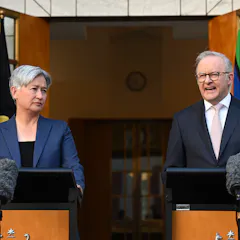
So far, Australia’s response to the US and Israeli strikes on Iran has been ‘say nothing’. But this may not be a successful long-term approach.
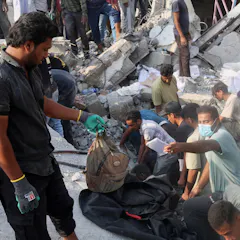
Daily compliance of international law remains the norm. Violations do occur – sometimes brazenly – but they are exceptions.
Top contributors
-

Professor in Human Rights and International Law, University of Newcastle
-
Professor of International Law, Australian National University
-
Associate Professor (Law), Edith Cowan University
-
Course Co-ordinator, International Law Clinical Program, ANU College of Law, Australian National University
-
Associate Professor, The University of Western Australia
-
Associate Professor of Law, Member of Deakin Cyber and the Centre for Law as Protection, Deakin University, Deakin University
-
Senior Visiting Scholar with the Center for the Study of Genocide and Human Rights, Rutgers University
-
Adjunct Professor, Institute for Marine and Antarctic Studies, University of Tasmania
-
Challis Chair of International Law, Sydney Law School, University of Sydney
-
Professor of Law, University of Waikato
-
Associate Professor of Politics and Global Studies, Arizona State University
-
Scientia Professor and ARC Laureate Fellow, Kaldor Centre for International Refugee Law, UNSW
-
Professor of Law and International Peace Studies, University of Notre Dame
-
Associate Professor, Deakin Law School, Deakin University
-
Adjunct Professor in Law, The University of Western Australia