
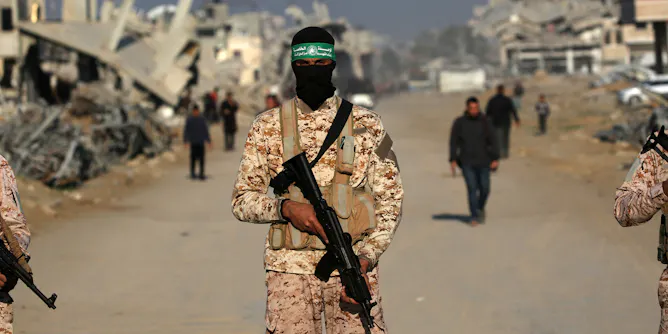
History suggests that without legal and moral accountability, reconciliation and durable peace will remain elusive.
Articles on International Criminal Tribunal for the former Yugoslavia
Displaying all articles
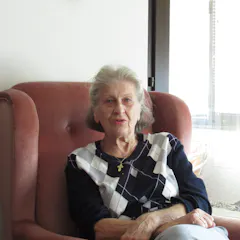
Legal academic Olivera Simic spent eight years talking to a war criminal prosecuted for crimes against humanity who receives fan-mail today.

Attempts to establish justice too early may complicate efforts to achieve peace.
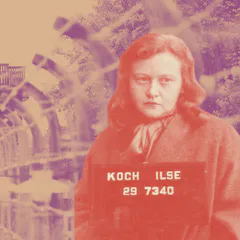
Ilse Koch’s husband was commandant of Buchenwald, one of Germany’s first and largest concentration camps. As the only woman among 31 people indicted for crimes committed there, she became infamous.
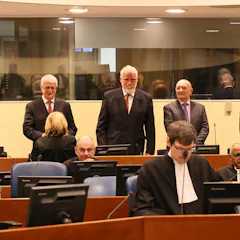
The International Criminal Tribunals for Rwanda (ICTR) and for the former Yugoslavia (ICTY) have tried dozens of individuals. An investigation looks at how the accused experienced these trials.
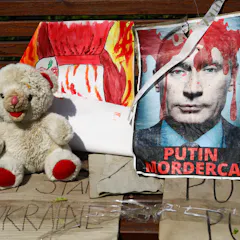
Prosecuting a leader like Vladimir Putin accused of war crimes is difficult. But the trial of Serbian leader Slobodan Milosevic in the early 2000s offers a potential playbook.
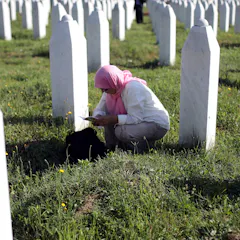
The massacre of 8,000 Muslim Bosniaks in a few days in 1995 must never be forgotten.

Former commander of the Bosnian Serb army Ratko Mladic has been found guilty of war crimes and crimes against humanity. Survivors of the atrocities have today welcomed the long-awaited news.
Bosnian Serb general found guilty of genocide.
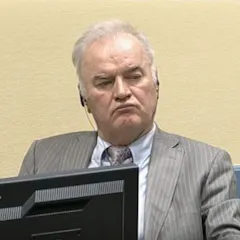
Forensic science of the dead helps to convict the living responsible.

In many countries sports like football brings people together, but in Bosnia it re-emphasises the divides.
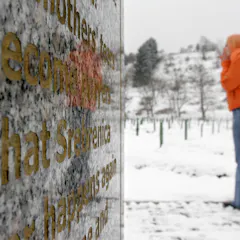
How long does it take to make peace? Decades after the end of the Bosnian war, just one in six residents felt that country had reached reconciliation.
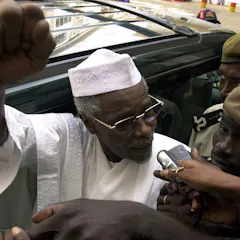
Former Chadian president Hissène Habré’s fate will be sealed by the appeals judgment in a part domestic and international trial bringing closure to victims and human rights champions after a 20 years.
Top contributors
-

Professor in International Law, Bournemouth University
-
Professor in Law, Griffith University
-
Associate Professor International Law, Roskilde University
-
PhD Candidate, Faculty of Health and Social Sciences, Bournemouth University
-
Research Fellow and Senior Lecturer in Reconciliation and Peacebuilding, University of Winchester
-
Professor of Political Science, University of Maryland, Baltimore County
-
Professor of International Law, The University of Western Australia
-
Professeur en droit international pénal, Études empiriques du droit, Université Libre de Bruxelles (ULB)
-
Associate Professor of Politics and Global Studies, Arizona State University
-
Senior Lecturer in Law, University of Waikato
-
Professor of Modern South-East European History, De Montfort University
-
Associate Professor in Modern European History, University of East Anglia