
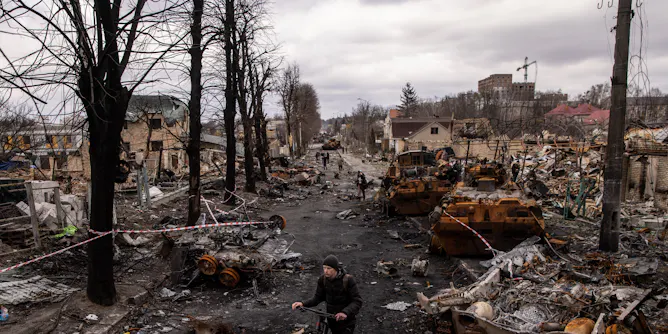
With evidence mounting of Russian war crimes in Ukraine, what options beyond trade sanctions should New Zealand now consider?
Articles on International Criminal Court (ICC)
Displaying 121 - 140 of 270 articles
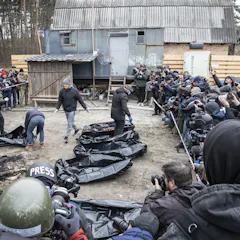
As terrible images from Bucha and other Ukrainian towns are shown around the world, Russian authorities continue to frame their invasion as a fight for their country’s survival.
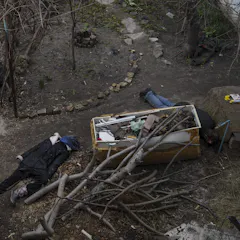
President Biden said that Vladimir Putin had committed war crimes, after news emerged of mass civilian murders in Bucha, Ukraine. Three stories from our archive explain what this means.

None of the available methods for holding Russian President Vladimir Putin accountable are likely to actually punish him, and they may even make new atrocities more likely.
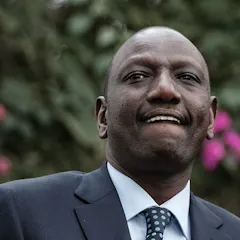
As an outlier in Kenya’s political power matrix, Ruto was elbowed out by the establishment. But he has somersaulted back by appealing directly to the masses.
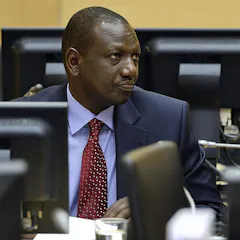
For the ICC, the case against Paul Gicheru represents the possibility for the court to clock a win where so far it has only suffered losses.
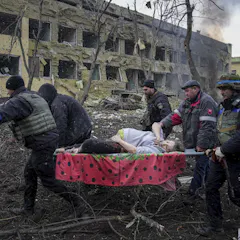
Vladimir Putin has a history of flattening cities in time of conflict. But alleged war crimes in Chechnya and Syria never resulted in charges, let alone prosecutions. Will Ukraine be any different?
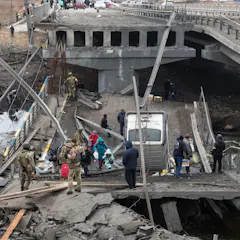
International law says that the Russian invasion is illegal in itself. The Russian military’s alleged conduct also breach various international legal treaties.
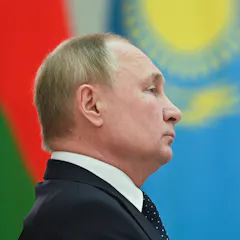
The International Criminal Court has handed arrest warrants for only three heads of state. Could Putin be next?
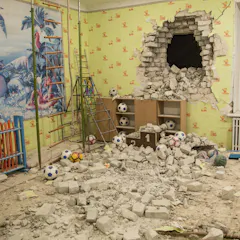
The International Criminal Court is launching an investigation into possible war crimes in Ukraine. But significant hurdles remain, and it’s uncertain anyone will ever be brought to justice.
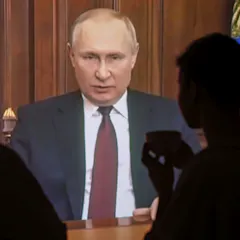
The next steps in the investigation that could result in indictments for alleged war crimes in Ukraine.
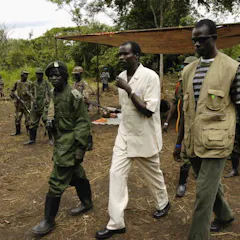
Fresh efforts to capture Kony comes amid growing influence of Russia in the Central African Republic.
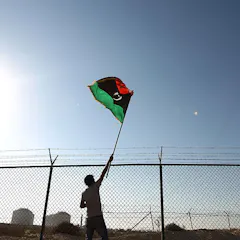
Whether or not elections will be able to seal the breach in the Libyan polity remains an open question.
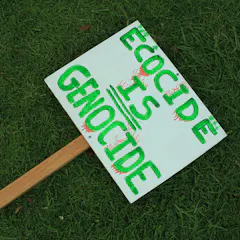
Criminalising ecocide means its victims will be able to receive reparations, helping to rebuild destroyed ecosystems and communities.
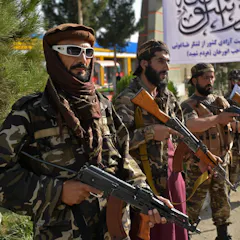
The Taliban is responsible for atrocities dating back to the 1990s, but has never been held responsible. The international community can play a role in ending the impunity.

The value of the rule of law is to challenge and constrain power. In this sense, the legacy of Habré’s trial and conviction is mixed.

Plus, why sarcasm is so difficult for children to understand – and how to help them. Listen to episode 23 of The Conversation Weekly podcast.
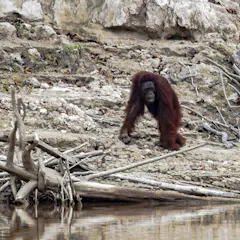
Environmental destruction remains an unofficial crime, but activists and scholars want it recognised.

An Indigenous lawyer makes the case that what happened to Indigenous children who went to residential schools is genocide and the case should be tried by the International Criminal Court.
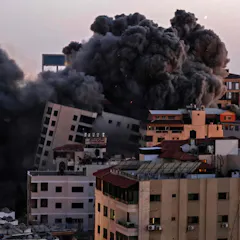
Neither Israel nor Hamas will listen to New Zealand directly, but there is still more parliament can do to promote international peace efforts.
Top contributors
-

Associate Professor International Law, Roskilde University
-
Professor of Human Rights and International Humanitarian Law, Queen's University Belfast
-
Lecturer in Law, University of East London
-
Senior Lecturer in International Relations, University of Tasmania
-
Professor of Law, University of Waikato
-
Lecturer in International Relations and International Security, University of Bath
-
Professor in Human Rights and International Law, University of Newcastle
-
Associate Professor of Politics and Global Studies, Arizona State University
-
Professor of International Law, Australian National University
-
Associate Professor in International Relations, University of Nottingham
-
Professor of Law, Swansea University
-
Senior Visiting Scholar with the Center for the Study of Genocide and Human Rights, Rutgers University
-
Distinguished Professor of Anthropology; Director, Center for the Study of Genocide and Human Rights, Rutgers University - Newark
-
Professor of International Law, University of Portsmouth
-
Lecturer in Law, Nottingham Trent University