
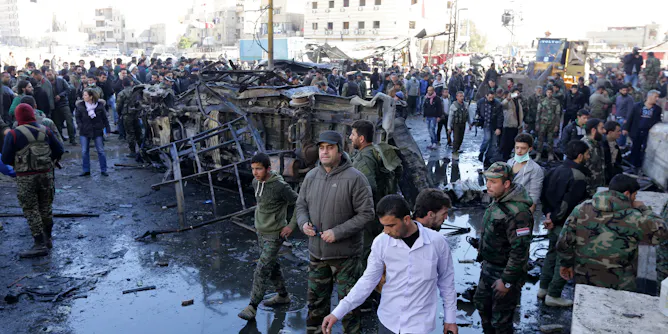
Even if the war in Syria is somehow brought to a close, prosecuting IS members for the crimes they’ve committed won’t be easy.
Articles on International Criminal Court (ICC)
Displaying 221 - 240 of 270 articles
But criminal sanctions alone aren’t enough. We also have to make individuals and firms financially liable for their actions.
We’re unlikely to see the Syrian leader face charges for crimes against humanity any time soon.
The violence that often accompanies political disputes or elections is testimony to the efficacy of hate propaganda as a tool in the political arsenal of Kenyan politicians.
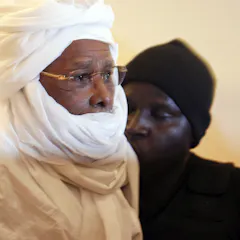
The trial of Chad’s former dictator could provide a template for prosecutions of other African despots. Its success could be seen as a victory for African justice over international approaches.
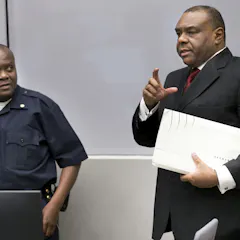
Jean-Pierre Bemba Gombo has been convicted for crimes of sexual violence during war in the Central African Republic. It’s a significant case, but not the historic victory it’s been hailed as.
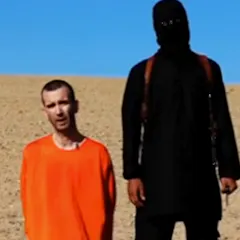
What is the likelihood of stateless terror suspects being brought to book for their crimes?
How can the International Criminal Court serve justice in a climate of intense rumour and bitter suspicion?
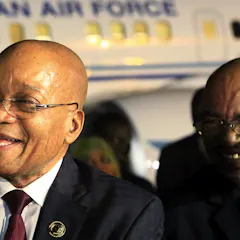
South Africa’s withdrawal from the ICC could have mere symbolic value. The country will continue to have obligations to binding decisions taken by the UN Security Council – including those pertaining to the court.

We have the courts, we have (some) evidence, but can we build a case? MH17 investigation could remain inconclusive.

The peace deal in Colombia is not only a welcome surprise after 50 years of war, it’s also groundbreaking. That offers hope for other countries in conflict.
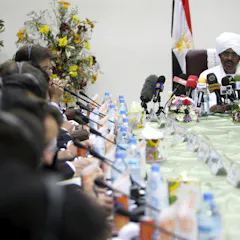
Omar al-Bashir’s planned trip to New York to address a summit on sustainable development at the UN General Assembly involves considerable reputational risk for the US.
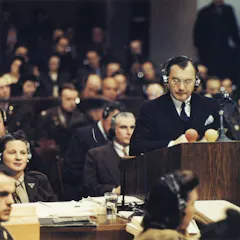
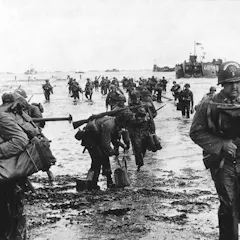
Set up between the Hiroshima and Nagasaki bombings, the Nuremburg Trials founded an entire legal system the world now takes for granted.
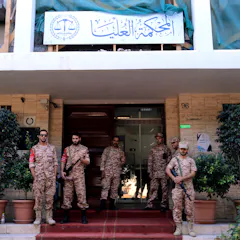
By declining to stop an unfair trial and a batch of death sentences in Libya, the world’s court has yet again proved its fecklessness.

Are there any other options at the international level to have the downing of Flight MH17 properly investigated and – if appropriate – prosecuted by an impartial, independent international court?
The ICC has not lived up to its noble intentions of making the world more just. Its failure echoes that of the 1928 Kellogg-Briand Pact, which set out to banish wars and to settle disputes peacefully.
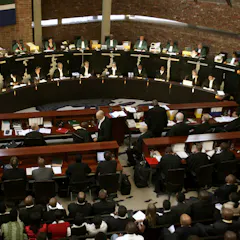
The South African government’s failure to arrest Omar al-Bashir flies in the face of the Constitutional Court’s decision in 2014 that South Africa has a duty to abide by its international obligations.
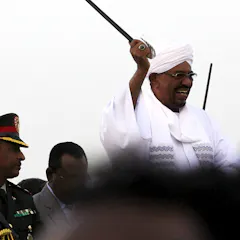
The attempt to arrest al-Bashir is the first time a court in an ICC member state has come to answering the question whether a sitting head of state can be detained and handed over to the ICC.
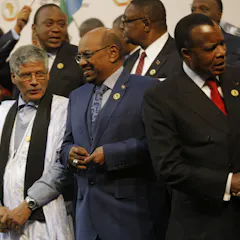
Omar al-Bashir left South Africa as a court dragged its feet over whether to stop him. This is probably illegal – and it’s par for the course.
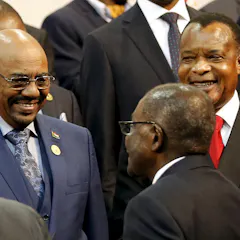
As a signatory to the Rome Statute, South Africa is obliged to arrest Omar al-Bashir and end his status as a fugitive from international law for war crimes allegedly committed in the conflict in Darfur.
Top contributors
-

Associate Professor International Law, Roskilde University
-
Professor of Human Rights and International Humanitarian Law, Queen's University Belfast
-
Lecturer in Law, University of East London
-
Senior Lecturer in International Relations, University of Tasmania
-
Professor of Law, University of Waikato
-
Lecturer in International Relations and International Security, University of Bath
-
Professor in Human Rights and International Law, University of Newcastle
-
Associate Professor of Politics and Global Studies, Arizona State University
-
Professor of International Law, Australian National University
-
Associate Professor in International Relations, University of Nottingham
-
Professor of Law, Swansea University
-
Senior Visiting Scholar with the Center for the Study of Genocide and Human Rights, Rutgers University
-
Distinguished Professor of Anthropology; Director, Center for the Study of Genocide and Human Rights, Rutgers University - Newark
-
Professor of International Law, University of Portsmouth
-
Lecturer in Law, Nottingham Trent University