
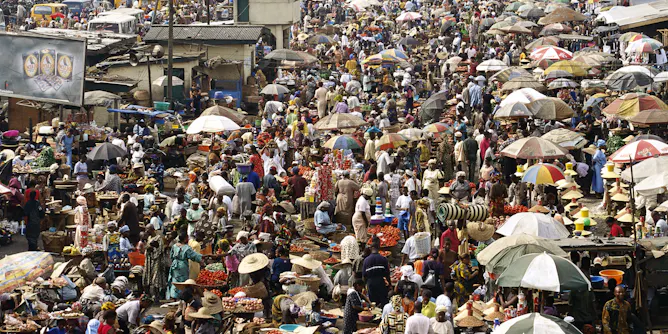
Floods regularly devastate Lagos’s informal workers, but traders and residents have built their own systems to adapt where the state has failed.
Articles on Informal traders
Displaying all articles
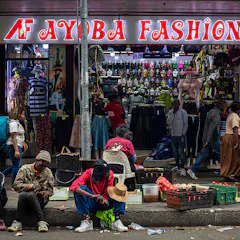
Traders in the informal economy need a supportive ecosystem so they can move beyond survival and contribute to local growth and development.
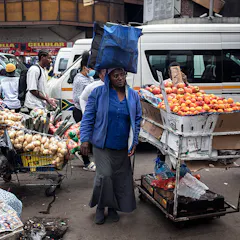
Informal trading is an integral part of the city of Johannesburg’s identity.

It’s often seen as harmless, but new research shows small business owners can feel compromised by requests to “lose the VAT”.
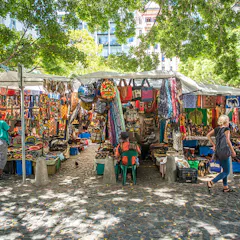
Cape Town’s informal traders need support, but they need to be consulted first.
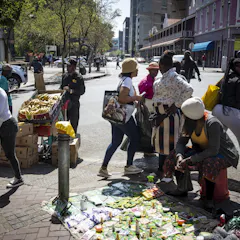
The city’s street trading management approach is mainly restrictive. Relocations, harassment and confiscation of of traders’ stock are common.
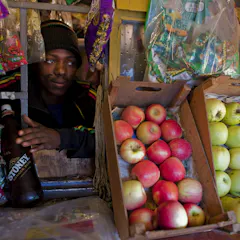
By better understanding the politics and governance of African cities and variations across cities, we can identify feasible opportunities to improve informal traders’ livelihoods.
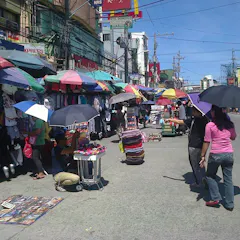
Street vendors are the most visible of the people who work in the informal sector – up to half the urban workforce in cities like Manila – but whose needs and rights receive no official recognition.

Graft is common in the way that markets in Kinshasa are run.
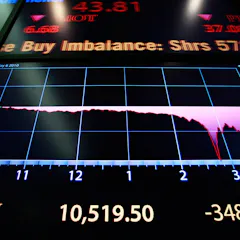
New research shines light on whether creating such a haven as a new type of exchange that slows trading down a bit could attract enough traders to be effective.
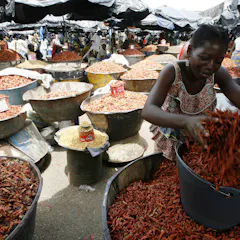
The informal economy in sub-Saharan Africa is largely marginalised despite its significant contribution to employment and GDP.
Top contributors
-

Senior Researcher, Gauteng City-Region Observatory
-
Professor of Cross-cultural Management, Middlesex University
-
Associate researcher, University of Antwerp
-
Professor in International Development, University of Antwerp
-
School of Economic Sciences, North-West University
-
Senior Research Fellow, International Food Policy Research Institute (IFPRI)
-
Associate Professor at Aix-Marseille University, Aix-Marseille Université (AMU)
-
Associate Professor, University of the Witwatersrand
-
Visiting senior lecturer, University of the Witwatersrand
-
CGIAR
-
Research Fellow – Informal Urbanism (InfUr-) Hub, The University of Melbourne
-
Professor, GIBS, University of Pretoria
-
Director of Studies, Loughborough University
-
Professor of Strategy and International Management, University of Southampton
-
Professor of Entrepreneurship, Audencia