

It is important that procedures surrounding funerals are developed by public health officials alongside traditional and religious authorities.
Articles on Infectious diseases
Displaying 381 - 400 of 692 articles

There’s no scientific definition for a wave of disease – and no evidence that the original onslaught of coronavirus in the US has receded much at all.

Australia’s island identity and attitude to border security was forged from handling pandemics since the time of federation. Here’s what we’ve learned along the way.

It’s excellent this virus has been found early, but there is no evidence yet of human-to-human transmission.

Despite disappointing download numbers and almost zero success in tracing COVID-19 infections, Australia is persisting with the COVIDSafe app, while the rest of the world embraces the ‘Gapple’ model.
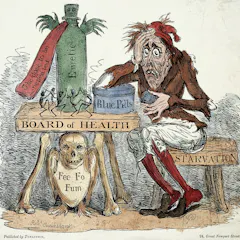
Pandemic histories are useful for understanding COVID-19, but how they connect with race, public health, revolution, labour and colonialism are needed to explain the present and predict the future.

A century ago, Australians were battling another pandemic, tuberculosis, with public health measures many will find familiar today.
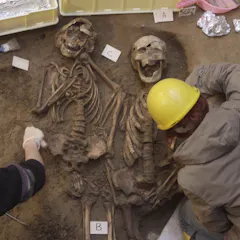
People have lived with infectious disease throughout the millennia, with culture and biology influencing each other. Archaeologists decode the stories told by bones and what accompanies them.
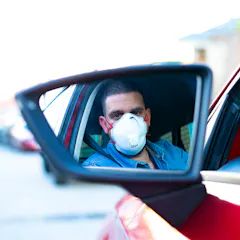
A COVID-19-type pandemic had long been predicted, but our warnings weren’t heeded. We need to start rethinking our approach to health now – even in countries like New Zealand.

The study of two hospitals was a first for researching the microbiology of the built environment in South Africa – a multi-disciplinary approach to understanding how to design healthier buildings.

As restaurants and cafes re-open, here’s what you can do to limit the chance of coronavirus transmission.

When two or more epidemics co-exist and compound one another to worsen health, they are said to be syndemic. COVID-19 is feeding on other crises and diseases.

Don’t spit, change out of your kit at home and clean match balls. These are just some of the ways sport is changing as restrictions ease.

COVID-19 is spreading fast through not only the world’s richest cities but also its poorest, ravaging slum areas where risk factors like overcrowding and poverty accelerate disease transmission.
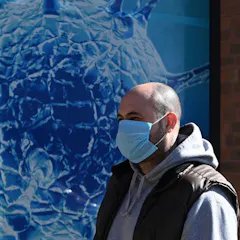
The pandemic, in that it represents a major and therefore exceptional risk, calls for a response built collectively, and not by a small group of experts or decision-makers.

Mysteries surround the coronavirus, but our expert is here to address some of the most perplexing issues.
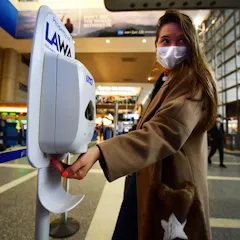
Human psychology has evolved to avoid situations that could lead to infection. Behavioral choices now could have long-term effects on how people interact with others and the world.
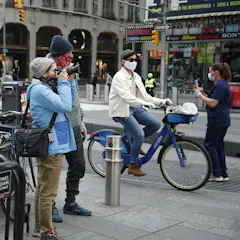
Your body can be infected and fight off SARS-CoV-2 without your ever noticing.

Lord May was an illustrious scientist, a towering figure in the British establishment, and a quintessential Aussie. His theories help explain everything from complex ecosystems to financial markets.

Nurses on the front lines of a pandemic need education, training and institutional support.
Top contributors
-

Professor of Global Biosecurity, NHMRC L3 Research Fellow, Head, Biosecurity Program, Kirby Institute, UNSW
-
Professor of Infectious Diseases, Monash University
-
Professor of Microbiology and Immunology, Indiana University
-
Associate Professor, Epidemiology, Deakin University
-
Professor of Infectious Diseases and Global Health, University of Sydney
-
Regents' Professor & Chair, Medical Laboratory Science, Texas State University
-
Assistant Professor of Epidemiology and Biostatistics, University of Illinois Chicago
-
Professor, Discipline of Paediatrics and Child Health, University of Sydney
-
Paediatrician & Infectious Diseases Physician; Senior Lecturer & NHMRC Fellow, Faculty of Medicine, University of Sydney
-
Paediatrician and Infectious Diseases Specialist; Clinical Researcher, University of Sydney
-
Adjunct Associate Professor, Faculty of Medicine
-
Senior Lecturer in Microbiology, Western Sydney University
-
Associate Professor of Medicine, Infectious Diseases Physician, Australian National University
-
John Curtin Distinguished Professor of Health Science, Curtin University
-
Deputy Director, WHO Collaborating Centre for Reference and Research on Influenza