

Twenty-five years after the landmark Delgamuukw case, Canada is still failing to fulfil its legal obligations to Indigenous Peoples.
Articles on Idle No More
Displaying all articles

A web of local environmental action campaigns launched against oilsands pipelines a decade ago helped bring an end to Keystone XL.
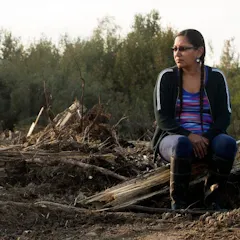
A co-founder of Idle No More was put on trial for ‘trespassing’ on her family’s ancestral lands. Canada has much to learn about institutionalizing respectful relationships with Indigenous peoples.

Built on historical research, this article tells the resilient, fascinating and rarely told history of Indigenous women’s organizing and resistance in Saskatchewan.

The headlines suggest the Supreme Court of Canada has ruled against Indigenous consultation. But its recent ruling is much more nuanced and complex than that.
Top contributors
-

Tier II Canada Research Chair in Indigenous Peoples and Global Social Justice, University of Regina
-
Professor of Law and Canada Research Chair in Indigenous Rights in Constitutional and International Law, University of Saskatchewan
-
Associate Professor, Faculty of Law, University of Windsor
-
Assistant Professor of Criminology, Toronto Metropolitan University
-
Assistant Professor, Faculty of Law, University of Windsor
-
Associate Professor, School of Professional Communication, Toronto Metropolitan University
-
Assistant Professor, Law, University of Windsor