
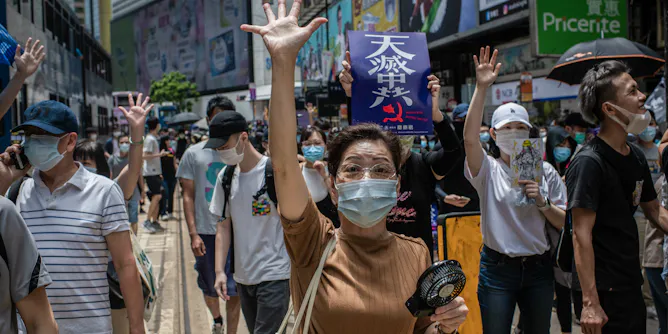
The cherished legal rights that Beijing seeks to suppress in Hong Kong were established, in part, by Vietnamese asylum-seekers who fought for their freedom in court in the 1980s.
Articles on Hong Kong extradition bill
Displaying all articles
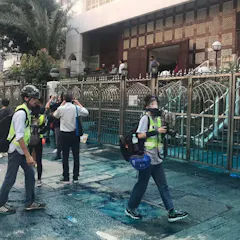
When police sprayed Kowloon Mosque with blue dye during protests, the people of Hong Kong rallied again to help clean it up.
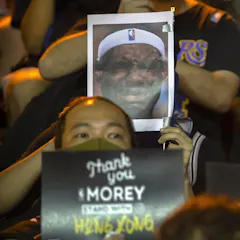
Protest, or the lack of it, can reveal one’s priorities and values. In failing to stand up to China, LeBron James and the NBA told us something about theirs.
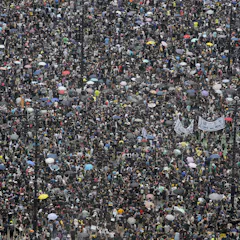
While the political and long-term consequences of the protests are still impossible to know, Hong Kong is already experiencing some short-term economic impacts.
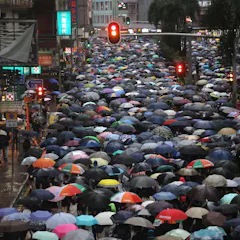
Why the Hong Kong protesters feel they have ‘nothing to lose’
The Conversation29.5 MB (download)
Hong Kong leader Carrie Lam has indicated she's open to dialogue. But unless she meets the demonstrators' demands, the protest movement isn't going to end anytime soon.
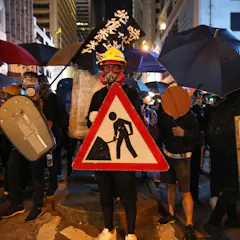
Protesters have adopted new approaches stemming from the failures of the 2014 Umbrella Movement and they are building something that is showing resilience to Beijing’s authoritarianism.
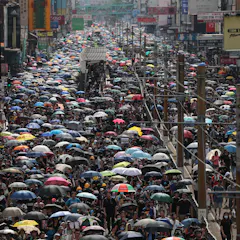
Hong Kong has few recognisable public places and none with the space for huge numbers of protesters. Instead, they have co-opted the streets and digital media as public spaces for protest.
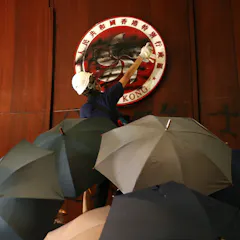
The occupation of Hong Kong’s Legislative Council building on July 1 was met with calls for ‘zero tolerance’ from mainland China.
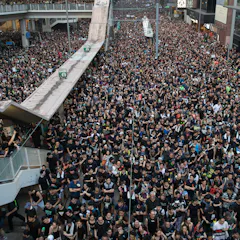
Huge protests in Hong Kong against proposed changes to extradition law have put the country’s relationship with China in the spotlight.
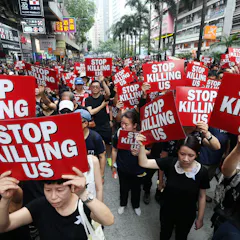
A controversial extradition law has been suspended in Hong Kong after more than a week of mass public resistance. Hong Kong’s legal system is one of its few remaining areas of autonomy from China.
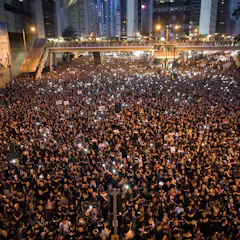
Hong Kong’s protesters are galvanised by their cause, but whether they can sustain their momentum and bring about real change remains to be seen.
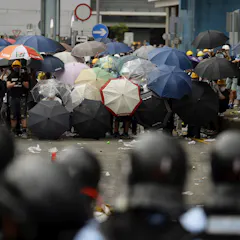
Why protests have returned to the streets of Hong Kong.
Top contributors
-

Pro Vice Chancellor (Business), Griffith University
-
Lecturer in Sociology, University of the Sunshine Coast
-
Professor of History, Tulane University
-
Senior Lecturer in International Politics, University of Surrey
-
Lecturer in Labour, Social Movements and Development, SOAS, University of London
-
Professor of Global Management, Thunderbird School of Global Management, Arizona State University
-
Research Assistant Professor, Appalachian State University
-
PhD Student, Recreation and Leisure Studies, University of Waterloo
-
Associate Professor in Urban Geography, University of Sydney
-
Professor in Asia Pacific Studies, Director of the Asia Pacific Studies Institutes, University of Lancashire
-
Senior Lecturer in Sociology, The University of Queensland
-
Associate professor, Australian National University
-
Associate Professor of Political Science, Brock University
-
Associate Professor, Department of Social Sciences, The Education University of Hong Kong