
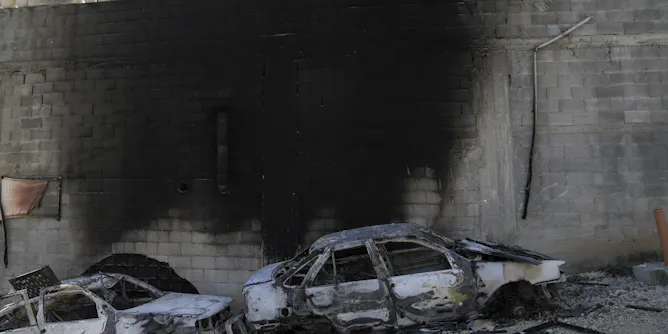
A scholar of Jewish history explains how the term ‘pogrom’ lives in Jewish collective memory and why its use can be highly contentious.
Articles on Holocaust
Displaying 101 - 120 of 261 articles
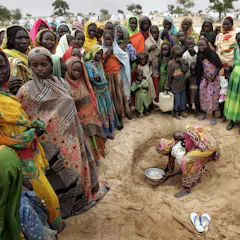
Many genocide classes review the Holocaust or Cambodia’s Killing Fields. A scholar wanted to show that genocide, war crimes, crimes against humanity and ethnic cleansing still happen today.

Gan Siyabonga is unique in Israel. It highlights a group that was both anti-apartheid and pro-Zionist.
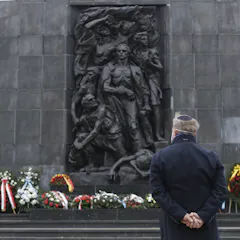
The Holocaust has become a contentious issue in Poland in recent years. And those challenging the government’s historical narrative have faced condemnation and lawsuits.
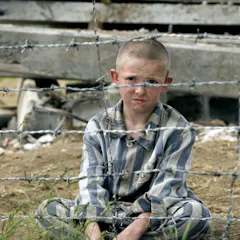
An expert in the representation of the Holocaust on film explains the responsibility of the reader to educate themselves beyond the depth of a single work of fiction.
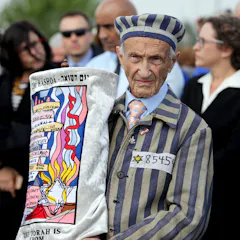
We navigate between making the Holocaust a fable and banning any representation by talking about, arguing over and even calling out fables of the Holocaust.
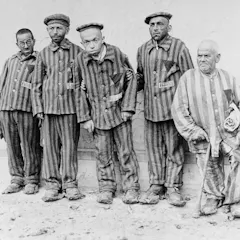
In 2023, International Holocaust Remembrance Day marks 90 years since the Nazis assumed power. Disabled people were the first Holocaust victims; Nazi programs discriminated against and murdered them.
This theme of this year’s Holocaust Remembrance Day encourages us to ask difficult questions of ourselves and society.
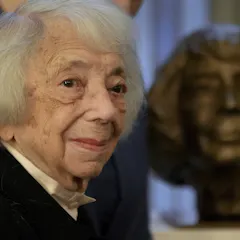
Over 100 life stories of Holocaust survivors have been published through a Holocaust survivors’ memoir program. Listening to survivors narrate their stories is a powerful learning experience.
Antisemitism often appears and spreads on social media. But digital technology can be part of the solution, too.

Spain has long avoided addressing the fact that tens of thousands of Spaniards were victims of Nazis, who collaborated with Spain’s former dictator, Francisco Franco.
Detention at Manus Island was not the same as detention at Auschwitz, writes Jordana Silverstein. But the historical insights from those who were in those places echo through time, across generations.
There isn’t one, clear-cut way to prevent genocide. But there are effective methods of prevention that governments can take.
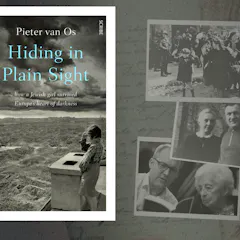
Mala, a Polish Orthodox Jewish woman, escaped the Warsaw ghetto early in the second world war and survived by passing as a Catholic. A new book tells her story.
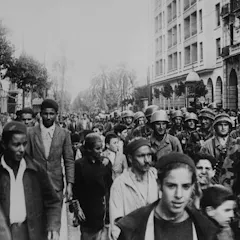
People across much of North Africa were subject to racist laws and suffering at the hands of European powers during the Second World War.
Many conspiracy theories and disinformation are rooted in antisemitic tropes which spread harm and undermine our democratic institutions.
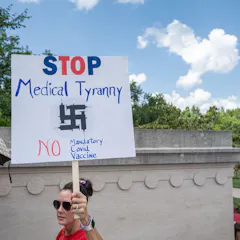
Many Americans know a simple version of Holocaust history, in which their country played the savior. The reality isn’t so comfortable, a historian writes.
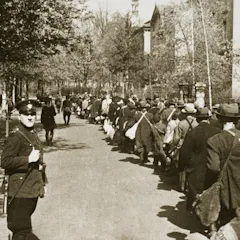
Holocaust scholars long relied on documents and survivor testimonies to help reconstruct the history of that tragic event. Now, they’re turning to wordless witnesses to learn more: pictures.
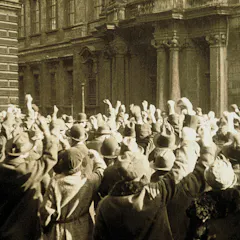
Writers seem to be especially vulnerable in polarized times, when the nuances of works are more likely to be overlooked.

Efforts to prohibit Holocaust denial will prevent hate speech and fascism, and protect the history of the Holocaust.
Top contributors
-

Professor of Sociology, Rowan University
-
Associate Professor in Modern European History and Jewish History, UNSW
-
Professor Emeritus of Modern European History, University of Essex
-
Professor of Post-Soviet Cultural History and Film, Queen Mary University of London
-
PhD in History, Durham University
-
Assistant Professor of Jewish Studies, College of Charleston
-
Faculty, Holocaust and Genocide Studies, Gratz College
-
Professor Emeritus in Contemporary German History, Nottingham Trent University
-
Distinguished Professor of Anthropology; Director, Center for the Study of Genocide and Human Rights, Rutgers University - Newark
-
Professor of History, USC Dornsife College of Letters, Arts and Sciences
-
Assistant Professor of Comparative Literature and English, MacEwan University
-
Casual Academic, Faculty of Arts and Social Sciences, University of Technology Sydney
-
Professor of German Historical Studies, University of Liverpool
-
Professor of Film Studies, Bangor University
-
Presidential Chair in Modern Jewish Studies, University of California, Los Angeles