

Many people with moderate to severe chronic pain find it difficult to move around. By contrast, HIV-positive people who had chronic pain are still active.
Articles on HIV/AIDS
Displaying 221 - 240 of 338 articles

The ghost of ‘Khwezi’ – the woman who accused Jacob Zuma of rape in 2006 – continues to haunt him, just as the spectre of rape continues to haunt South Africa.

Dispensing cash to ensure healthy care for vulnerable children is critical, but it must be supplemented by other interventions to maximise well-being.

A judge has found that NHS England cannot reasonably refuse to fund anti-HIV drugs for gay men. This is a major step forward.
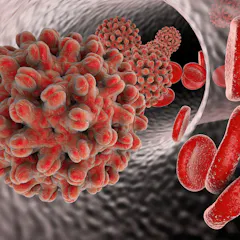
Liver cancer in Africans tends to occur between the ages of 30 and 40. But a study has found that it occurs at a significantly younger age in those who are infected with HIV and hepatitis B.

The focus of the 2016 International AIDS Conference has on access to necessary antiretrovirals, equity and making sure no-one is left behind. But there is a funding gap that needs to be addressed.

Studies have suggested that women using a particular kind of injectable contraceptive are more susceptible to HIV infection. Research in mice offers new insights.

Taking antiretrovirals is key to reducing HIV infection rates, but the challenge lies in making sure people who know they are infected actually take the drugs.
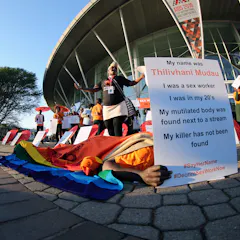
Mobility is not only a risk factor for HIV – it is also a structural determinant in how HIV responses are designed and implemented.
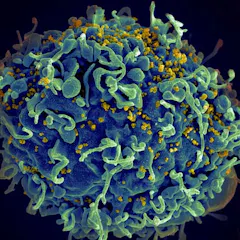
HIV research continues to search for a cure. The focus is on developing therapies to cure HIV infection or allow people with HIV to safely stop antiretroviral therapy and keep the virus under control.

Current epidemiological and financial trends suggest there’s a major risk of a substantial shortfall in the funds required to sustain life-saving antiretroviral programmes.
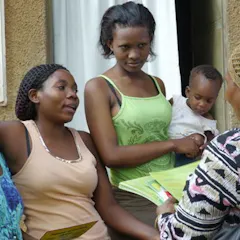
Many women across the world feel unable to refuse sex or request condom use. Empowering them could help bring down HIV rates.
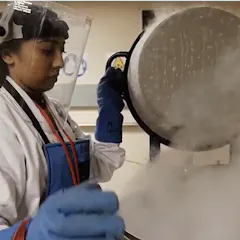
A new centre in South Africa will work to significantly reduce emerging HIV and TB co-infections.

Three new studies conducted in South Africa provide insights into the engine that drives HIV transmission in the country.
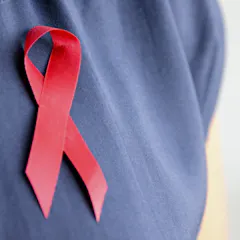
The International AIDS Conference is more than just a talk shop. The platform it offers for engagement between governments, scientists and civil society is of undisputable value.

Chikwe Ihekweazu relives his experience from 2000, when the International AIDS Conference was last hosted in South Africa.

Activists, health-care workers and scientists in South Africa were faced with a horrific epidemic but went on a ruthless crusade to turn it around.
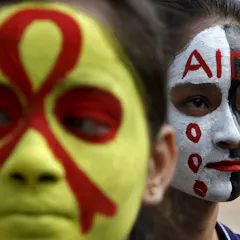
The 90-90-90 strategy is an attempt to get the HIV epidemic under control by adopting a ‘test and treat’ approach. This is part of the plan to eliminate AIDS by 2030.

There are good reasons for drawing attention to “the end of AIDS” in Australia. But this needs to be read with caution.

Former South African President Thabo Mbeki remains a puzzle to many of his compatriots. A new book, ‘The Thabo Mbeki I know’, will help to understand him better.
Top contributors
-

Professor of medicine and deputy director of the Desmond Tutu HIV Centre at the Institute of Infectious Disease and Molecular Medicine, University of Cape Town
-
Principal Research Fellow, Australian Research Centre in Sex, Health and Society, La Trobe University
-
Distinguished Professor, Infectious Disease and Oncology Research Institute, Faculty of Heath Sciences, University of the Witwatersrand, Executive Director Perinatal HIV Research Unit, Chief Scientific Officer, South African Medical Research Council
-
Associate Professor, Public Health Ethics, School of Population Health, UNSW
-
Melbourne Laureate Professor, University of Melbourne; Director, The Peter Doherty Institute for Infection and Immunity
-
Professor of Epidemiology and Public Health, University of Malawi
-
Research Director at The Health Economics and HIV and AIDS Research Division (HEARD), University of KwaZulu-Natal
-
Assistant Professor of Nursing, University of Michigan
-
Assistant Professor of Public Health, University of Iowa
-
Professor of Anthropology, American University
-
Senior Research Fellow, Monash University
-
Behavioural Scientist, Human Sciences Research Council
-
Professor of Global Health and Director, O'Neill Institute, Georgetown University
-
Professor, School of Health Sciences, University of Northern British Columbia; University of Victoria
-
Associate Professor and Head of the Surveillance and Evaluation Program for Public Health at the Kirby Institute, UNSW