

The Household, Income and Labour Dynamics in Australia (HILDA) Survey, out today, found women exhibiting much lower levels of financial literacy than men. How do you score?
Articles on HILDA
Displaying 41 - 60 of 63 articles

The government claims university degrees are failing businesses, but analysis of the latest graduate outcome and employer satisfaction surveys tells us the problem is with underemployment.

There is a strong and statistically significant association between respondents’ cognitive ability and their support for equal rights between same- and different-sex couples.

Data shows that the gender wage gap can be partially explained by how different skills and psychological traits are treated in the labour market.

The latest data from the Australian Bureau of Statistics shows inequality declining slightly as overall incomes stagnate.
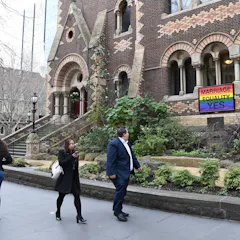
HILDA data reveal an overwhelming tide of support toward the rights of same-sex couples within Australian society.
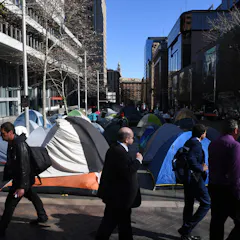
If the gap between the wealth of the billionaires and that of the average residents continues to widen dramatically, there is likely to be discontent.
The two major sources of data show conflicting trends on income inequality.
Australia will be left behind without adequate planning and preparation on fertility issues.

Economic arguments against immigration often rest on simplistic arguments of supply and demand. The data show immigration has a negligible effect on wages, employment or hours worked.

Australia’s labour market does a relatively good job of accommodating the preferences of the majority of workers. But that’s not to say there’s no-one who wouldn’t prefer to work more – or less.

Women may be happy in roles that are associated with gender stereotypes but the gender pay gap persists and women certainly aren’t happy with that.

Wages are stagnating and women have not benefited nearly as much as men from earlier wage increases. And what if small business isn’t the powerhouse we’ve been led to believe? What recent HILDA data has to tell us about gender, income and work.

How has the wealth of Australian households changed over the last 15 years?

Household incomes and wealth have remained stagnant since 2009.

Financial stress is more likely to cause Australians to drop out of home ownership. Why?

Measures of household wealth don’t go far enough in identifying those most at risk of being excluded from society, or in explaining the level of exclusion they face.

Gay men earn less than heterosexual men, but lesbians earn more than straight women. The reasons may surprise you.

Highly publicised estimates of the cost of raising a family in Australia suggest that parents must make hefty financial sacrifices to meet the needs of their children. In a recent paper, we challenge the…
The latest instalment of the long running Housing, Income and Labour Dynamics Survey from the Melbourne Institute of Applied Economic and Social Research was released today, with many commentators using…
Top contributors
-

Professorial Fellow and Co-Director, HILDA Survey, Melbourne Institute of Applied Economic and Social Research, The University of Melbourne
-
Principal Research Fellow, Melbourne Institute of Applied Economic and Social Research, The University of Melbourne
-
Senior research fellow, The University of Melbourne
-
Adjunct Professor, School of Government and International Relations, Griffith University
-
Senior research fellow, The University of Melbourne
-
Professorial Fellow, The University of Melbourne
-
Associate professor, The University of Melbourne
-
Senior Research Fellow, Social Policy Research Centre, UNSW
-
Professor, Crawford School of Public Policy, Australian National University
-
Professor of Economics and Director, Tax and Transfer Policy Institute, Crawford School of Public Policy, Australian National University
-
Lecturer in Ageing and End of Life, La Trobe University
-
Professor, Bankwest Curtin Economics Centre, Curtin University
-
John Curtin Distinguished Professor, Curtin University
-
Senior research fellow, The University of Melbourne
-
Senior Research Fellow, Social Policy Research Centre, UNSW