

Children and teens with chronic diseases and their caregivers need to be able to find, evaluate and use electronic health information.
Articles on Health information
Displaying 1 - 20 of 25 articles

Chatbot advice is readily available, is personalised and can be prompted for greater clarity. But it can also lead to serious patient harm.

AI can help you navigate health information, but evaluating the credibility and quality of responses is key.

If an older person believes dodgy health advice on social media, it’s easy to blame their age. But we’re all susceptible.
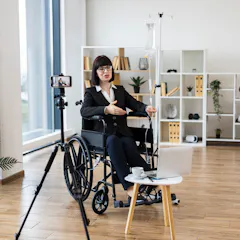
Patients sharing their health journeys online are filling vital information gaps, but social media algorithms often bury their most useful posts.
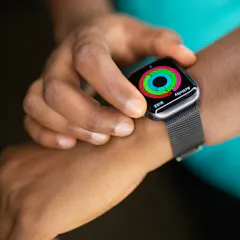
Smartwatches aren’t always as accurate as you might think. In some cases, you’d be better off listening to your body.

Women are frustrated at being bombarded with marketing for menopause ‘solutions’ that don’t work or overstate the benefits.

Not all examples of flawed medical records relate to individual human error. Here’s what else can go wrong.
Between allowing more “free speech” and removing official fact-checking, Meta’s platforms risk becoming more hostile to public health organisations.

Research shows cardiac patients want to understand heart events, adopt heart-healthy diets, manage medications, recognize symptoms, control risk factors and engage in cardiac rehabilitation programs.

How do we distinguish between valuable information from legitimate health experts, and pseudoscientific nonsense from unscrupulous wellness influencers?

Now is the time to learn from the COVID-19 response through an action-oriented independent inquiry focused on accountability. Reforms to data generation, access and use are essential.

If people rely on ChatGPT or Google for complex medical questions, they could come unstuck.
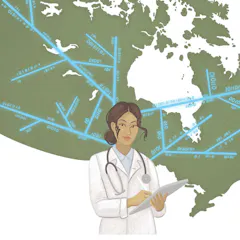
There are concerns about how health data are used, but research shows support for uses with public benefits by health-care providers, governments, health-system planners and university-based researchers.

Searching symptoms online has become so common there is a name for the condition of health anxiety induced by self-diagnosis on the internet: Cyberchondria.

Researchers are developing an AI-powered device to detect asthma and COPD symptoms in real-time for faster treatment. The ‘patch’ listens to airway sounds, but filters out speech to protect privacy.

South Sulawesi residents’ low trust in government explains why people there did not take much efforts to protect themselves, despite feelings that they were at risk from COVID-19.

Shared decision-making upholds person-centred care and supports people to take charge of their own health: their views, input and experiences are important contributors to health plans.

The majority of front page reports were negative in tone, seeing very little possibility for individual agency and self-efficacy. This can amplify public anxiety and fear.

While the HIPAA Privacy Rule prevents health care providers from sharing your health information without your permission, it doesn’t prevent other people from asking you about it.
Top contributors
-

Health Sciences Librarian, Nursing and Information Scientist, Queen's University, Ontario
-
Professor of Health Services and Policy Research, University of British Columbia
-
PhD Candidate, Health Innovation (Medicine, Health and Human Sciences), Macquarie University
-
Professor in Media Studies and Production, University of Cape Town
-
Affiliate Scientist, KITE Research Institute, Adjunct Professor, Department of Physical Therapy, University of Toronto
-
Associate Professor, Communicable Disease Control, The University of Queensland
-
Professor of Clinical Redesign – Nursing, University of Tasmania
-
Associate Professor of Medicine, University of Toronto
-
Adjunct Associate Professor, School of Nursing, University of Tasmania
-
Professor of Medicine, Université de Sherbrooke
-
Information Systems Researcher, University of Dar es Salaam
-
Senior Lecturer in Media and Digital Studies and Deputy Head of School, Rhodes University
-
Professor and Chair, Department of Journalism, Stellenbosch University
-
Program Officer at The Australia-Indonesia Centre, Australia-Indonesia Centre
-
Honorary Enterprise Professor, School of Population and Global Health, and Department of General Practice and Primary Care, The University of Melbourne