
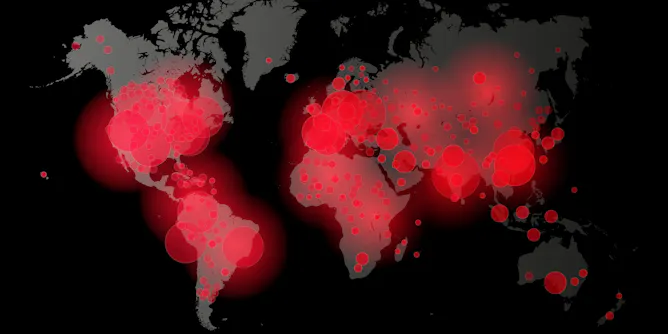
Global health funding cracks do not bode well for pandemic governance as recent disease outbreaks are reminding us. What does this mean for developing countries and how do they cope with health emergencies?
Articles on health crisis
Displaying all articles

Canada’s ‘us against them’ COVID-19 strategy is amplifying social division, creating major psychosocial impacts, and has resulted in a significant decrease in trust toward authorities.
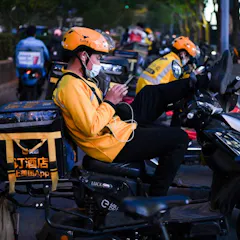
In China, as elsewhere, the pandemic has turned the world of work upside down.
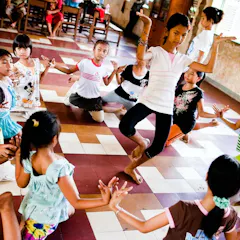
Cambodia found the strength to rebuild itself
through art after the 1979 genocide. While the context is different, this example suggests the importance of art in navigating COVID-19.
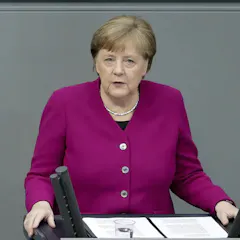
Female leaders have shone in the response to the coronavirus pandemic but is there more to it than simply having women in charge?
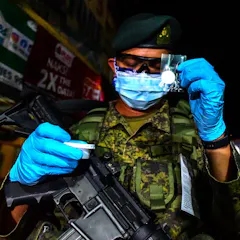
An external shock such as coronavirus merely presses pause on conflicts and offers little hope for solutions.
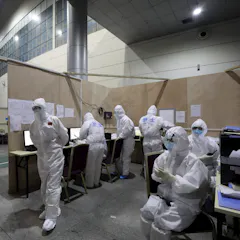
In a health crisis, decisions about treatment and containment must be made quickly. It’s crucial those decisions be based on research evidence, but fast and easy access is not always available.
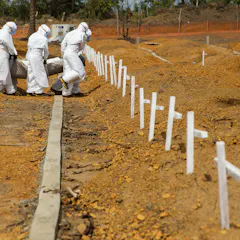
It could be a matter of days before the ebola epidemic in the DRC spreads to urban centres or spills over into neighbouring countries.
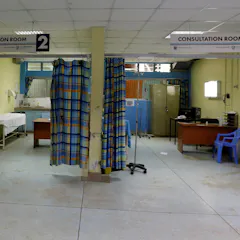
The striking doctors in Kenya have vowed not to resume work until the government meets their demands.
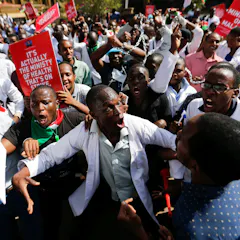
Doctors in Kenya went on strike two months ago asking the government to implement a collective bargaining agreement signed in June 2013.

Aleppo has 85,000 children. Dozens are injured every week, just like five-year old Omran Daqneesh whose pictures have shocked the world. Many have far worse injuries and will not survive.
Top contributors
-

Tutorial Fellow, School of Medicine, University of Nairobi, University of Nairobi
-
Doctorat en sociologie, ATER à l'Université Paris Cité, Université Paris Cité
-
Postdoctoral research associate, Department of Management, Université du Québec à Montréal (UQAM)
-
Professor, School of Management Sciences, Université du Québec à Montréal (UQAM)
-
Part-time lecturer at the Global Health & Social Medicine, Harvard University, and Lecturer at the School of Public Health, College of Health Sciences, University of Liberia
-
Professeur, socio-histoire de la Chine, CESSMA (UMR 245), Université Paris Cité
-
chargé de recherche au CNRS, Centre national de la recherche scientifique (CNRS)
-
Dean, John Molson School of Business, Concordia University
-
Research Fellow, Institut Barcelona Estudis Internacionals
-
Executive Director
-
Professeur associé, Faculté de médecine et des sciences de la santé, Université de Sherbrooke
-
Associate professor, School of applied politics, Scientific codirector, CIDIS (Centre interdisciplinaire de développement international en santé), Université de Sherbrooke
-
Cadre en exercice, John Molson School of Business, Concordia University
-
MD, Health Policy PhD, Queen Elizabeth Scholar, Dalley Fellow, Ontario Graduate Scholar, Emerging Voices Global Health Fellow, McMaster University
-
Professeur, Département de management / Department of Management, Université du Québec à Montréal (UQAM)