
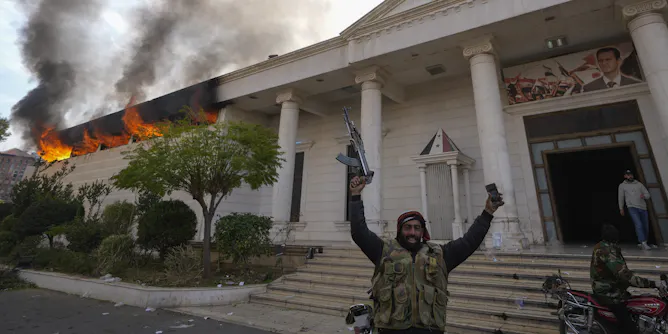
The fall of Bashar al-Assad in Syria has struck a serious blow to Iran’s Axis of Resistance. But weak governments in Lebanon and Jordan could fall next, creating a jihadist axis.
Articles on Hassan Nasrallah
Displaying all articles
As the ground war in Lebanon heats up, how did it happen and where might it all end up?
Over the past two decades, the west has begun to present these extrajudicial killings as ‘justice’ with scant regard for international law.
There is now speculation that Israel may invade Lebanon while Hezbollah is in disarray.
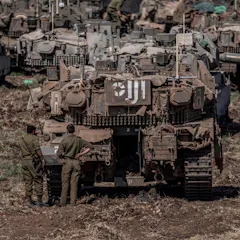
The killing of Hezbollah leader Hassan Nasrallah has left the Lebanon-based militant group leaderless, but history tells us that Israel cannot occupy territory in Lebanon for any sustained period.
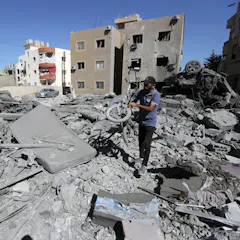
Wars have always required false dichotomies: Christian and Muslim, civilization and barbarism, West and East to justify violence against the other.
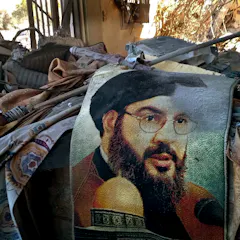
Israeli strikes have wiped out much of the leadership of a group that has huge influence – if not popularity – within Lebanon.
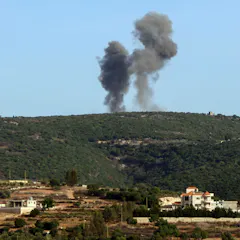
Israelis and Lebanese face similar predicaments: Their well-being is being sacrificed for military priorities.
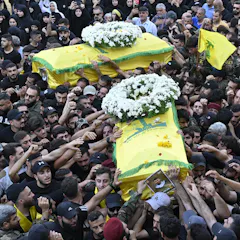
As Hezbollah reels from the communication device blasts, the scene has been set for an all-out war with Israel.

Both sides have stepped back from the precipice of all-out war, but this doesn’t mean the danger is over.
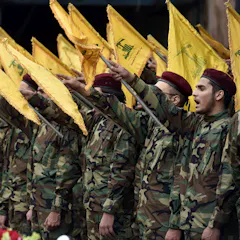
Unlike Hamas, Hezbollah is a large, well-equipped army with the capability to badly hurt Israel.
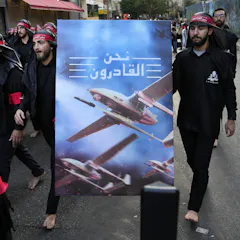
Hezbollah’s recent release of drone footage taken inside Israel appears designed to send a message that the armed group can cause serious damage in the event of a full-scale war.
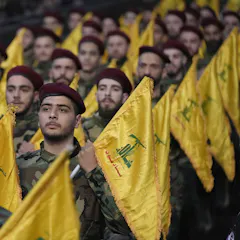
Since the war began, Israel has exchanged tit-for-tat cross-border attacks with the Lebanese armed group Hezbollah. It is imperative to prioritize diplomatic solutions that end the violence.

A selection of analysis from our coverage of the war in Gaza over the past fortnight.
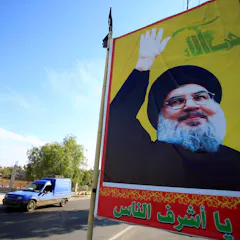
Closing the loophole: why the UK government must clip Hezbollah’s ‘wings’.
Top contributors
-

Postdoctoral fellow at Queen's University's Centre for International Policy and Defence (CIDP), Queen's University, Ontario
-
Professor of Economics, City St George's, University of London
-
Research Scholar, Middle East Studies, Australian National University
-
Lecturer in Comparative Politics, Queen's University Belfast
-
Professor of History and Peace Studies, University of Notre Dame
-
Director of Dickinson Program in New Zealand & Associate Professor of Politics at the University of Otago, Dickinson College
-
Senior Lecturer, Politics & International Relations, Monash University
-
Professor of Political Science, Sciences Po
-
Research Fellow, Faculty of Life Sciences and Education, University of South Wales
-
PhD candidate, Centre for Comparative Literature, University of Toronto
-
Lecturer in Law, Essex Law School, University of Essex
-
Addison Wheeler Fellow in the School of Government and International Affairs , Durham University
-
Associate Professor in International Relations, Swansea University
-
Senior Lecturer in Law, University of Huddersfield
-
Faculty Lecturer, International Relations, McGill University