

There is evidence of people who crossed gender boundaries even in ancient civilizations, though the terms naming them have evolved over time.
Articles on Global health
Displaying 21 - 40 of 186 articles
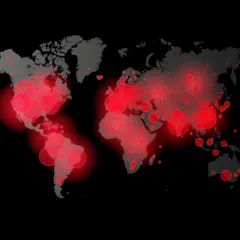
Global health funding cracks do not bode well for pandemic governance as recent disease outbreaks are reminding us. What does this mean for developing countries and how do they cope with health emergencies?
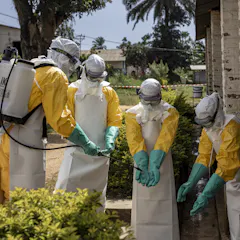
Geography may not provide meaningful protection once an outbreak is already underway.

The late postpartum period has the highest risk for maternal deaths, yet the standard of postpartum care in the US ends at approximately six weeks after birth.

The US lacks the capacity to treat long COVID, and HHS defunding is taking the country further away from being able to handle the country’s growing number of long COVID cases.
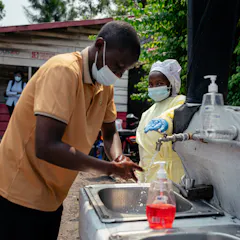
Tests for Ebola don’t detect this strain, so it took the WHO extra time to confirm the cause of the outbreak.

This condition’s prevalence is rising worldwide, and it is very treatable, but disparities in access to care remain.
Disease outbreaks can make women and girls especially vulnerable to violence, but health surveillance systems do a poor job tracking these trends.
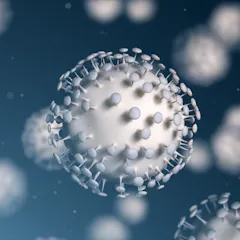
Scientists are learning to spot pandemic threats without touching dangerous pathogens.

In the wake of the WHO’s One Health summit, a new atlas explores the interdependency between environmental, health and food security issues, and strategies for supporting sustainability and the welfare of all life forms.

As sea levels rise, increasing amounts of salt water are leaking into freshwater supplies worldwide.

Exposure to lead remains one of the leading environmental risk factors for early death and poor health globally.
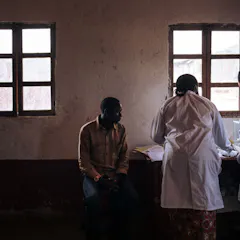
Public health campaigns had made significant strides toward eradicating diseases like elephantitis and river blindness. But this progress has since unraveled with the second Trump administration.
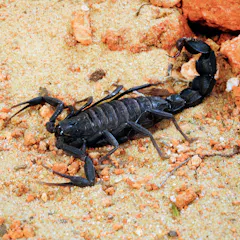
At least 1.2 million scorpion stings are recorded each year – and around 3,000 people, mainly children, die from them.
Public health scholars worry that the resurgence of measles may signal a coming wave of other vaccine-preventable diseases.

After decades of stalled progress, new vaccines, treatments and genetic tools are helping scientists protect children and save lives worldwide.
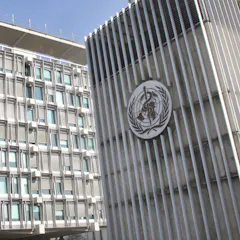
As the U.S. withdraws from the World Health Organization, it cedes influence over global health programs. A more immediate concern is disruption of disease surveillance and emerging health threats.
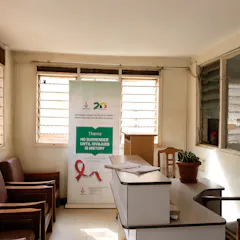
A mix of domestic revenue generation, efficiency gains and strategic partnerships is essential to sustain and expand HIV programmes despite declining external aid.
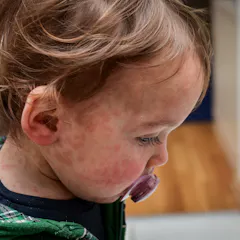
Decreased vaccination rates have led to measles outbreaks in Canada and other countries.
The America First Global Health Strategy aims to secure US interests but may instead undermine it by design.
Top contributors
-

Associate Principal Research Fellow, Burnet Institute
-
Professor of Health Studies, University of Richmond
-
Professor of Philosophy, Binghamton University, State University of New York
-
Associate Professor and Chief Health Officer - COVID and Health Emergencies, Burnet Institute
-
Canada Research Chair of Epidemiology & Global Health, McGill University
-
Professor of Public Health, The University of Melbourne
-
Associate Professor, Melbourne School of Population and Global Health, The University of Melbourne
-
Visiting Fellow at Nossal Institute for Global Health, The University of Melbourne
-
Assistant Professor of Medicine, Addiction Medicine, University of Colorado Anschutz
-
Assistant Professor of Resource Economics, UMass Amherst
-
Professor de Clínica Médica e Medicina Laboratorial, Universidade Federal de São Paulo (UNIFESP)
-
Assistant Professor of Law, L’Université d’Ottawa/University of Ottawa
-
Professor of Global Biosecurity, NHMRC L3 Research Fellow, Head, Biosecurity Program, Kirby Institute, UNSW
-
Adjunct Associate Professor of Epidemiology, Columbia University
-
Bachelor of Medical Science (Hons) student; global health researcher, Murdoch Children's Research Institute