

DNA sequencing means a scientist can take a bucket of seawater and ID every fish in the area. Now we need a universal ‘biobank’ of samples to make a truly powerful environment monitoring tool.
Articles on Genome
Displaying 121 - 140 of 209 articles

The koala genome, published today, gives us new and valuable information to aid conservation of this marsupial. It identifies special genes that evolved to adapt the koala to its unique lifestyle.

By sequencing the genomes of other species, we can better understand our place in natural history.

Recent discoveries of ancient viruses are helping scientists understand their origins.

A new study shows that most young adults know about the connection between omega-3 fats and brain and heart health. Despite this, only two out of five reported buying or eating omega-3 foods.

We now have the capacity to quickly and cheaply sequence an individual’s genome and scour it for disease-causing genes. But how much, and what type, of information does a parent-to-be want to know?

You should be aware of the amount of genetic information you might disclose in a research study – and what the benefits and risks will be.
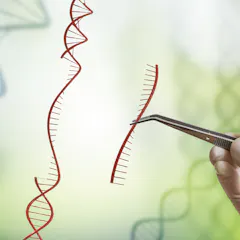
Most of our genes descend directly from the last common ancestor of animals.

We’re at the point in DNA technology where individuals who – having parted with $99 and a small vial of saliva – may suddenly find themselves in a criminal investigation.

A public genealogy data base was used to track down the so-called “Golden State Killer,” raising concerns about the privacy of using public sites to fill out our family trees.

When you send off a cheek swab to one of the private genome companies, you may sacrifice not just your own privacy but that of your family and your ancestors.

In 2003 the Human Genome Project “cracked the code of life”, yet parts of our DNA remained unidentified. A new study fills out our genetic blueprint by using a nanotechnology-based technique.

Humans, and indeed pet dogs, are more than just products of genes – even before the moment of conception, environments play a vital role in shaping us.

A health and human rights researcher, therapist and professor explains why racial justice is a public health issue.

A new study of ancient Botai horses turns our knowledge about wild and domestic horses on its head.
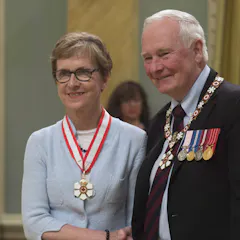
Canada’s female scientists are superstars in their fields yet most Canadians have never heard of them. On International Day for Women in Science, it’s time to give them the recognition they deserve.

Handedness is the tendency to prefer using one hand over the other to perform certain tasks. But how did we get this way?
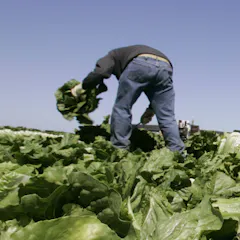
The recent E. coli outbreak in North America was linked to romaine lettuce. Many such outbreaks are often linked to fresh produce. Here’s what you need to know to keep your family safe.

Only one Canadian has ever received the Nobel Prize for medicine, in 1923. But Canadian discoveries have been essential to stem cell research, gene sequencing and treatments for cancer.

Star Wars: The Last Jedi leaves many questions about the saga in a galaxy far, far away unanswered. Fortunately, biology may offer a insights on the Force, midi-chlorians, clones, and Rey’s lineage.
Top contributors
-

Distinguished Research Professor, Emerita, Dalhousie University
-
Emeritus Robert Reford Professor and Professor of Medicine, McGill University
-
Professor, Chemistry and Biochemistry, Laurentian University
-
Vanier Scholar and Ph.D. Candidate in Microbiology and Immunology, Dalhousie University
-
Junior Fellow, MacEachen Institute for Public Policy and Governance; Medical Student, Dalhousie University
-
Distinguished Research Professor, Dalhousie University
-
Professor and Chair of Genomic Diversity, Queen Mary University of London
-
Associate Professor and Canada Research Chair, Department of Chemistry and Biochemistry, University of Lethbridge
-
Principal Scientist and Canada Research Chair in Zoonotic Virus and Animal Reservoirs at the Vaccine and Infectious Disease Organization and Co-Lead of One Health at the University of Saskatchewan, University of Saskatchewan
-
Professor in Medicine, Ethics and Society, University of Warwick
-
Masters Student, Biomolecular Interactions and Biophysical Modelling of RNA viruses, University of Lethbridge
-
Reader in Genetics, University of Aberdeen
-
Assistant Professor/Canada Research Chair in emerging viruses, University of Manitoba
-
Professor of Medicine and Vice President, Research, McMaster University
-
Doctoral Student in Biochemistry, University of Washington